
A marble masterpiece of kings, conquest, and mistaken identity.

Some objects survive the fall of kingdoms and still manage to confuse the modern world.
The Alexander Sarcophagus is one of them.
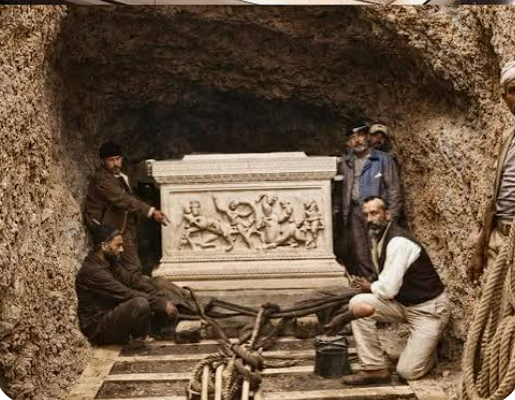
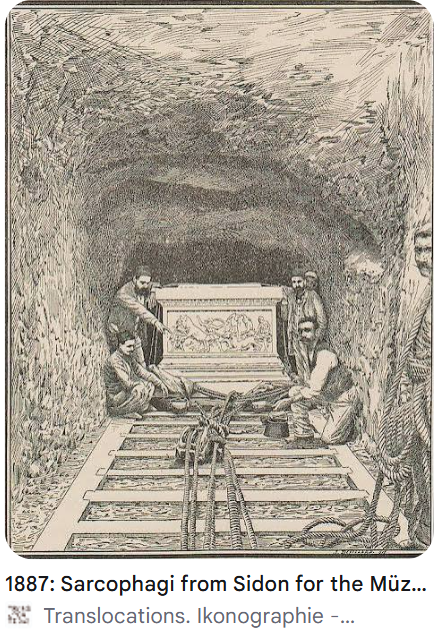
Discovered in 1887 in the Royal Necropolis of Sidon, in present-day Lebanon, this extraordinary stone coffin is now housed in the Istanbul Archaeological Museums. At first glance, the name suggests something dramatic and straightforward — that it must have belonged to Alexander the Great himself. But that is where the first surprise begins. Despite the name, the sarcophagus was not Alexander’s burial place.
So why does it bear his name?
Because Alexander appears upon it.
Carved in luminous Pentelic marble, the sarcophagus is covered in richly detailed reliefs showing battle scenes and lion hunts, with figures widely identified as Alexander and his companions. The craftsmanship is so refined that the stone almost seems to move. Horses rear, warriors charge, drapery ripples, and bodies twist with tension and life. It is not merely a coffin. It is theatre in marble.
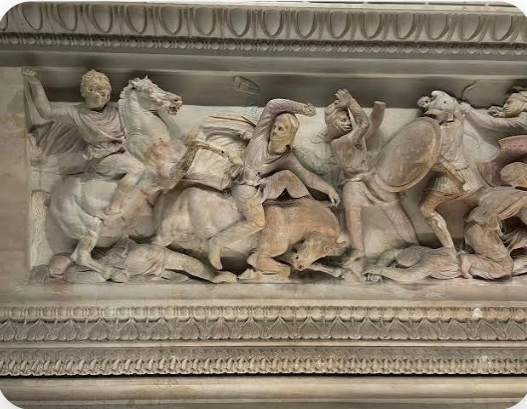
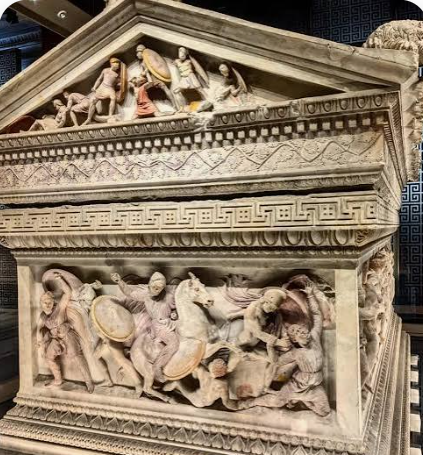
Most scholars believe the sarcophagus was made for Abdalonymus, the king of Sidon appointed after Alexander’s conquest. If that is true, then the object becomes even more interesting. It was not made to bury the conqueror, but to associate another ruler with his power, his prestige, and his world-changing image. In that sense, the sarcophagus is not just funerary art. It is political art. It is memory shaped into stone.
And there is another detail that unsettles modern assumptions.
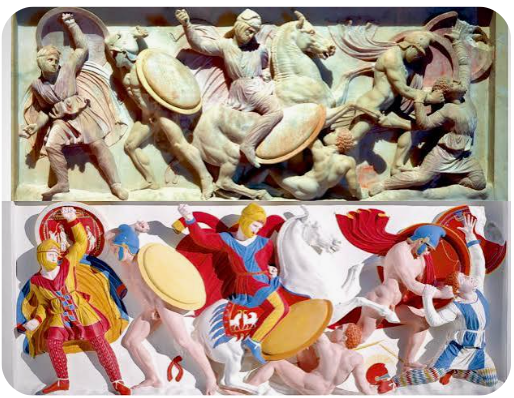
Today, many people imagine ancient sculpture as cold white marble, pure and severe. But traces of pigment found on the Alexander Sarcophagus reveal that it was once vividly painted. Reds, blues, yellows, and other colors once brought these scenes to life. The masterpiece we admire now is only the ghost of its original brilliance.
That may be one of the object’s greatest lessons: history often survives in fragments, and what we inherit is not always what once existed.
The Alexander Sarcophagus remains one of the most remarkable objects to survive from the ancient world — not because it answers every question, but because it refuses to. It stands at the crossroads of death, art, kingship, conquest, and identity. It reminds us that names can mislead, beauty can outlive empires, and the past is rarely as simple as its label.
If it was never Alexander’s, perhaps that makes it even more fascinating.
Its greatest secret was never who appears on its surface.
It was who wanted Alexander remembered there at all.
#GothicDustDiaries #Curiosities #AlexanderSarcophagus #AncientHistory #Archaeology #HellenisticArt #Sidon #AncientWorld #HistoricalMysteries #MarbleMasterpiece