
Erebus and Terror
Lost for 169 Years... Then Found Beneath the Arctic Ice
HMS Erebus and HMS Terror (1845) - The lost ships of the Franklin Expedition
In May 1845, two Royal Navy vessels—HMS Erebus and HMS Terror—departed England on what was expected to be the final great quest to chart the Northwest Passage through the Canadian Arctic. Commanded by the experienced Sir John Franklin, the expedition carried 129 officers and crew, advanced scientific instruments, and provisions believed sufficient for several years.
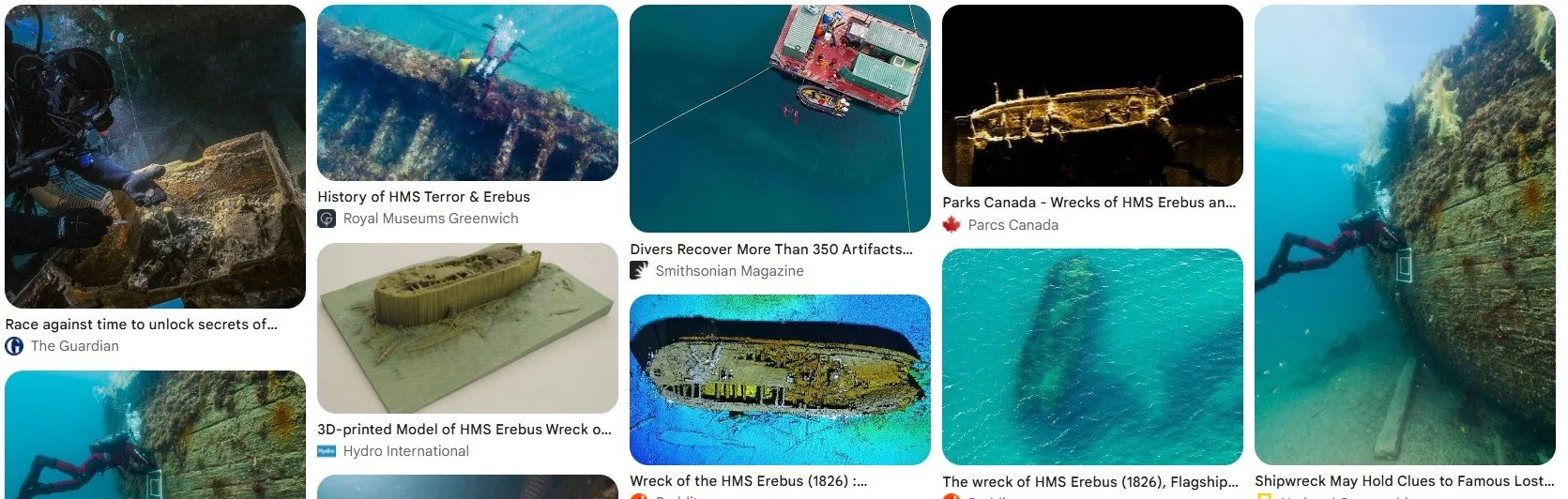
The ships themselves were engineering marvels for their time. Originally built as bomb vessels, they had been heavily reinforced with iron plating and thick timber to withstand crushing ice. Steam engines salvaged from railway locomotives allowed each ship to maneuver even when the wind failed. To Victorian Britain, they represented the very best of naval technology.
Yet after entering the Arctic, both ships vanished.
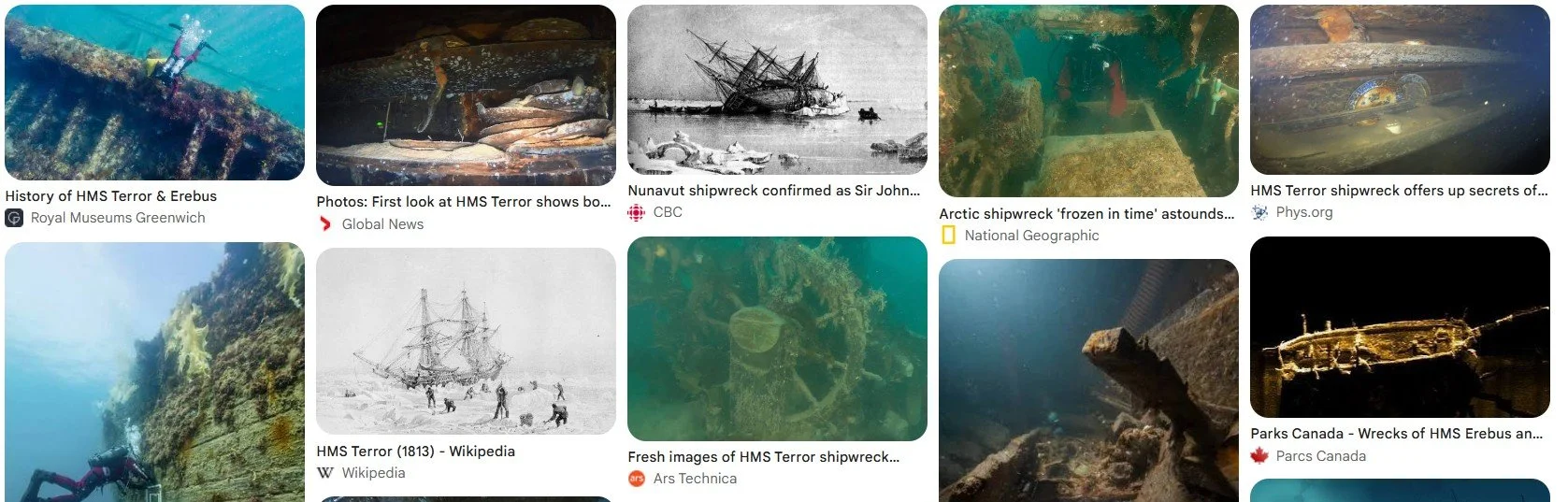
The last confirmed sighting came in July 1845, when whaling vessels observed Erebus and Terror waiting for favorable conditions in Baffin Bay. After that, silence.
Years passed with no word. Search expeditions eventually uncovered scattered clues—abandoned campsites, equipment, graves on Beechey Island, and written notes revealing that the ships had become trapped in ice beginning in September 1846. Sir John Franklin had died in June 1847, and in April 1848 the surviving crew abandoned the vessels in a desperate attempt to reach safety by land.
None survived.
The mystery endured for generations. Historians debated whether disease, starvation, lead poisoning from canned food, harsh weather, or a combination of factors doomed the expedition. Inuit oral histories, preserved for decades, described abandoned ships sinking into the Arctic waters, but these accounts were largely overlooked by early European searchers.
Modern researchers eventually recognized the value of those Indigenous accounts.
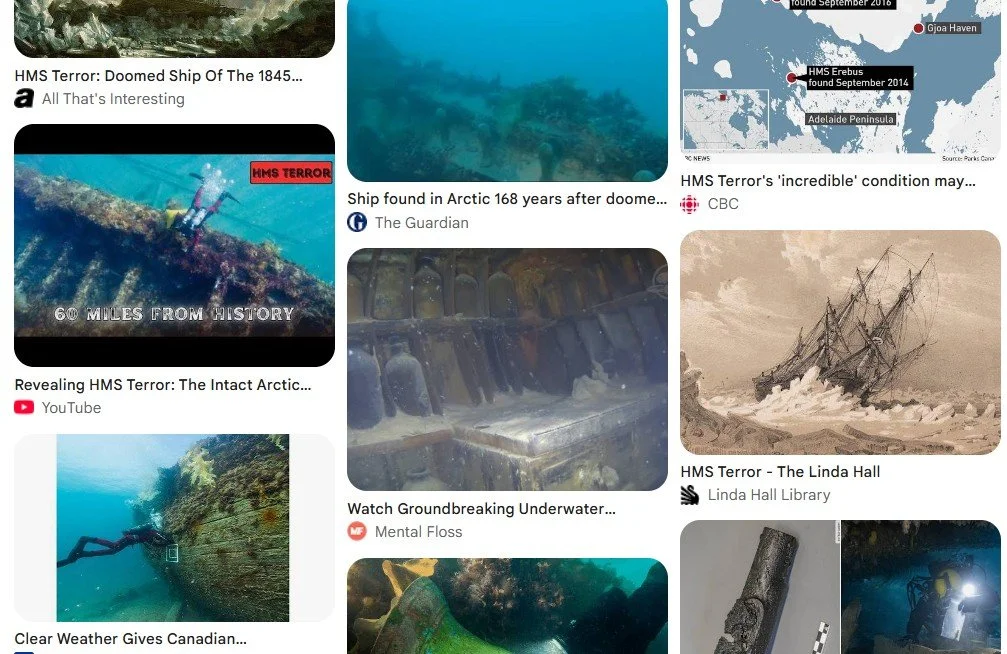
Using historical records, satellite technology, sonar surveys, and guidance from Inuit knowledge, Parks Canada launched renewed searches.
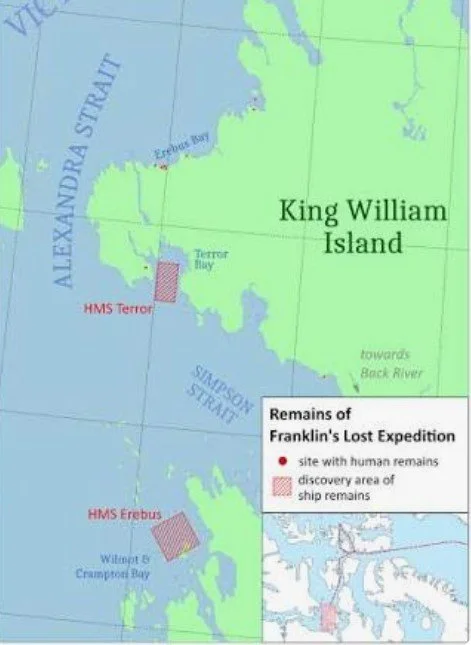
In 2014, HMS Erebus was discovered resting upright on the seabed of Wilmot and Crampton Bay.
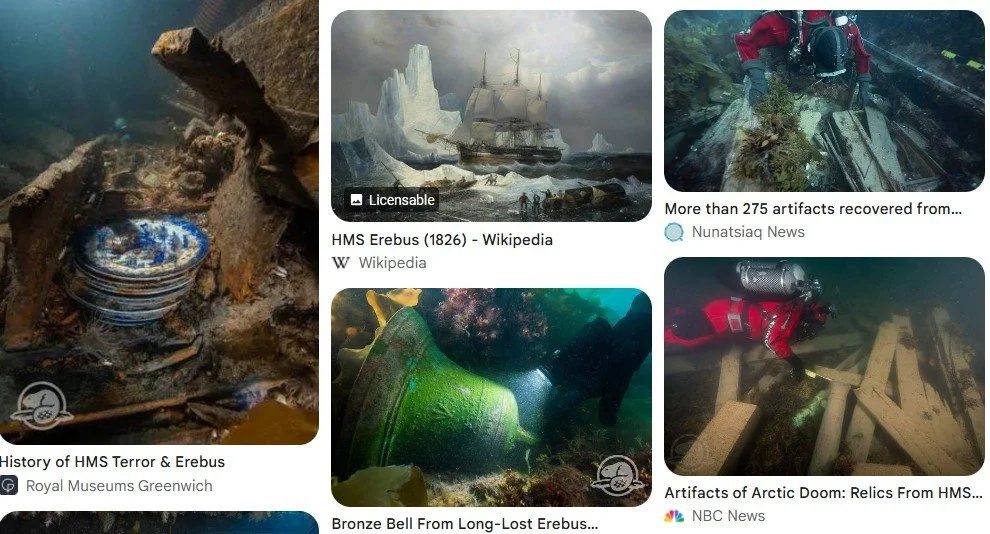
Just two years later, in 2016, HMS Terror was found remarkably well preserved in Terror Bay, nearly intact despite spending more than 160 years beneath Arctic waters.
The discoveries stunned archaeologists. Cabins, artifacts, navigational instruments, dishes, bottles, personal belongings, and sections of the ships remained preserved by the frigid environment. Every dive continues to reveal new insights into life aboard one of history's most famous lost expeditions.
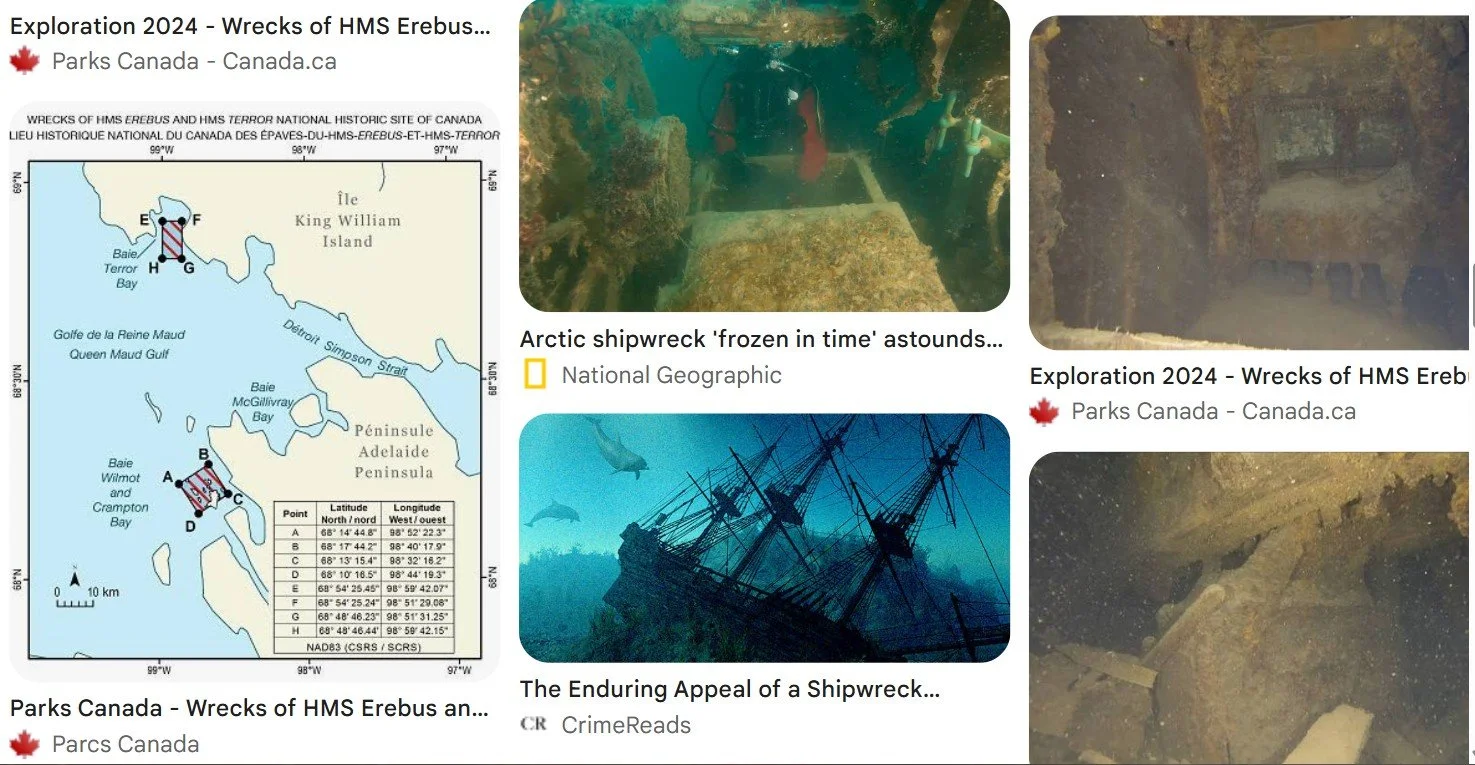
Today, the wrecks are protected as part of Canada's national historic heritage. They serve not only as archaeological treasures but also as reminders of human ambition, technological innovation, and the unforgiving power of nature.
After nearly 170 years hidden beneath Arctic ice, Erebus and Terror finally told their story.