
Gerald Brom
Where Dark Fantasy Becomes Fine Art
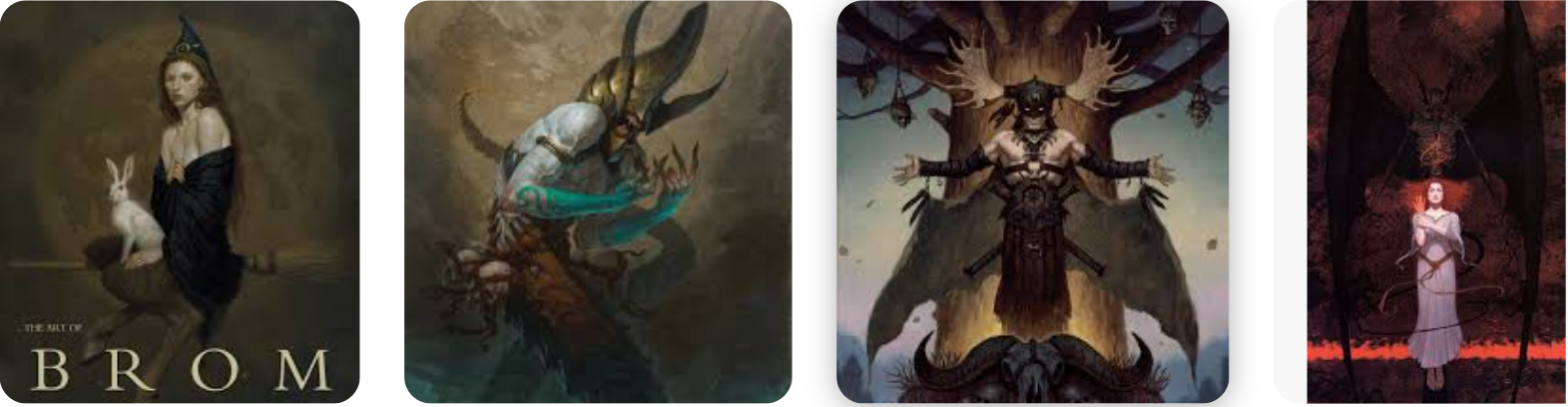
Gerald Brom occupies a rare space in modern dark art: an illustrator whose work became instantly recognizable long before many readers knew his name. His paintings carry a distinct atmosphere—part myth, part nightmare, part forgotten folklore—where creatures emerge from darkness with startling elegance and human figures often seem caught between power and ruin.
Born in the United States and shaped by a childhood that included frequent moves because of his father’s military career, Brom developed an early fascination with visual storytelling. That sense of displacement may explain why so much of his work feels like it belongs nowhere entirely fixed: forests that are ancient but unreal, figures suspended between eras, and landscapes that seem haunted by memory.
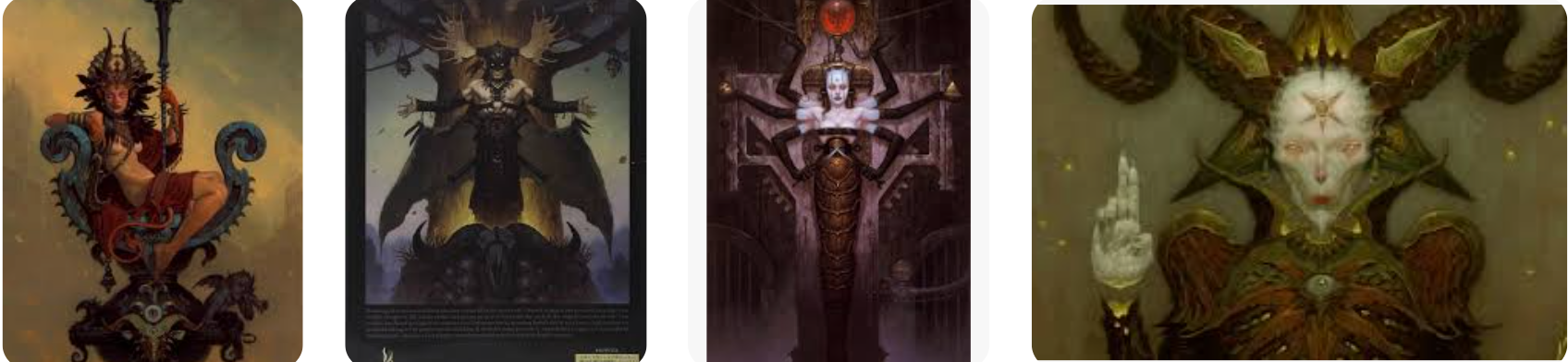
His early career gained attention through commercial illustration, particularly in fantasy publishing, where his covers quickly stood apart from conventional heroic fantasy. Rather than polished triumph, Brom’s imagery offered tension—armor weathered by battle, wings torn by time, faces marked by moral ambiguity. Even supernatural beings in his paintings often carry emotional depth rather than simple menace.
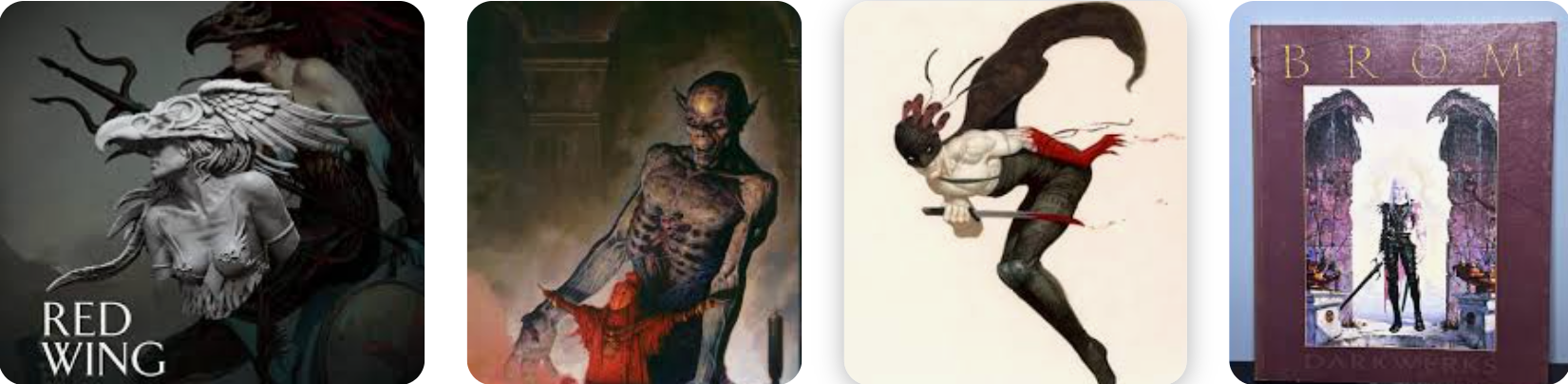
What separates Brom from many fantasy illustrators is his refusal to separate beauty from discomfort. His demons, faeries, witches, and spectral figures are often unsettling precisely because they feel believable. Texture matters in his work: cracked leather, cold metal, bark, smoke, bone, and fabric all seem tangible enough to touch.
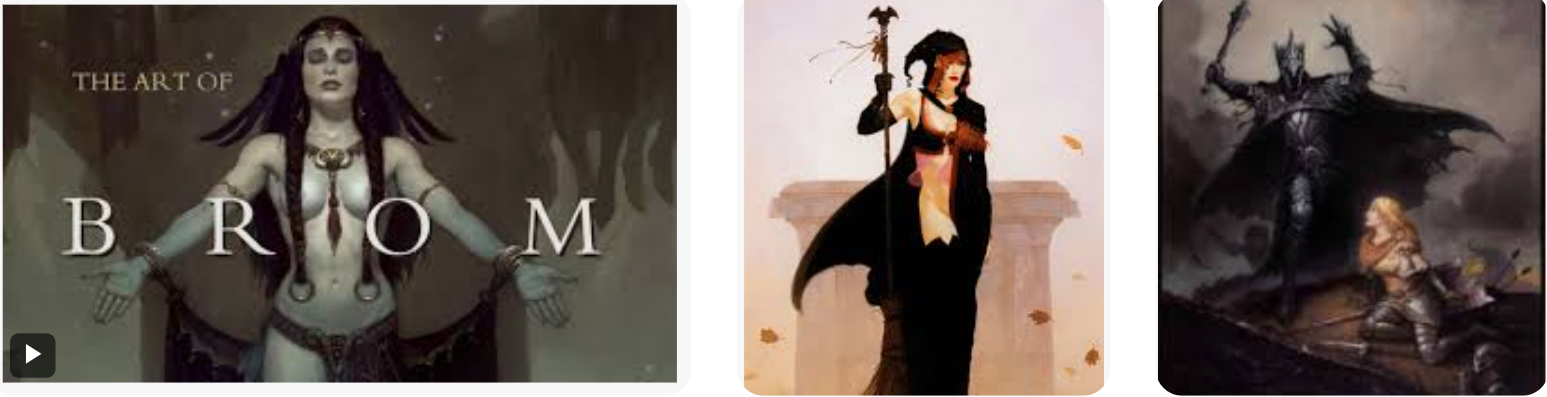
His later transition into fiction deepened that world-building. Novels such as Krampus: The Yule Lord and The Child Thief reimagined familiar legends through darker moral landscapes. In these works, folklore is not softened for comfort; instead, old stories recover their original sharpness—wild, dangerous, and morally uncertain.

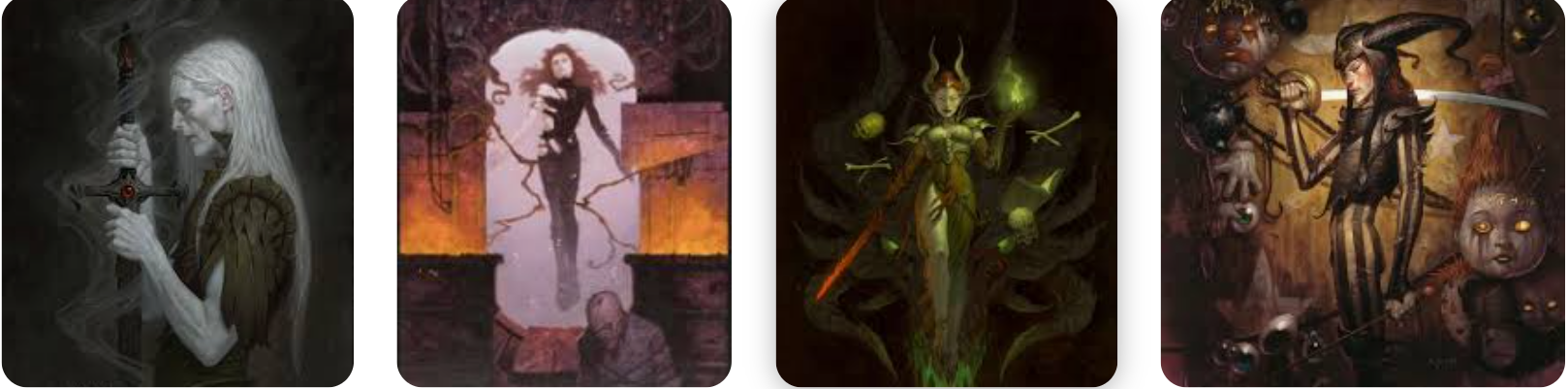
The strongest work to feature from Brom is often The Child Thief, because it captures nearly every element that defines his artistic identity in a single world. His reinterpretation of Peter Pan transforms a familiar story into something feral, sorrowful, and visually haunting, where childhood wonder is inseparable from danger. The accompanying imagery reflects Brom at his most complete: antlered figures, shadowed forests, weathered textures, and characters suspended between innocence and brutality. It is an ideal entry point because it shows how his illustrations do more than decorate a story—they establish emotional architecture. For readers encountering Brom for the first time, The Child Thief reveals how he restores myth to its older form, where beauty is never entirely safe and every image feels as though it carries a forgotten history.
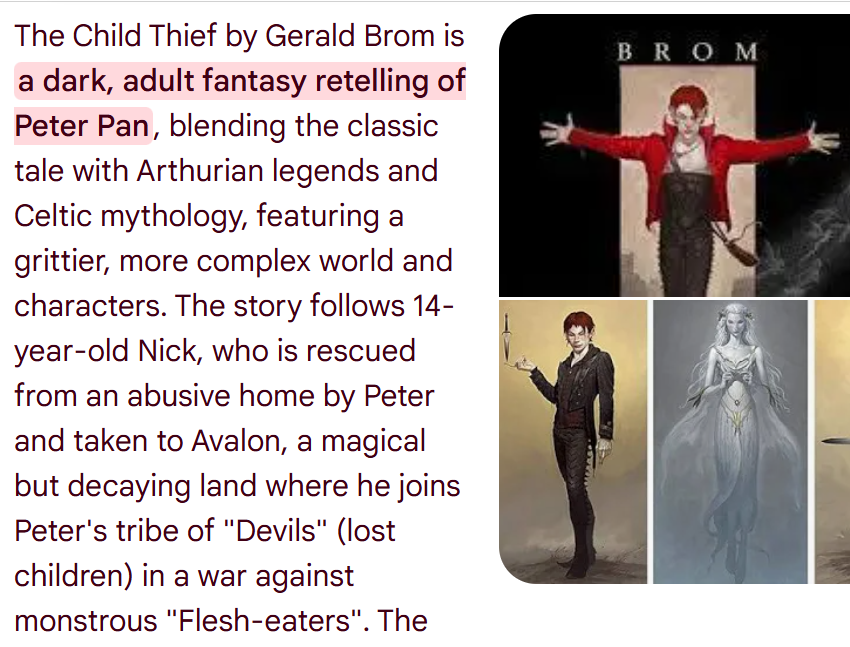
Brom’s lasting appeal lies in his ability to make fantasy feel ancient rather than invented. His worlds seem discovered rather than created, as though they existed long before the page and will remain after the reader leaves them behind.
For those drawn to gothic imagination, Brom represents a modern continuation of an older artistic instinct: to show that darkness is not merely frightening—it is layered, symbolic, and often strangely beautiful.
#GeraldBrom #DarkFantasy #GothicArt #FantasyIllustration #MythicArt #DarkLiterature #VisualStorytelling #KrampusTheYuleLord #TheChildThief #GothicDustDiaries #DarkArtists #FantasyBooks