
Dante Gabriel Rossetti
Dante Gabriel Rossetti: A Gothic Portrait in Four Minutes
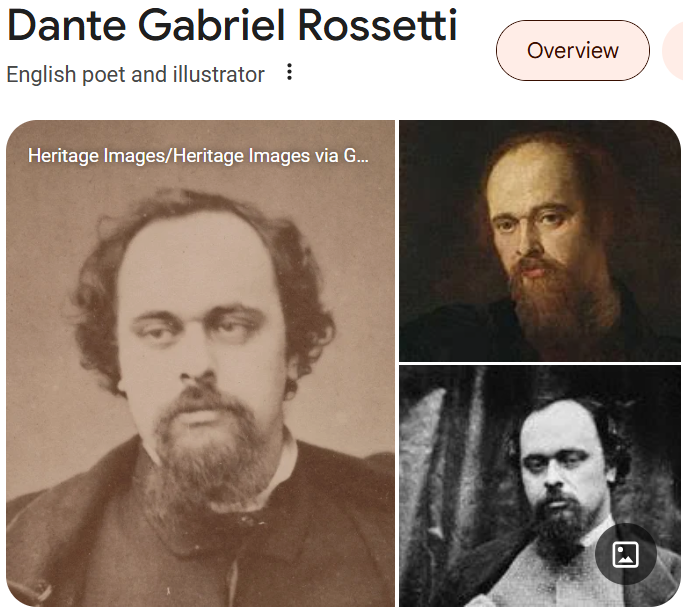
Dante Gabriel Rossetti moved through the Victorian world as if he were half-ghost, half-prophet — a man whose art seemed torn between the earthly beauty he adored and the shadows that haunted him. One of the founding spirits of the Pre-Raphaelite Brotherhood, Rossetti rejected the polished perfection of academic art, turning instead toward luminous color, fevered symbolism, and faces that throbbed with secrets. If the medieval world had risen again in candlelit chambers, inked manuscripts, and whispered spells, Rossetti would have felt entirely at home.
Born in 1828 to an Italian exile and a fiercely intellectual mother, Rossetti grew up in a household steeped in poetry, politics, and the occult shimmer of ancient texts. He was a painter who longed to be a poet, and a poet who painted as if each stroke might conjure the soul he wanted to reach. His early works — “The Girlhood of Mary Virgin” and “Ecce Ancilla Domini!” — glowed like altarpieces resurrected from some forgotten chapel, filled with symbolic lilies, divine melancholy, and unearthly light.
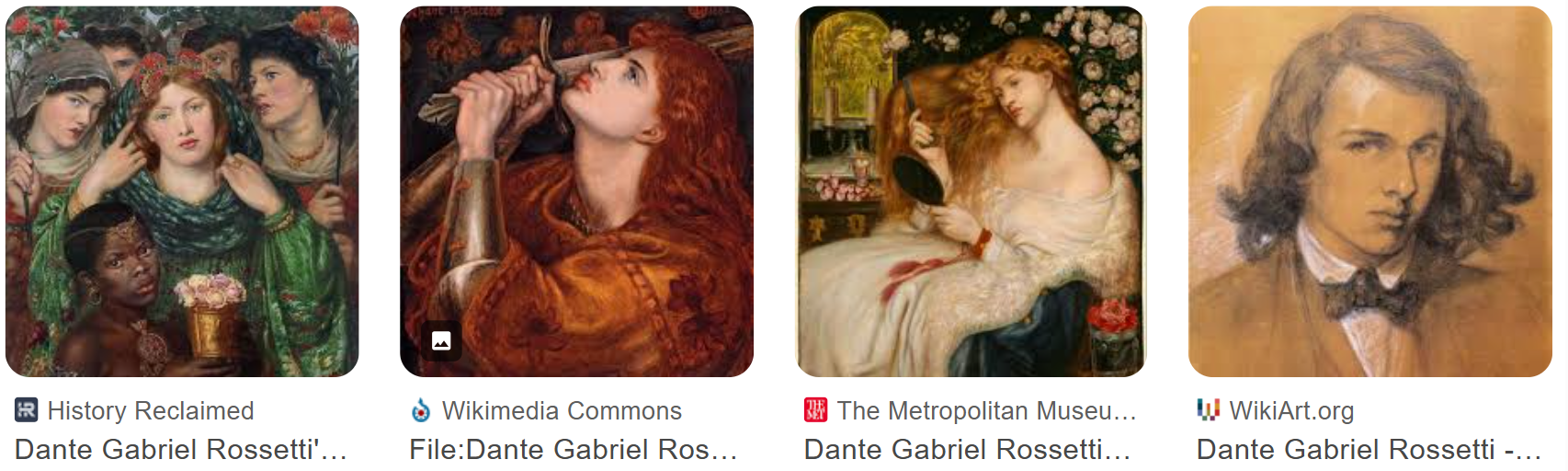
But Rossetti’s life was not merely artistic; it was tragically romantic, almost theatrically so. His muse and wife, Elizabeth Siddal, became the pale, ethereal idol of the Pre-Raphaelites. Their love smoldered with intensity, but her death in 1862 plunged him into a gothic grief from which he never fully returned. In a gesture so dramatic it feels like folklore, Rossetti placed a book of his unpublished poems in her coffin — only to have it later exhumed so he could reclaim the verses. The episode clung to him like a curse, feeding whispers that he had overstepped the boundary between devotion and the macabre.
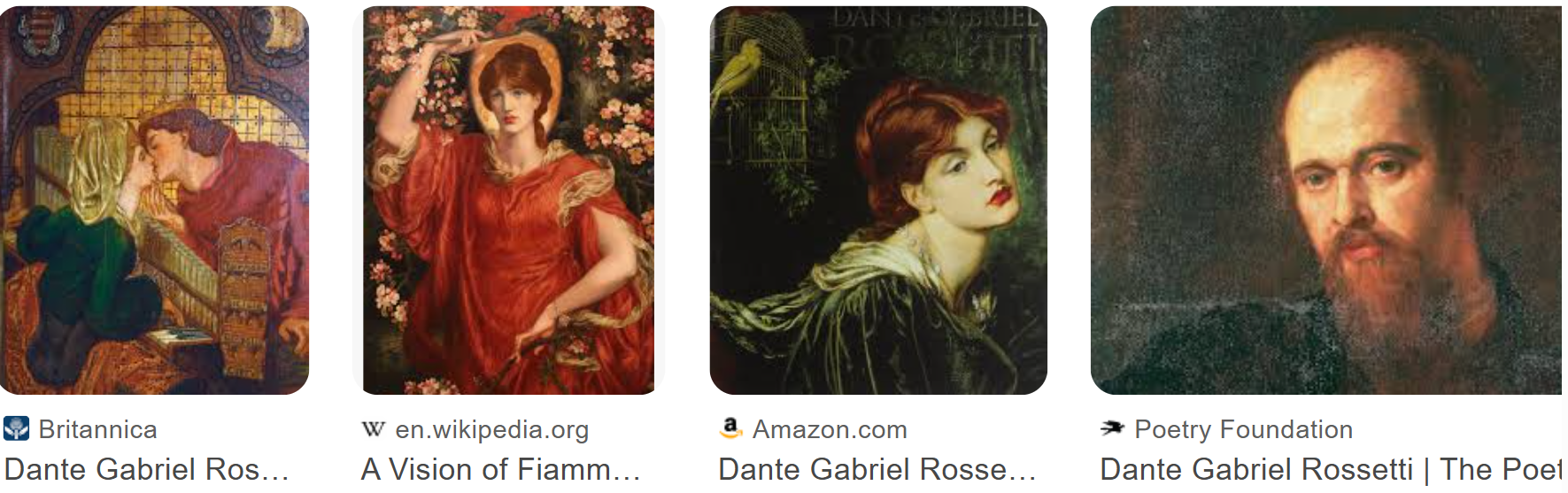
As he aged, Rossetti’s paintings grew heavier with symbolism, saturated with deep greens, blood-reds, and golds that suggested both sanctity and sin. The women in his portraits — Alexa Wilding, Jane Morris, Fanny Cornforth — became icons of longing, mysterious enchantresses whose haunted eyes seemed to guard unsaid stories. His work began to feel like a séance on canvas, summoning beauty from worlds both divine and doomed.
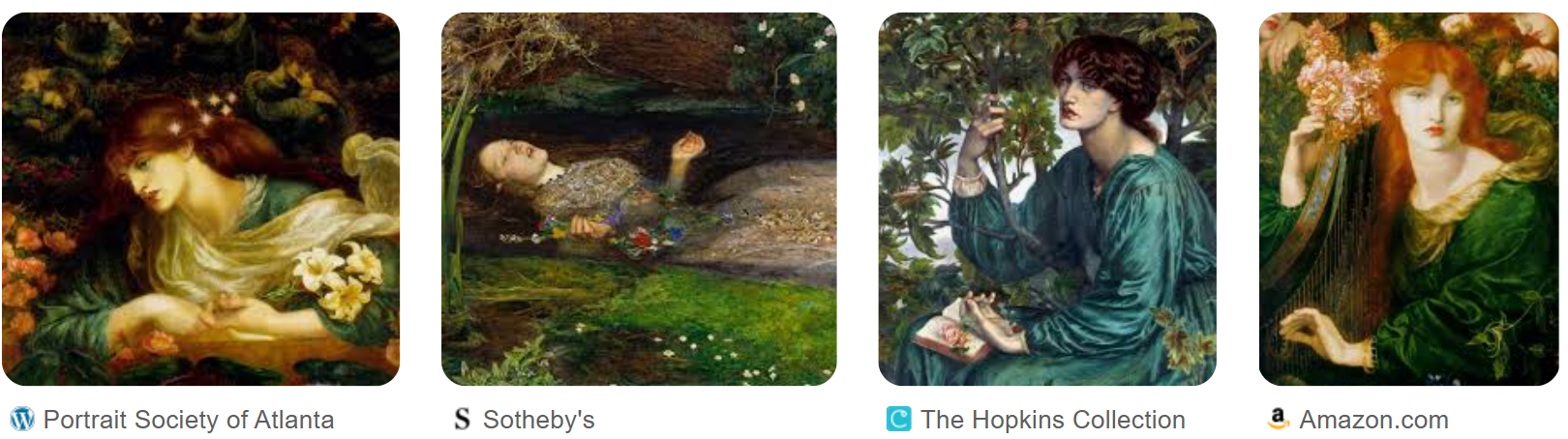
In his final years, illness and paranoia closed in like gothic fog. Still, the allure of Rossetti’s vision has never faded. His art survives as a cathedral of color and shadow, built on the edge between eros and elegy — a reminder that the most haunting works are often born where love meets loss, and light trembles on the brink of darkness.
“The Blessed Damozel” — Opening Stanzas (Rossetti, 1850)
The blessed damozel lean’d out
From the gold bar of Heaven;
Her eyes were deeper than the depth
Of waters stilled at even;
She had three lilies in her hand,
And the stars in her hair were seven.
Her robe, ungirt from clasp to hem,
No wrought flowers did adorn,
But a white rose of Mary’s gift,
For service meetly worn;
Her hair that lay along her back
Was yellow like ripe corn.
Herseem’d she scarce had been a day
One of God’s choristers;
The wonder was not yet quite gone
From that still look of hers;
Albeit, to them she left, her day
Had counted as ten years.
Where to Find the Full Poem
Project Gutenberg — hosts Rossetti’s collected poems in full.
Poetry Foundation — provides the entire text along with notes and background.
Bartleby / Public Domain Poetry Archives — often includes both early and later versions of the poem.
Internet Archive — scans of Rossetti’s original printed books.
#DanteGabrielRossetti #PreRaphaelite #VictorianArt #GothicAesthetic #ArtHistory #PoetryAndPainting #ElizabethSiddal #Romanticism #Symbolism #GothicLit #AestheticMovement