
WHEN MENTAL ILLNESS BECAME ENTERTAINMENT
A Hospital Unlike Any Other
Imagine walking through the streets of London centuries ago, looking for an afternoon's diversion.
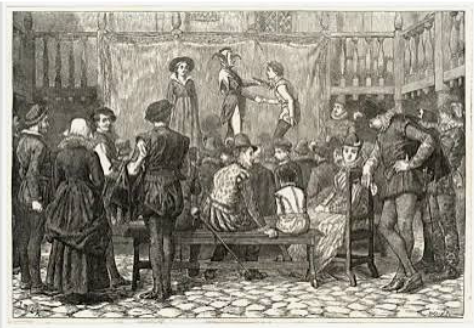
You might visit a market, attend a theatrical performance, or wander through the city's crowded streets. But there was another destination that attracted the curious: a hospital where people experiencing mental illness could be observed by strangers.
Its name was Bethlem Royal Hospital.
The world would come to know it as Bedlam.
Founded in 1247, Bethlem began as a religious institution and gradually developed into a hospital associated with the care of people suffering from mental illness. Its name eventually entered the English language as a synonym for chaos, confusion, and disorder.
But its most troubling legacy was not merely its reputation.
It was the spectators.
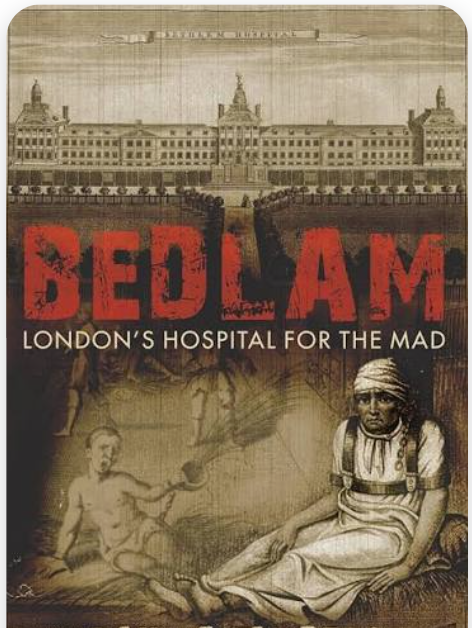
When Patients Became Attractions
During the seventeenth and eighteenth centuries, Bethlem became one of London's notorious attractions.
At designated times, members of the public could enter the hospital and observe its patients. Donation boxes helped collect money for the institution, which depended upon charitable support.
For some visitors, the experience was an exercise in curiosity. Others came seeking an unusual diversion.
The people being watched, however, were not actors performing for an audience. They were individuals living with conditions that society understood poorly and frequently feared.
Imagine being frightened, confused, or seriously unwell while strangers examined your behavior, whispered about you, or laughed at your distress.
The boundary between medical care and public entertainment had become dangerously blurred.
The Palace of Madness
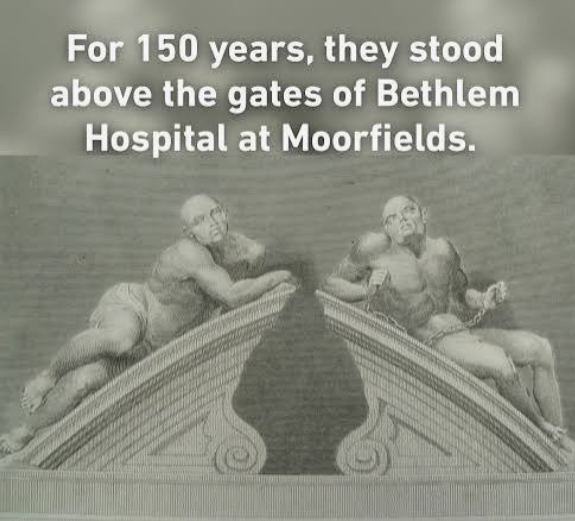
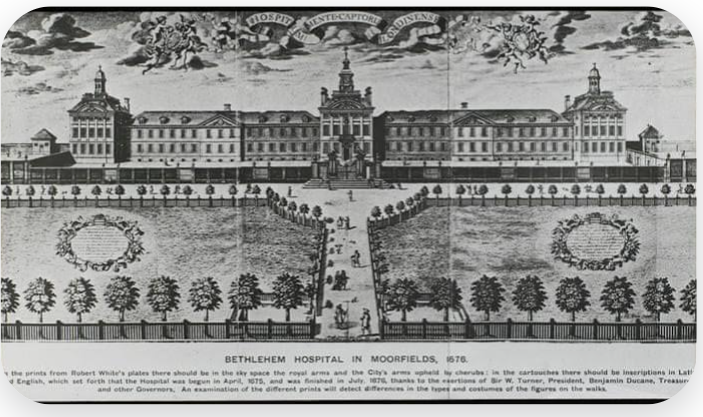
In 1676, Bethlem moved into an imposing building at Moorfields.
Its grand architecture presented an extraordinary contrast to the suffering associated with the institution.
Outside stood sculptural representations of two supposed forms of madness: Raving and Melancholy. The figures reflected the period's understanding of mental illness and reinforced the hospital's public identity.
The building itself was designed to impress.
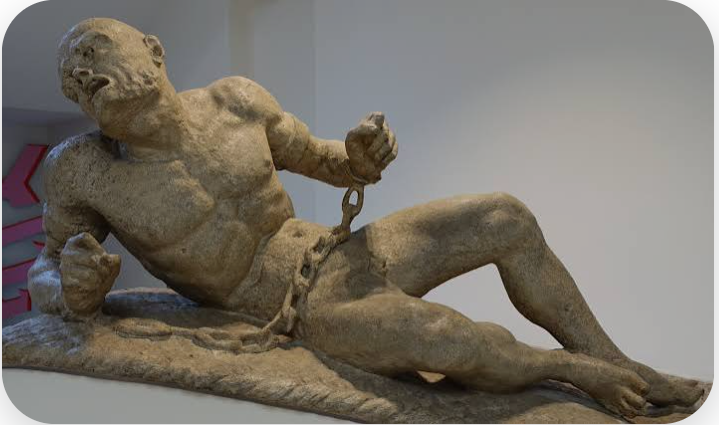
Yet behind its monumental exterior lived people whose experiences could be shaped by confinement, restraint, limited medical understanding, and the public's fascination with their conditions.
Bedlam had become both an institution of care and a symbol of society's complicated relationship with mental illness.
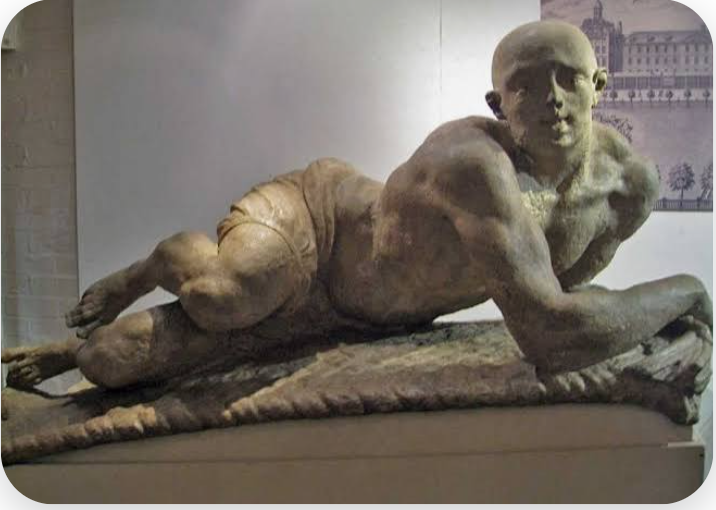
A Day Out at Bedlam
The idea of visiting a hospital to observe patients may seem almost incomprehensible today.
Yet Bethlem's visitors included ordinary Londoners and prominent figures of their time.
The experience was not necessarily identical for everyone. Some visitors approached the hospital with sympathy or genuine interest. Others treated what they saw as amusement.
That distinction matters.
The surviving history is more complicated than the familiar image of crowds arriving solely to mock helpless patients. Nevertheless, the practice exposed vulnerable people to observation by strangers who had no personal connection to their care.
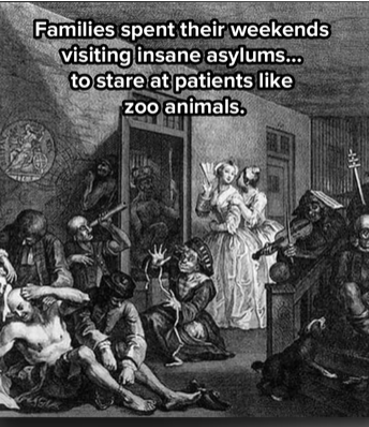
Their illness became something to look at.
Their privacy became negotiable.
And their humanity could disappear behind the curiosity of an audience.
When an Asylum Became a Convenient Prison
There was another, equally disturbing side to the history of confinement.
An accusation of insanity could sometimes become a weapon in the hands of relatives seeking control over property, inheritance, or an unwanted family member.
In eighteenth- and nineteenth-century Britain, private madhouses attracted accusations of accepting people whose confinement served the interests of others. Some individuals alleged that family members had arranged their commitment to remove them from financial affairs, silence disagreements, or prevent them from exercising control over their own lives.
The possibility that medical authority could be manipulated for personal gain became a serious public concern and helped inspire reforms intended to prevent wrongful confinement.
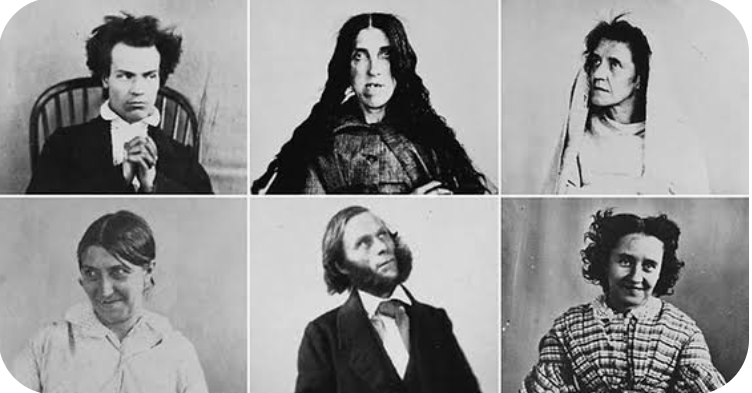
Imagine being perfectly capable of managing your own affairs, yet finding yourself imprisoned behind institutional doors because someone with greater influence wanted you out of the way.
And once confined, whose word would carry more weight—yours, or that of the people declaring you unwell?
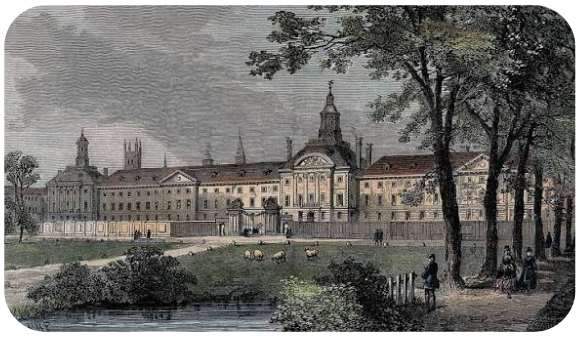
For some, the asylum represented a place of treatment. For others, it could become an instrument of control.
The cruelty lay not only in the conditions behind those walls, but in the possibility that a person's freedom could be taken away for someone else's benefit.
The Doors Begin to Close
By the eighteenth century, criticism of public visiting had grown.
In 1770, Bethlem's governors restricted general admission, replacing the earlier system with controlled access. The decision followed concerns about disorderly visitors and disturbances to patients.
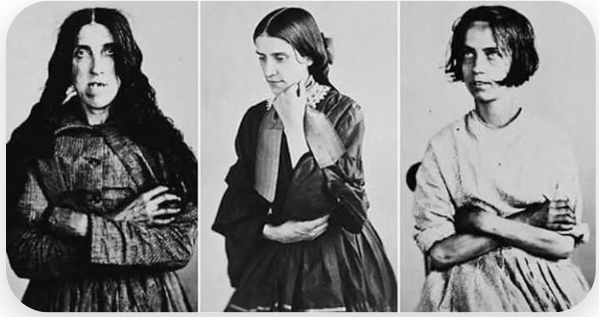
The unrestricted spectacle was coming to an end.
But Bedlam's reputation endured.
For generations afterward, its name continued to evoke frightening images of madness, confinement, and institutional neglect.
The hospital itself survived, changing locations and evolving alongside the development of psychiatric care.
Bethlem Royal Hospital remains part of London's mental-health history, while the Bethlem Museum of the Mind preserves and interprets the institution's complicated past.
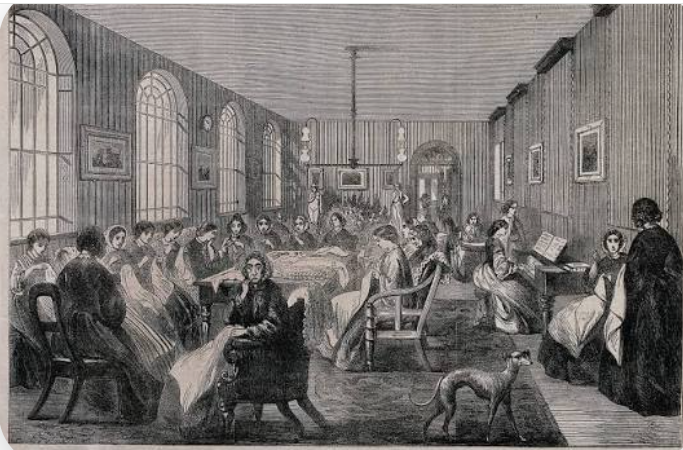
The People Behind the Spectacle
It is easy to examine Bedlam through the lens of historical horror.
Its dramatic buildings, unsettling reputation, and curious visitors seem almost designed for a Gothic tale.
But this was never simply a story about an extraordinary building.
It was a story about people.
People who were ill, frightened, misunderstood, or unable to defend themselves against the judgment of strangers.
The most disturbing question may not be why people visited Bedlam centuries ago.
It may be why human suffering has so often attracted an audience.
Even today, sensational stories about mental illness can turn vulnerable individuals into objects of curiosity rather than subjects deserving understanding.
Bedlam reminds us that compassion and spectacle can occupy the same society—and that the difference between them lies in how we choose to see another human being.
The greatest tragedy of Bedlam was not that people came to watch. It was that the people being watched had become the entertainment.
#GothicDustDiaries #Bedlam #BethlemRoyalHospital #DarkHistory #ForgottenHistory #MentalHealthHistory #VictorianHistory #LondonHistory #HistoricalCuriosities #HumanDignity
One historical refinement: although the general public could visit until 1770, the popular claim that families routinely paid admission to torment patients oversimplifies the surviving evidence. The historical record supports public viewing, visitor donations, and documented disturbances, but not every sensational detail repeated online.