
Black Sheep of the Family
Born Different. Judged Differently. Unapologetically Unique.
Every family has one. The one who doesn't quite match the flock.
The rebel. The dreamer. The questioner. The one who refuses to follow the path everyone else has chosen.
Sometimes they're outspoken. Sometimes they're quiet observers who simply see the world differently. They may challenge traditions, question authority, reject expectations, or pursue dreams that others consider foolish.
They are the ones who never quite fit the family mold.
And somewhere along the way, someone gives them a name.
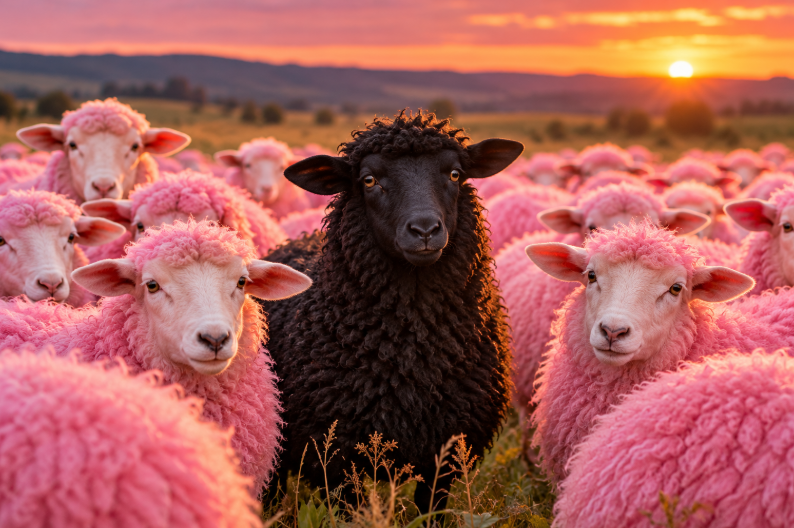
The black sheep of the family.
For generations, the expression has carried an unmistakably negative meaning. Being called the black sheep suggested embarrassment, disgrace, rebellion, or failure to conform.
But how did an innocent animal with an unusual coat become a symbol of family disapproval?
And why have so many people begun wearing that once-unwelcome title with pride?
The story begins long before modern psychology, family disagreements, or rebellious children.
It begins in a pasture.
The Sheep That Didn't Belong
Imagine a flock of sheep grazing across the English countryside centuries ago.
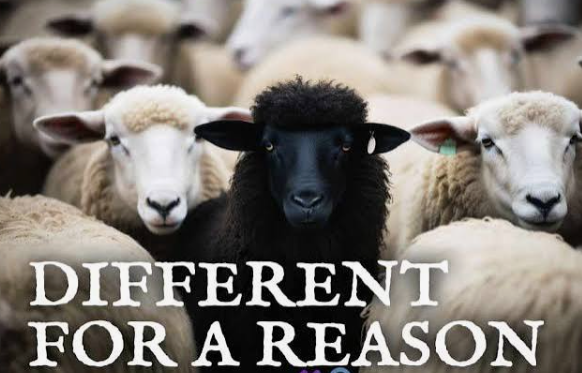
Nearly every animal wears a coat of creamy white wool. Then, among them, stands one with a coat as dark as midnight.
The animal is perfectly ordinary in every respect except its color.
Yet that difference mattered.
For centuries, wool was an important agricultural commodity. White wool was particularly valuable because it could be dyed into numerous colors. Naturally dark wool offered fewer possibilities for dyers, making it less desirable in certain markets.
Black wool was not worthless, however. It could be used in its natural color, and its value depended on the needs of the market.
Still, the contrast between the dark sheep and its lighter companions provided a powerful metaphor.
One sheep looked different from the rest.
And difference, as history repeatedly demonstrates, has not always been welcomed.
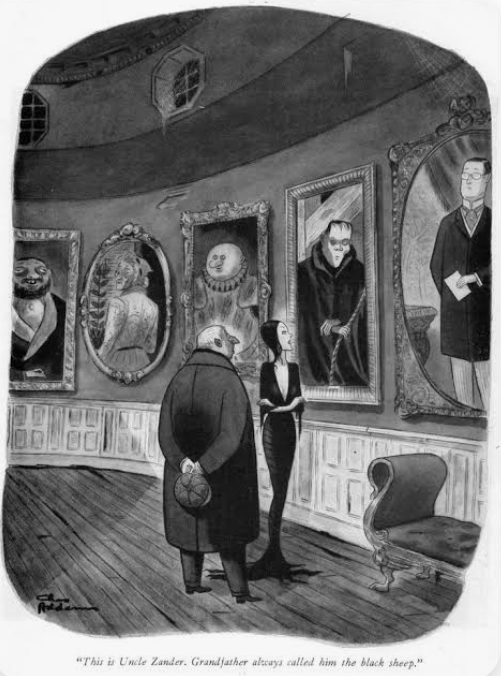
Over time, the black sheep became associated with the troublesome or disreputable member of a family or community.
The expression was already being used figuratively in English centuries ago, eventually becoming firmly established in everyday speech.
But the symbolism surrounding black sheep was never entirely negative.
An Omen of Misfortune—or Good Luck?
In earlier European societies, unusual animals frequently attracted superstition.
A creature born with an unexpected color or marking could be interpreted as a warning, a blessing, or evidence of supernatural influence.
Black animals, in particular, became entangled with folklore surrounding darkness, witchcraft, and the unknown.
Yet the black sheep occupied an interesting position in these traditions.
While some regarded its appearance with suspicion, others considered it fortunate.
In parts of England, including Sussex, Somerset, Kent, and Derbyshire, the presence of a black sheep in a flock was traditionally regarded as a sign of good luck.
Imagine that.
The very animal that eventually became a symbol of disgrace could also be welcomed as a blessing.
Perhaps that contradiction tells us more about human nature than it does about sheep.
What one person considers undesirable, another may consider extraordinary.
The Black Sheep in Scripture
Sheep appear frequently throughout biblical literature, often representing innocence, sacrifice, prosperity, or the relationship between a shepherd and his flock.
One particularly interesting passage appears in Genesis 30.
In the story, Jacob negotiates with Laban over his wages, agreeing to receive certain unusually colored animals from the flock.
The account includes speckled, spotted, and dark-colored sheep.
Early English translations, including the sixteenth-century Coverdale Bible, helped establish these descriptions in the language of English-speaking readers.
However, the biblical passage does not explicitly describe such animals as morally inferior.
The distinction concerns their appearance and their role in Jacob's agreement.
Nevertheless, the story offers an intriguing historical connection between unusually colored sheep and the idea of animals being separated from the larger flock.
It is worth remembering that the biblical account and the later expression black sheep of the family are not necessarily directly connected.
Sometimes a symbol develops meaning through centuries of storytelling rather than through one identifiable source.
Baa, Baa, Black Sheep
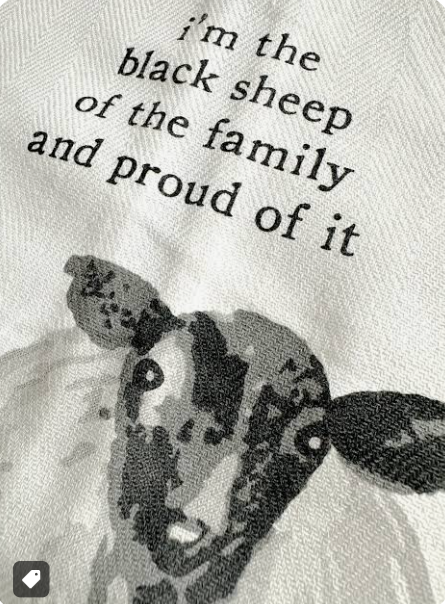
Long before most children understand the expression's darker implications, they encounter a black sheep in one of the English language's most familiar nursery rhymes.
Baa, Baa, Black Sheep appeared in print by approximately 1744, in Tommy Thumb's Pretty Song Book.
Its familiar opening asks the sheep whether it has any wool.
And, of course, the sheep does.
Three bags full.
Over the years, numerous interpretations have surrounded the rhyme, including suggestions that it refers to medieval wool taxation or social inequality.
Such explanations are interesting, but their historical foundations remain disputed.
What is certain is that the black sheep had become a recognizable figure in English popular culture long before the modern expression acquired its present emotional significance.
The nursery rhyme itself does not portray the animal as wicked or rebellious.
It simply has wool to offer.
Perhaps the sheep was never the problem.
Perhaps the problem was how people chose to interpret its color.
When the Black Sheep Became Human
Eventually, the expression moved beyond the pasture.
The black sheep became the relative who embarrassed the family, rejected accepted behavior, or refused to meet expectations.
In strongly traditional households, this could mean marrying someone considered unsuitable, choosing an unconventional occupation, questioning religious beliefs, or rejecting a predetermined future.
In other families, the label might be reserved for someone whose behavior was genuinely destructive.
And therein lies an important distinction.
Not every black sheep is a misunderstood visionary.
Some individuals earn the description through harmful behavior.
Others receive it simply because they are different.
An artist born into a family of accountants.
A traveler raised among people who never leave their hometown.
A daughter who refuses to accept that her ambitions should be limited by expectations of what a woman ought to become.
A son who questions traditions that generations before him followed without hesitation.
Sometimes the black sheep is not the person who causes trouble.
Sometimes they are simply the person asking questions nobody wants to answer.
And sometimes, being different is enough to make others uncomfortable.
The Psychology of the Black Sheep Effect
Interestingly, psychology has a name for a phenomenon closely related to this experience.
It is called the Black Sheep Effect.
In 1988, researchers José Marques, Vincent Yzerbyt, and Jacques-Philippe Leyens published research examining how people evaluate members of their own groups.
Their findings suggested that individuals may judge an undesirable member of their own group more harshly than a similarly undesirable outsider.
Conversely, they may evaluate a highly desirable member of their own group more favorably.
Why?
Because group membership is closely connected to identity.
Families, communities, organizations, and social groups develop shared expectations about acceptable behavior.
When someone violates those expectations, the group may experience that difference as a threat to its collective identity.
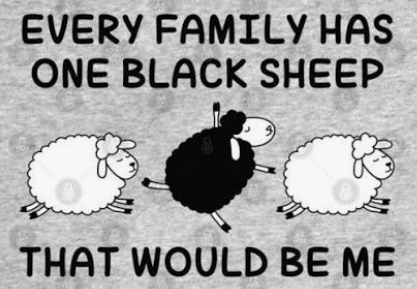
Distancing itself from the offending member can become a way of protecting the group's reputation.
The research was not limited to families, but its implications help explain why disagreements within families can become particularly intense.
A stranger may be forgiven for holding an unconventional opinion.
A family member expressing that same opinion may be accused of betrayal.
The difference is not necessarily the opinion itself.
It is the expectation that members of the same group should think and behave alike. Wiley Online Library
The Family Scapegoat
There is another distinction worth exploring.
The black sheep and the family scapegoat are sometimes treated as interchangeable, but they are not necessarily the same.
A black sheep may genuinely reject the family's expectations.
A scapegoat, however, is someone who receives disproportionate blame for problems within a group.
In dysfunctional family relationships, one member may become the convenient explanation for disagreements, disappointments, or unresolved tensions.
Rather than examining the family's broader problems, attention becomes focused on the supposedly troublesome individual.
The person who speaks openly about a problem may even become more unpopular than the person responsible for creating it.
But not every family outsider is a scapegoat, and not every disagreement represents mistreatment.
Understanding the difference matters.
Being unconventional does not automatically make someone right.
Neither does being surrounded by people who disagree automatically make someone wrong.
The question is whether a person is being judged for what they have actually done—or merely for refusing to conform.
The Black Sheep Who Changed the Rules
History offers countless examples of individuals who challenged the expectations of their families, communities, or societies.
Some were artists whose work was initially rejected.
Others were scientists who questioned accepted explanations, reformers who challenged established institutions, or women who refused to accept the narrow roles available to them.
Consider Jessica Mitford, born into an aristocratic British family famous for its dramatically different political beliefs.
Mitford rejected much of her family's traditional world and embraced left-wing political activism.
She reportedly described herself as the family's “red sheep”—a variation on the familiar expression that reflected her own convictions.
Her story illustrates something important.
The outsider is not always someone who has failed to meet expectations.
Sometimes the outsider has deliberately chosen different expectations.
And there is a world of difference between those two things.
Reclaiming the Black Sheep
Today, the expression is undergoing something of a transformation.
For some people, being the black sheep is no longer an accusation.
It is a declaration of independence.
It means refusing to surrender individuality simply to earn approval.
It means understanding that family traditions can be meaningful without being mandatory.
It means recognizing that belonging should not always require becoming someone else.
Of course, independence carries responsibilities.
Being unconventional does not excuse cruelty, dishonesty, or disregard for others.
And rebellion for its own sake is not necessarily admirable.
But neither is conformity simply because it makes everyone else comfortable.
There is something remarkable about people who are willing to examine inherited beliefs and decide for themselves which ones deserve to continue.
Sometimes they preserve those traditions.
Sometimes they change them.
And sometimes they walk away entirely.
A Day for the Black Sheep?
In recent years, social-media posts have occasionally referred to October 1 as National Black Sheep of the Family Day.
Despite the appealing idea, there is no well-established historical evidence that this is an officially recognized or widely observed annual holiday.
The date appears to be an informal internet celebration rather than a longstanding tradition.
But perhaps a formal holiday is unnecessary.
After all, the black sheep has spent centuries being told it doesn't belong.
Why should it need permission to celebrate its individuality?
The Beauty of Being Different
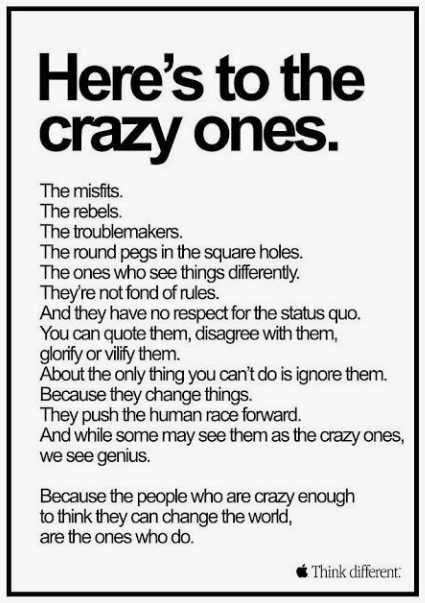
There is an old assumption that belonging requires similarity.
That families should share the same values, ambitions, beliefs, and expectations.
That the safest path is the one already traveled.
That standing apart from the crowd is somehow evidence of failure.
But a flock composed entirely of identical sheep would be a rather uninteresting sight.
The black sheep introduces contrast.
It challenges the assumption that sameness is the natural measure of worth.
And perhaps that is why the expression has survived for so long.
It speaks to something deeply human: the tension between our desire to belong and our need to remain ourselves.
Some people spend their lives trying to escape the label.
Others eventually discover that it fits them perfectly.
They stop apologizing for their unusual interests, independent thinking, unconventional dreams, or refusal to follow a predetermined script.
They understand that being different may come with misunderstanding, criticism, and occasionally loneliness.
But it can also bring freedom.
Freedom to question.
Freedom to explore.
Freedom to dream beyond the boundaries someone else has drawn.
And freedom to become a person who could never have existed by simply following the flock.
So, to every black sheep who has ever been told they were too different, too outspoken, too curious, too independent, or simply too much—perhaps the problem was never the color of your wool.
Perhaps the world just needed a little more contrast.
And if you happen to be the black sheep of your family? Drop me a line and tell me your story.
Then, whatever you do… Wear it proudly.
#GothicDustDiaries #BlackSheepOfTheFamily #BlackSheep #FamilyDynamics #BlackSheepEffect #Individuality #Nonconformist #BeDifferent #Unconventional #Psychology #HistoryAndFolklore #ArcaneMusings #FamilyTraditions #EmbraceYourUniqueness #ThinkForYourself