
Spanish Moss - Old Man's Beard
Legends, Ghosts, and the Truth Behind the South's Most Mysterious Plant
https://youtube.com/shorts/O8xzRirpC9A
One of the first things visitors notice when visiting the Deep South is the graceful gray strands hanging from ancient live oaks. Spanish moss has become one of the most recognizable symbols of Florida, Georgia, and the coastal South. It creates a landscape that feels timeless—sometimes peaceful, sometimes haunting.
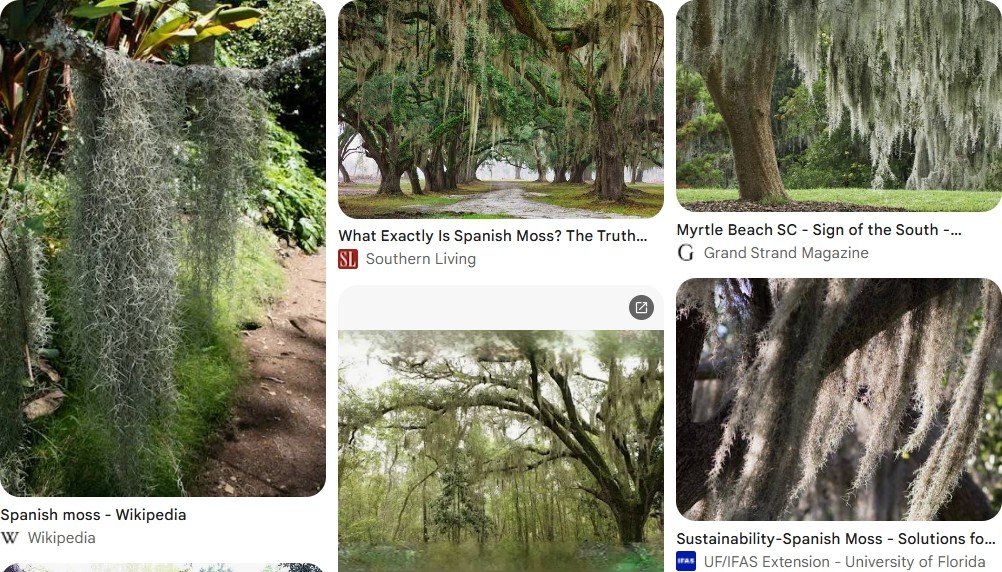
Over the centuries, this remarkable plant has inspired countless legends.
One of the oldest Southern legends tells of a cruel old man whose long gray beard became tangled in the branches of towering oak trees. As he struggled to escape, strands of his beard were torn away and remained hanging from the limbs forever. Locals began referring to the mysterious gray strands as the old man's beard.
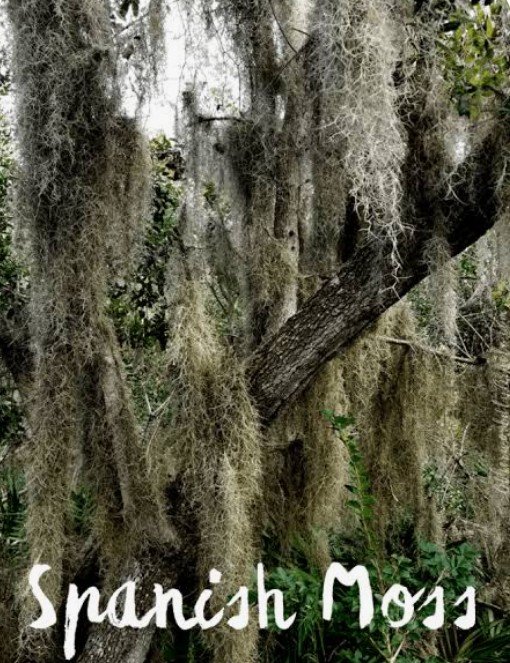
In several Native American legends, the moss represents the beautiful hair of a young woman. Some versions tell of a princess mourning the loss of her beloved. Others speak of sacrifice, courage, or eternal devotion. Although each tribe tells the story differently, the common thread is that the hanging moss became a lasting reminder of love, loss, and remembrance.
As generations passed, Spanish moss became closely associated with haunted plantations, forgotten churches, and old cemeteries. Its appearance helped inspire countless ghost stories, Gothic novels, and Hollywood films. To this day, a moss-draped oak silhouetted against the evening sky instantly creates an atmosphere of mystery.
Yet despite all the folklore, the truth is every bit as fascinating.
Spanish moss is neither Spanish nor moss.
It is actually an air plant, belonging to the bromeliad family, making it a distant relative of the pineapple.
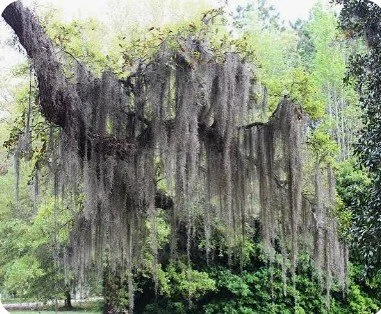
Unlike parasites, Spanish moss does not steal nutrients from the trees it grows upon. Instead, it anchors itself to branches while collecting moisture and nutrients directly from the air, rain, and dust. The tree simply serves as a convenient place to live.
Another common myth claims Spanish moss is "filled with chiggers."
While insects may occasionally inhabit fallen moss lying on the ground, healthy Spanish moss growing high in trees is not naturally infested as many people believe.
More Than Just Folklore
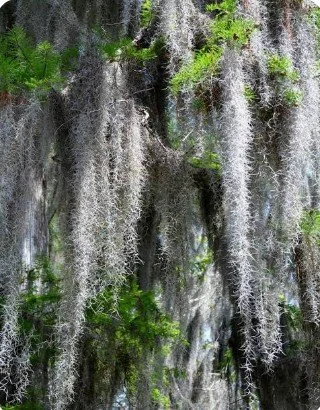
Beyond its legends and mysterious appearance, Spanish moss also found practical uses throughout history. Indigenous peoples and early settlers used it for mattress stuffing, insulation, rope, and even packing material. In traditional folk medicine, it was sometimes prepared as teas, poultices, or tinctures and used for ailments ranging from inflammation to fever. While modern research into its medicinal properties continues and scientific evidence remains limited, its long history reminds us that many of nature's most ordinary-looking plants have served generations in remarkable ways.
Perhaps the greatest lesson of Spanish moss is that even something often misunderstood or overlooked can have beauty, purpose, and value.
Today, Spanish moss remains one of the defining images of the American South. Whether viewed through the lens of folklore, history, botany, or photography, it continues to capture our imagination just as it has for centuries.
It isn't Spanish. It isn't moss. Yet it has become one of the most recognizable symbols of the American South.