
The Skin-Bound Tomes
Creaking leather sound fades into a whisper
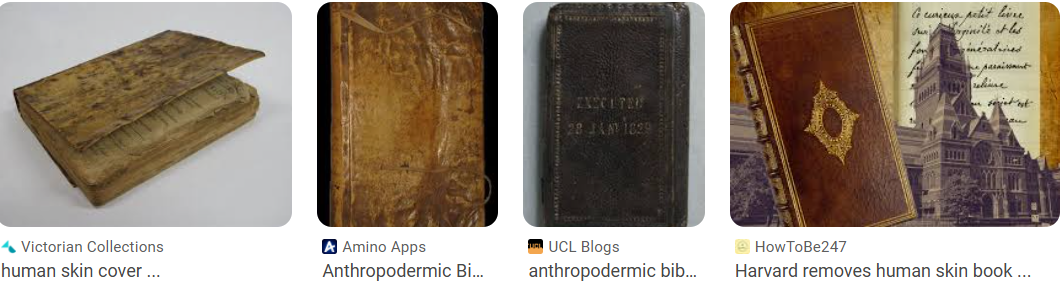
Welcome, seekers of the shadowed unknown, to @gothicdustdiary; your guide through the eerie depths. Today we unveil a chilling relic—books bound in human skin, a practice known as anthropodermic bibliopegy. Picture this: pages crafted like any tome, yet the covers whisper tales of flesh, replacing animal hide with the very essence of humanity.
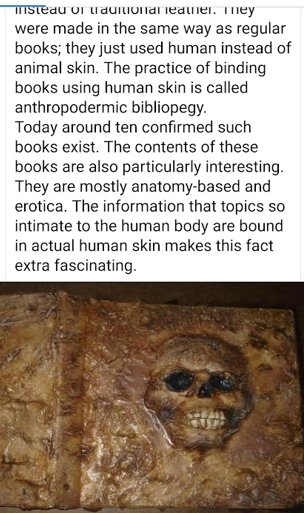
This macabre art, dating back to the 16th century, peaked in the 19th century when anatomists and collectors turned cadavers into literature. Today, around ten confirmed examples exist, their rarity a testament to their grim allure. Housed in libraries like Harvard’s Houghton or the College of Physicians of Philadelphia, these books are no mere curiosities—their contents delve into anatomy and erotica, subjects so intimate they seem to pulse with the skin that binds them. Imagine a medical text, its diagrams etched over a donor’s dermis, or an erotic tale wrapped in the flesh of its muse—morbid fascination indeed.
The process mirrored traditional bookbinding: skin was flayed, tanned with salts and oils, and stretched taut over boards, sometimes inscribed with the donor’s name. Origins vary—some skins came from executed criminals, others from unclaimed bodies, and a few, disturbingly, from willing donors. The 1837 case of John Horwood, whose skin bound his confession after his hanging, or the 1860s French erotica volume, rumored from a courtesan, fuel the gothic shiver. X posts speculate on lost volumes, with users joking, “My library’s overdue for a skin upgrade!”—yet the reality is a haunting blend of science and taboo.

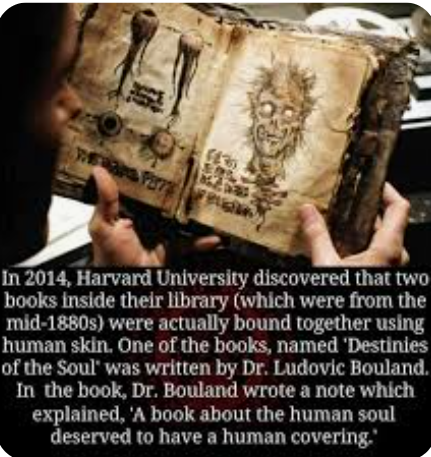
These tomes reflect a darker human impulse—control over death, a literal wearing of the past. Anatomy texts, like those from the 18th-century surgeon’s table, offered practical knowledge, while erotica bound in human flesh blurs desire with decay, a gothic paradox. Scholars debate ethics, with some calling it a violation, others a preserved history. The morbidity deepens when you consider the donors—were they complicit, or stolen? This ambiguity cloaks the books in an unseen narrative, perfect for late-night musings.
For your gothic soul, these skin-bound relics are more than artifacts—they’re portals to the unseen, where the body’s secrets are eternally etched.