
When Satire Becomes Scripture
Modern Mythologies, Invented Faiths, and the Strange Persistence of Belief
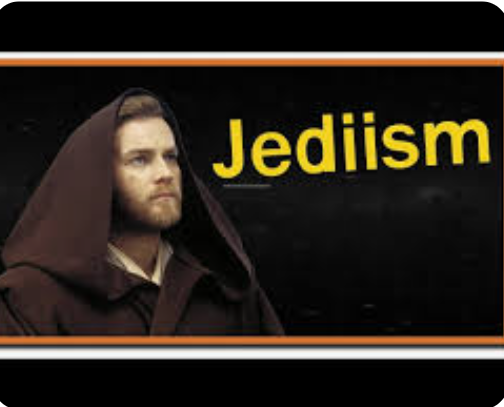
In the strange intersection between imagination and belief lies one of the most curious questions of modern society: what truly makes a religion? Over the past few decades, people around the world have written unexpected answers on official forms—everything from Jedi inspired declarations to followers of Flying Spaghetti Monster. What began for many as humor, protest, or commentary has often evolved into something far more reflective: a lens through which people examine authority, identity, and the human need to attach meaning to symbols.
Even when born from satire, these modern belief systems reveal something deeply ancient. Humanity has always wrapped morality, fear, wonder, and philosophy into stories powerful enough to outlive their origin. The names change, the imagery shifts, but the instinct remains the same.
The rise of modern symbolic religions is not simply a joke against institutional faith. In many cases, it is a reaction to bureaucracy, legal definitions, and the uncomfortable question of who decides what counts as sacred. When some individuals listed Jedi as religion on census forms, it was partly playful—but also philosophical. The idea of discipline, balance, restraint, and unseen force resonated because those themes already belong to humanity’s oldest spiritual language.
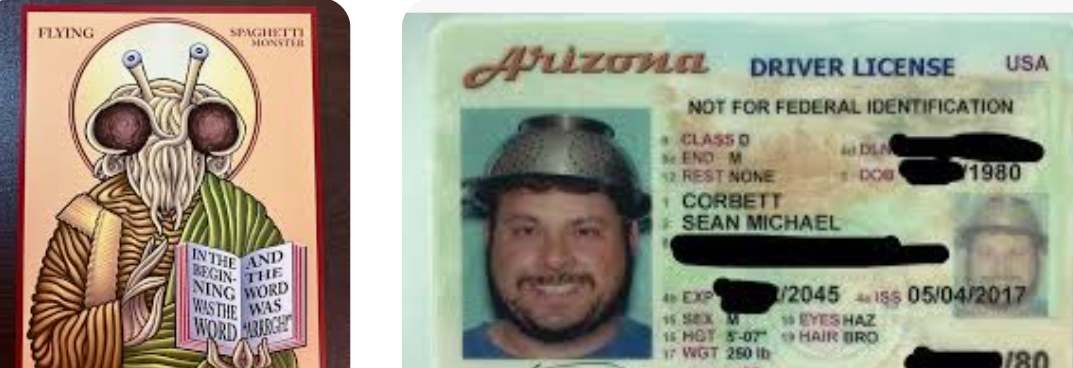
The same paradox surrounds Pastafarianism. What began as criticism of selective religious accommodation soon developed into its own strange cultural iconography: colanders worn in identification photos, pirate references, and a deliberately absurd creator made of noodles and divine humor. Yet beneath the absurdity lies a very old function of myth: using symbols to expose power structures.
Ancient civilizations often began no differently than this, though history has polished their origins into solemn permanence. Storm gods once explained lightning because lightning demanded explanation. Sea gods governed oceans because survival depended on forces no one controlled. A symbol became ritual; ritual became doctrine; doctrine became inheritance.
Today the symbols are different, but the mechanism remains familiar.
A lightsaber, though fictional, easily becomes modern ritual imagery because it already borrows from older archetypes: the disciplined initiate, the hidden order, the battle between inner darkness and restraint. In many ways, Jedi language echoes fragments of older philosophical traditions, particularly ideas resembling discipline found in Stoicism and balance often associated with Eastern metaphysical systems.
What makes these movements fascinating is not whether they qualify legally, but why they emerge so naturally. Human beings rarely tolerate a purely empty symbolic landscape. If traditional structures weaken, new ones appear—sometimes sincere, sometimes ironic, often both at once.
Even satire can become meaningful when repeated enough times. Ritual has never depended entirely on origin. Many old customs survive long after their first explanation faded. A symbol used ironically today may become identity tomorrow.
For Arcane Musings, this raises a darker and more beautiful thought: mythmaking never disappeared. It merely learned to wear modern clothing.
Ancient people watched the stars and imagined gods moving through darkness. Modern people watch distant galaxies through cinema and imagine moral codes hidden in fictional orders. One generation offered incense to unseen heavens; another quotes invented creeds that still somehow carry emotional truth.
The object matters less than the instinct behind it.
Whether sincere belief, philosophical experiment, satire, or quiet rebellion, these unconventional religions reveal something constant beneath civilization: humans remain creatures who search for order inside mystery.
And perhaps that is why even the most unusual symbols endure.
Somewhere between satire and spirituality, someone still lights a candle, someone still asks what governs fate, and someone still wonders whether meaning can be found in stories powerful enough to survive repetition.
Sometimes that search begins with a temple.
Sometimes with a galaxy far away.
And sometimes, improbably, with a cosmic bowl of spaghetti.

Brief Footnotes on Unusual Belief Systems
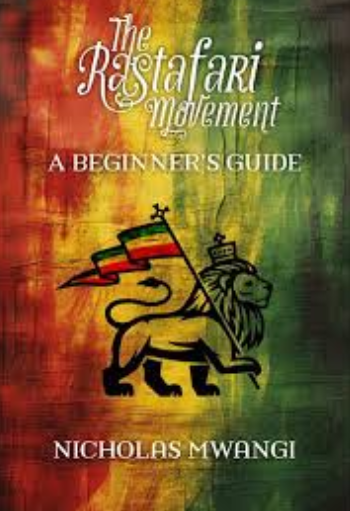
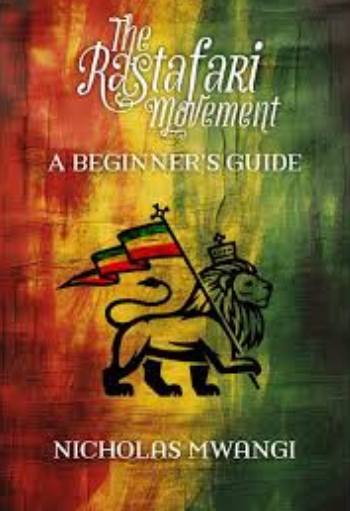
Rastafari movement -- Often called Rastafarianism in casual speech, the movement emerged in Jamaica during the 1930s and centers on spiritual identity, African heritage, and the recognition of Haile Selassie as a divine figure by many adherents. Though often misunderstood through popular culture, it carries deep themes of liberation, resistance, and sacred living.
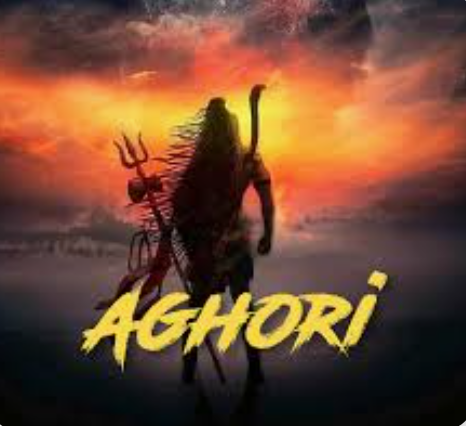
Aghori -- The Aghori are an ascetic order associated with radical renunciation within certain branches of Hindu tradition. Known for confronting death and impurity directly, they use extreme symbolic practices to challenge attachment and fear, seeking spiritual transcendence beyond ordinary social boundaries.
Raëlism -- Raëlism teaches that life on Earth was scientifically created by extraterrestrial beings called Elohim. Founded in the 1970s, it blends UFO belief, scientific language, and philosophical ideas about human origins and future cloning.
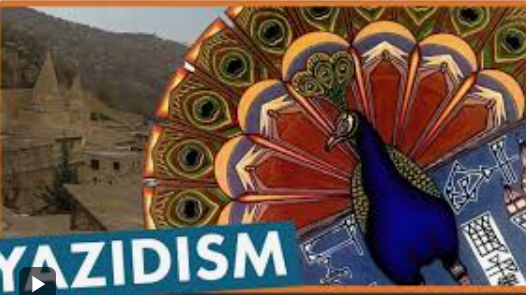
Yazidism -- Often misspelled as “Yawai,” Yazidism is an ancient monotheistic faith rooted mainly in Iraq and surrounding regions. Its traditions combine older Mesopotamian, Persian, and Abrahamic elements, with strong symbolic reverence for angelic beings.
Universe People -- Originating in the Czech Republic, Universe People teaches that extraterrestrial civilizations communicate spiritual warnings to humanity. Its worldview mixes apocalyptic expectation, cosmic salvation, and moral purification.
Church of Euthanasia -- Founded in Boston, this provocative movement uses satire and radical environmental messaging to argue that humanity should reduce reproduction to protect planetary survival. Its language is intentionally confrontational and symbolic rather than conventionally devotional.
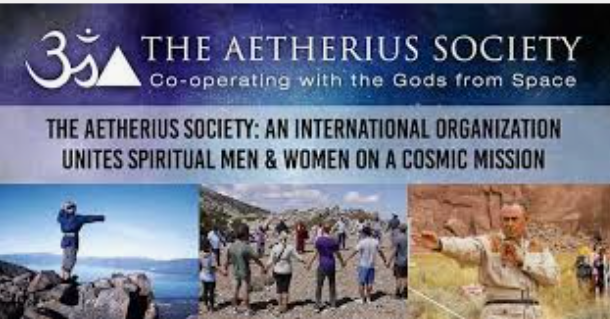
Aetherius Society -- Often misspelled as “Etharia,” the Aetherius Society combines spiritual teachings with belief in advanced cosmic intelligences guiding humanity. It presents prayer, energy work, and extraterrestrial communication as interconnected sacred acts.
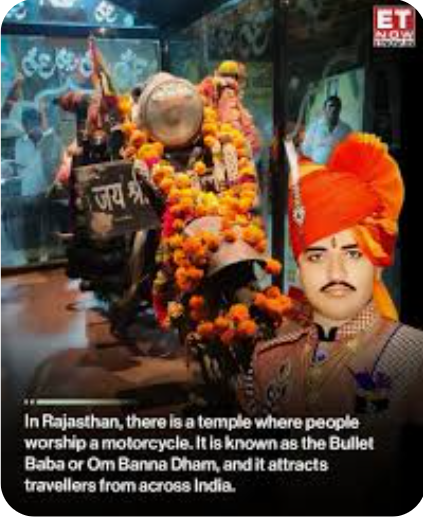
Bullet Baba -- A roadside shrine in Rajasthan centered around a motorcycle said to have belonged to a man named Om Banna, who died in a crash near that location. Local accounts say the motorcycle repeatedly returned to the crash site after police removed it, which led people to believe the place carried spiritual significance.
Of these, Rastafari and Yazidism are ancient or historically rooted enough that they are not satire-based in the same category as Jedi or Pastafarianism. These serve as contrast examples rather than direct parallels.

These examples represent only a small fraction of the unusual belief systems that exist across cultures, eras, and modern societies. Some emerge from satire, some from philosophy, some from ancient ritual, and some from tragedy woven into place. Perhaps that is why the subject remains so compelling: no matter the age, humans continue to shape meaning through symbol, story, and belief — and there may yet be more worth exploring in time.