
Gateway to Ancient Egypt
Heracleion: The Egyptian City the Sea Swallowed
For centuries, Heracleion existed somewhere between history and legend.
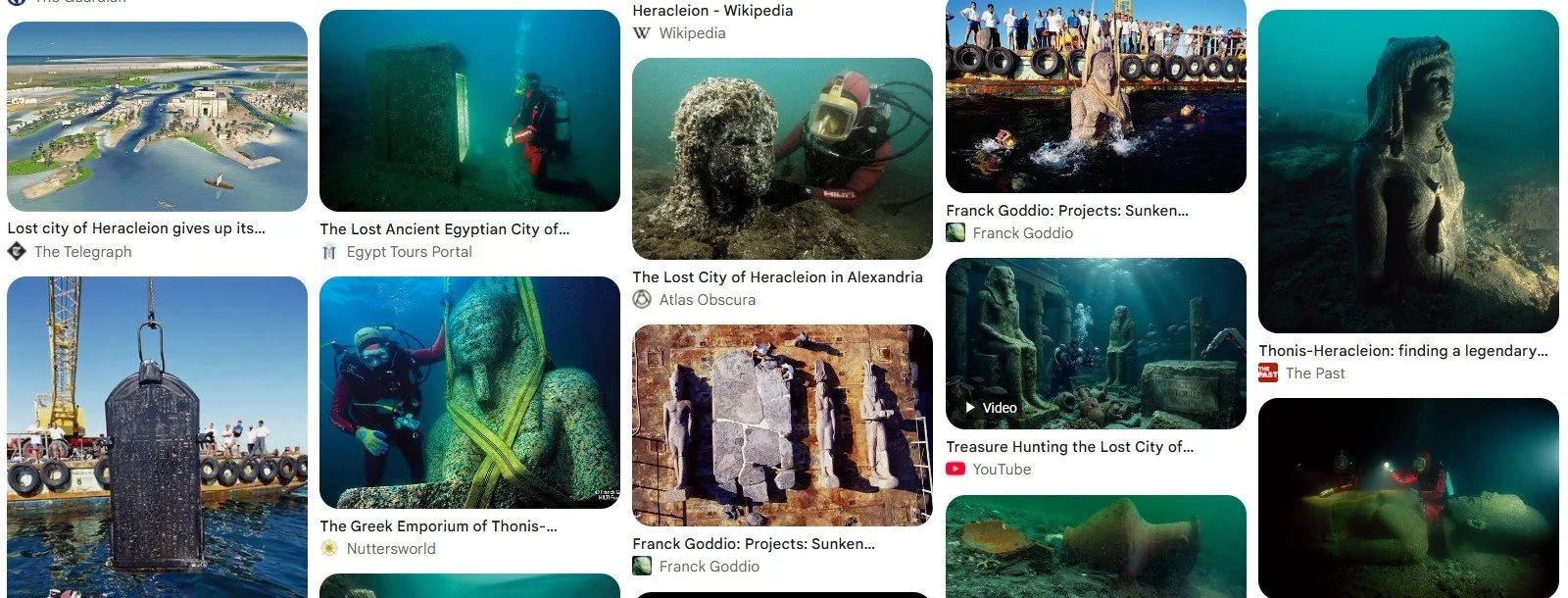
Ancient writers spoke of a prosperous Egyptian port near the mouth of the Nile—a city of temples, ships, merchants, priests, and extraordinary wealth. Greeks knew it as Heracleion. Egyptians called it Thonis.
And then it disappeared.
Not merely abandoned. Not reduced to picturesque ruins beneath desert sand.
The city vanished beneath the water.
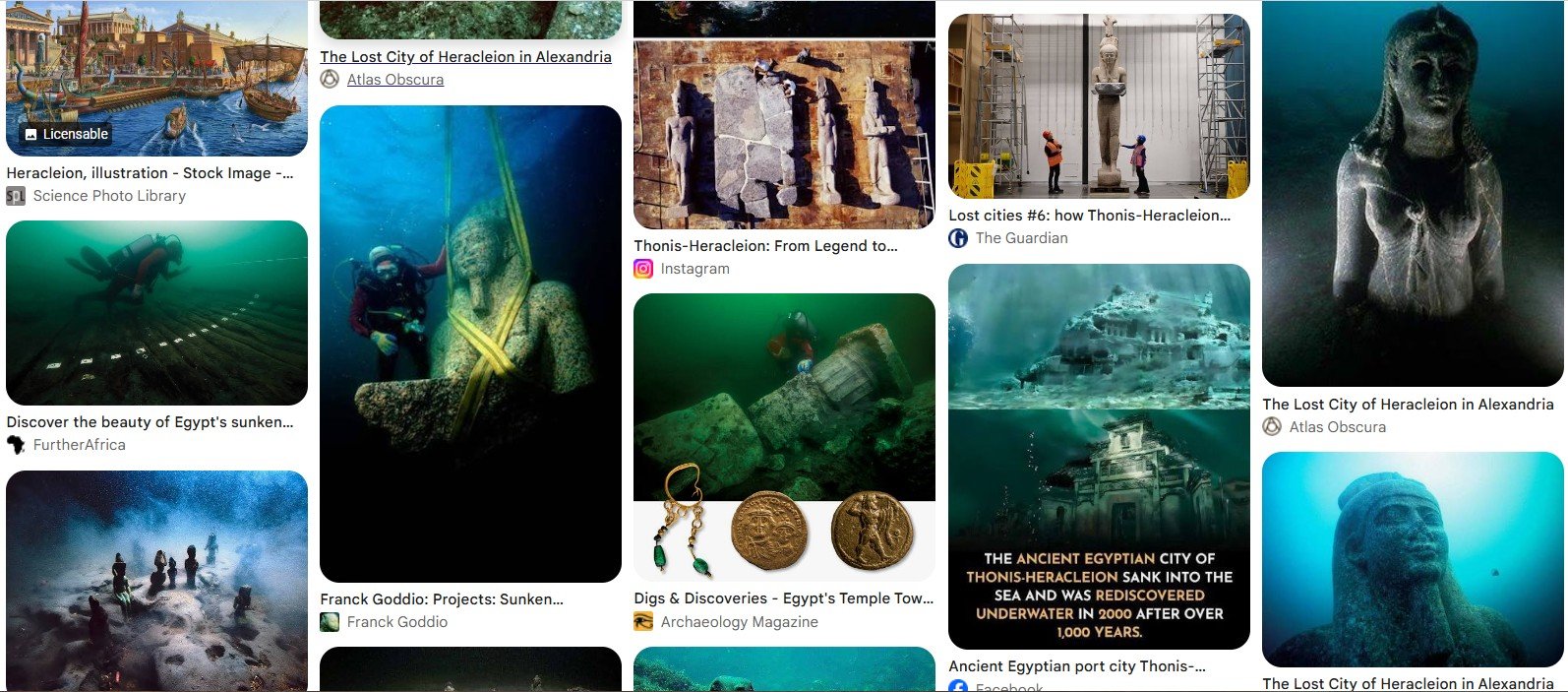
For more than a thousand years, the Mediterranean kept it.
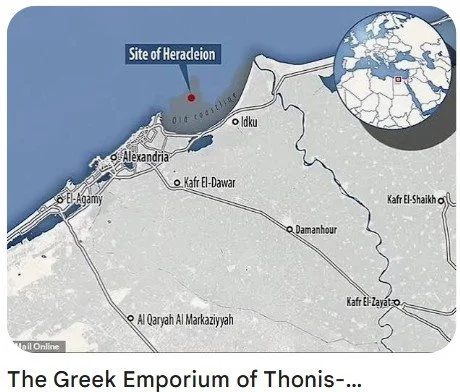
Long before Alexandria became Egypt's great Mediterranean port, Thonis-Heracleion stood at one of the principal entrances into the country.
Its position near the Canopic mouth of the Nile made it an important point of contact between Egypt and the Mediterranean world. Ships arriving from abroad passed through this region, bringing goods, people, beliefs, and cultures with them.
This was not an insignificant coastal village.
Heracleion was a thriving port and religious center filled with harbors, canals, buildings, ships, and temples. At its heart stood a great temple dedicated to the god Amun-Gereb.
The city also occupied an intriguing place between Egyptian and Greek cultures. Its two names—Thonis and Heracleion—were once thought by some scholars to refer to separate places. Archaeological discoveries eventually helped establish that they were names for the same city.
But prosperity could not protect Heracleion from the ground beneath it.
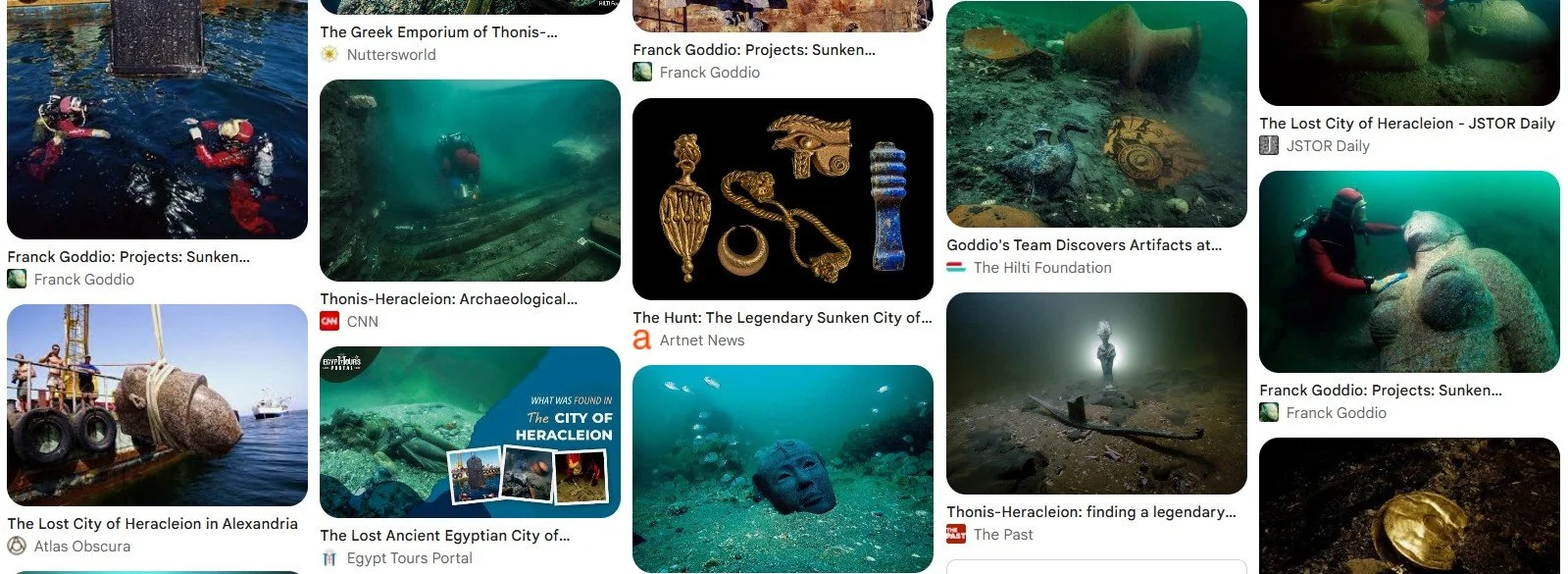
When the Earth Gave Way
Heracleion was constructed upon unstable, water-saturated ground in the Nile Delta.
Over centuries, earthquakes, rising water, subsidence, and a phenomenon known as soil liquefaction contributed to portions of the region collapsing. During liquefaction, saturated soil can temporarily lose its strength, causing heavy structures to sink or topple.
Gradually—and perhaps during episodes of sudden catastrophe—the city succumbed.
Temples fell.
Buildings disappeared.
Stone monuments sank into the sediment.
The sea moved over streets where people had once walked.
By around the eighth century AD, Heracleion had effectively disappeared beneath Abu Qir Bay.
Eventually even its location was lost.
A City Found Again
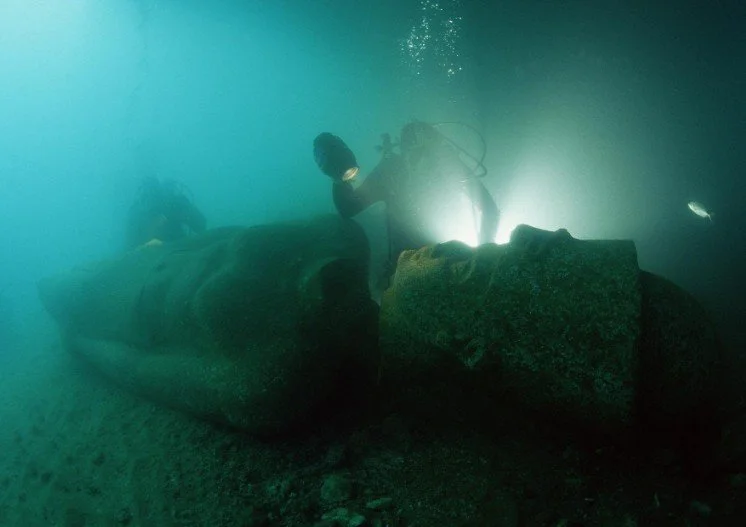
More than a millennium later, underwater archaeologist Franck Goddio and his team began surveying the waters of Abu Qir Bay.
In 2000, the lost city emerged from history.
Beneath layers of sediment lay the remains of an extraordinary ancient urban landscape.
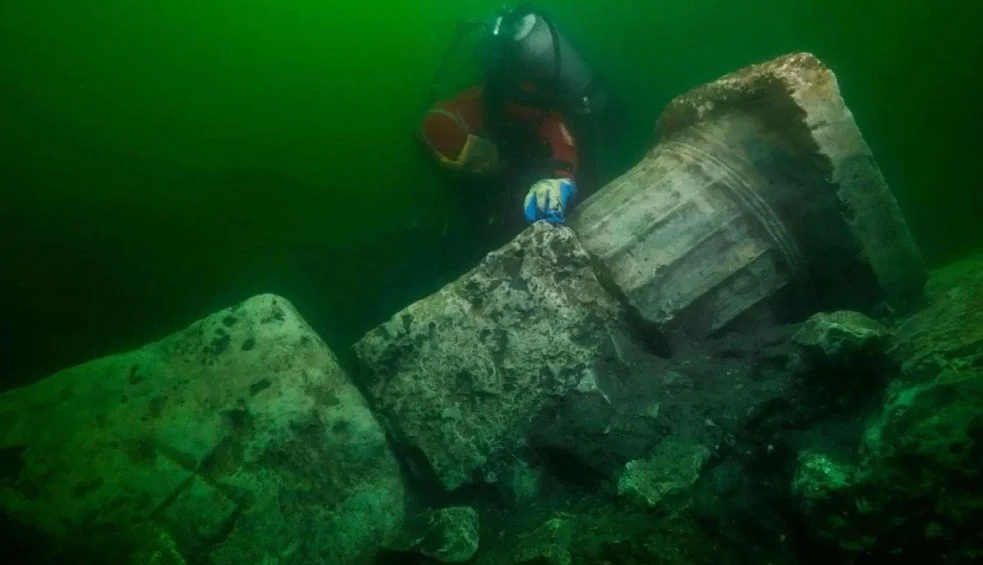
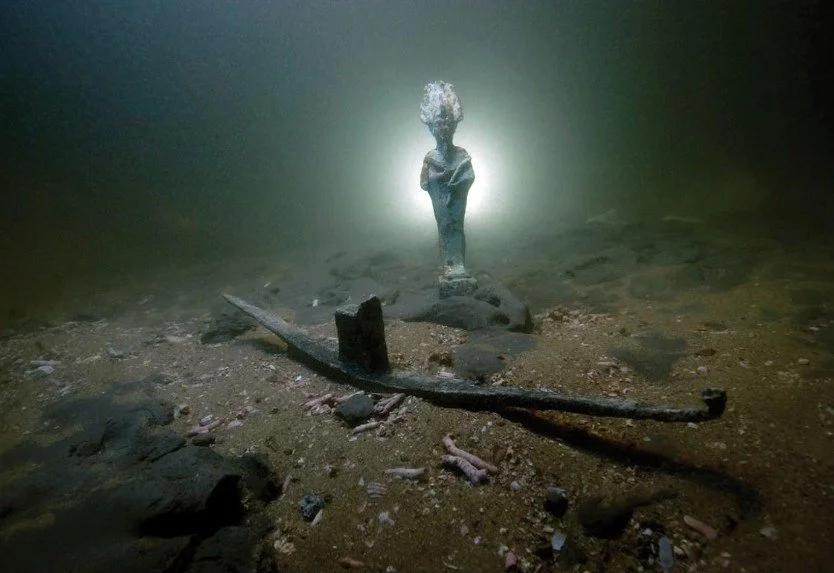
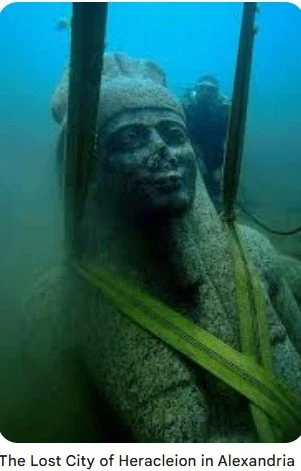
Archaeologists discovered colossal statues, temple ruins, inscriptions, jewelry, coins, ritual objects, pottery, anchors, and the remains of numerous ancient ships.
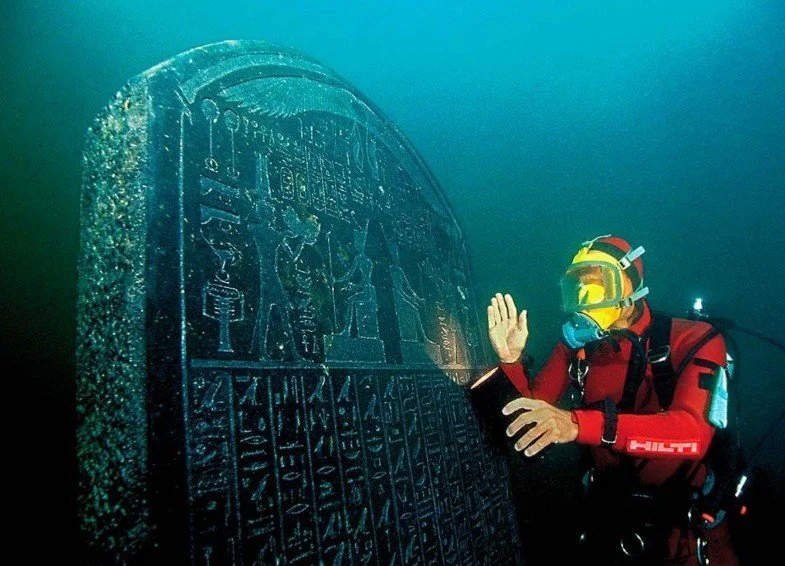
One particularly important discovery was a large, inscribed stone known as a stele. Its inscriptions helped confirm the identity of the submerged city and its connection to ancient Thonis.
The seabed had done something remarkable.
It had hidden the city—but it had also preserved it.
Objects that might have been destroyed, dismantled, reused, or scattered on land remained beneath layers of sediment, waiting for someone to find them.
Ships Beneath the Sand
Among Heracleion's most fascinating discoveries are its ancient shipwrecks.
Dozens of vessels have been identified in and around the submerged city, providing archaeologists with an extraordinary glimpse into Egyptian shipbuilding, commerce, and life within one of antiquity's busiest ports.
Anchors scattered across the ancient harbor floor testify to the constant movement of vessels that once passed through the city.
Imagine that harbor at its height.
Sails on the horizon.
Merchants unloading cargo.
Priests moving toward the temples.
Foreign sailors entering Egypt through its maritime gateway.
Then imagine the same place today—silent beneath several meters of water.
The City That Wasn't a Legend
There is something especially compelling about lost-city stories because they so easily drift into mythology.
Atlantis has been sought for generations. Other submerged formations inspire endless arguments over whether nature or human hands created them.
Heracleion is different.
The city is real.
Its statues can be raised from the seabed. Its inscriptions can be read. Its ships can be studied. Its temples can be mapped.
A place once known primarily through ancient texts is now an archaeological landscape beneath the Mediterranean.
And perhaps that is what makes Heracleion more haunting than any legend.
People lived there.
They worshipped there.
They traded there.
They built monuments they expected to endure.
Then the ground beneath their city failed, the water claimed what remained, and generations eventually forgot exactly where Heracleion had stood.
For more than a thousand years, an entire city rested beneath the waves.
The sea had not erased Heracleion.
It had simply closed the door.
Gothic Dust Diaries — SUNKEN
#GothicDustDiaries #Heracleion #Thonis #SunkenCities #LostCities #UnderwaterArchaeology #AncientEgypt #EgyptianHistory #Archaeology #AncientHistory #AbuQirBay #Mediterranean #ForgottenHistory #HistoryBeneathTheWaves #RelicsOfThePast #History #ExploreHistory