
When the Ocean Returns More Than It Took
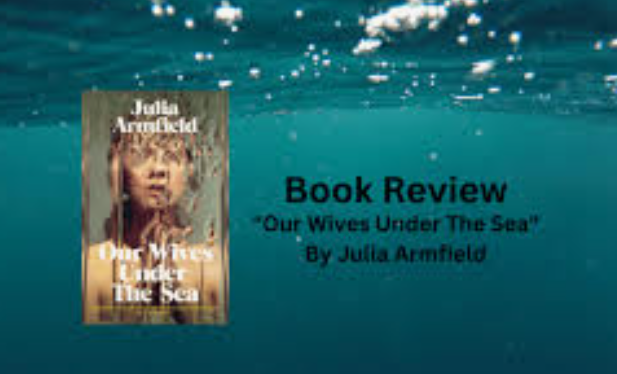
By: Julia Armfield
Although not written as a traditional Gothic novel, Our Wives Under the Sea carries many of the elements that Gothic readers instinctively recognize: isolation, transformation, emotional haunting, and an unseen force that alters human life long after the event itself has ended.
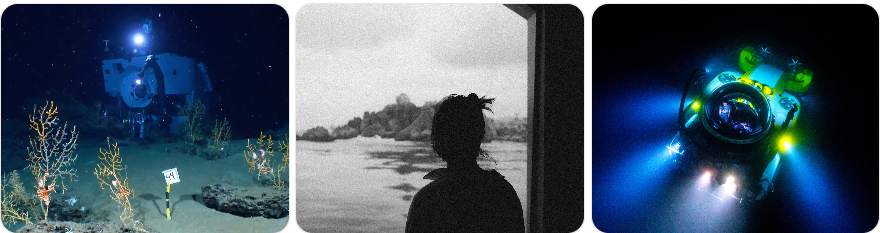
Leah, a marine biologist, departs on a deep-sea research mission aboard a submersible built for scientific observation. What should have been a controlled descent into the ocean’s depths becomes something far more unsettling when the vessel suffers a catastrophic delay and communication with the surface is lost. Far below the reach of ordinary rescue, time stretches strangely. Systems fail, silence grows oppressive, and the sea itself begins to feel less like environment and more like presence.
When Leah finally returns, survival does not restore normal life. Her wife, Miri, quickly senses that something fundamental has shifted. Leah is physically present, yet emotionally distant, as though part of her remains submerged in whatever occurred below. Ordinary domestic routines begin to fracture under subtle but disturbing changes: prolonged silence, strange physical habits, and an increasing pull toward water. She spends long periods immersed in the bathtub, detached from ordinary conversation, while her body and behavior seem governed by something neither woman can fully explain.

The novel unfolds through alternating perspectives — Miri witnessing the slow unraveling at home, and Leah recounting the claustrophobic ordeal beneath the sea. This structure gives the story two forms of confinement: one in the crushing darkness of the ocean floor, the other inside a home where love is still present, but certainty is gone.
What makes the novel especially effective is that its horror never depends on spectacle. There are no dramatic monsters emerging from the deep. Instead, the terror comes through gradual estrangement: the fear that someone may survive disaster yet return altered beyond recovery. The ocean remains largely unseen, but its influence is unmistakable — ancient, patient, and indifferent.

For SUNKEN fictional tales, this makes Our Wives Under the Sea especially compelling because the sea is not merely backdrop; it becomes an active force of transformation. The deeper Leah traveled, the less certain it becomes that anything returned untouched.
At its heart, the novel asks a deeply Gothic question: how do we grieve someone who is still standing in front of us, but no longer fully belongs to the world we share?
#GothicDustDiaries #SUNKENFictionalTales #OurWivesUnderTheSea #JuliaArmfield #MaritimeFiction #LiteraryHorror #SeaMystery #GothicLiterature #OceanNarratives #BookReview #DarkFiction #AtmosphericReading