
The Millionaire’s Ship Beneath the Atlantic
https://youtube.com/shorts/GyNMoLMuTyI
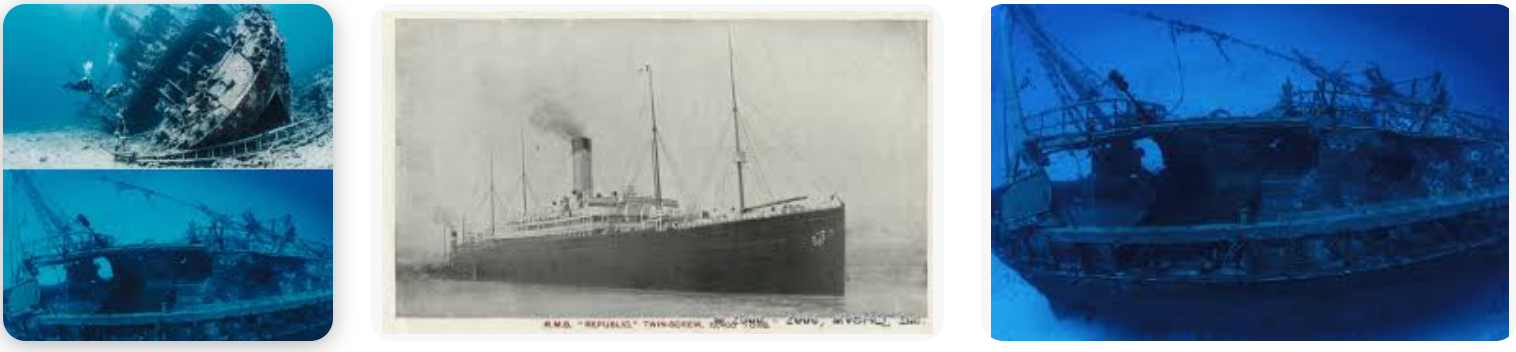
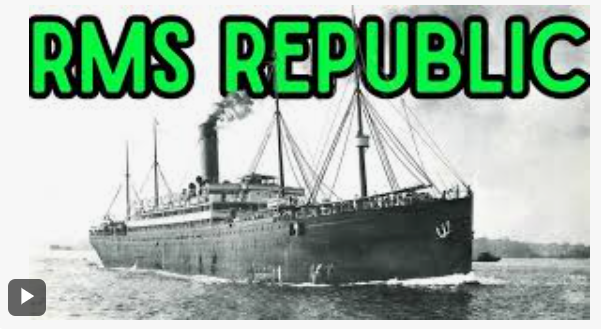
Before luxury liners became legends through catastrophe, one ship quietly carried wealth, elegance, and status across the Atlantic under a name that would later drift into maritime mystery — the RMS Republic, often remembered as the Millionaire’s Ship.
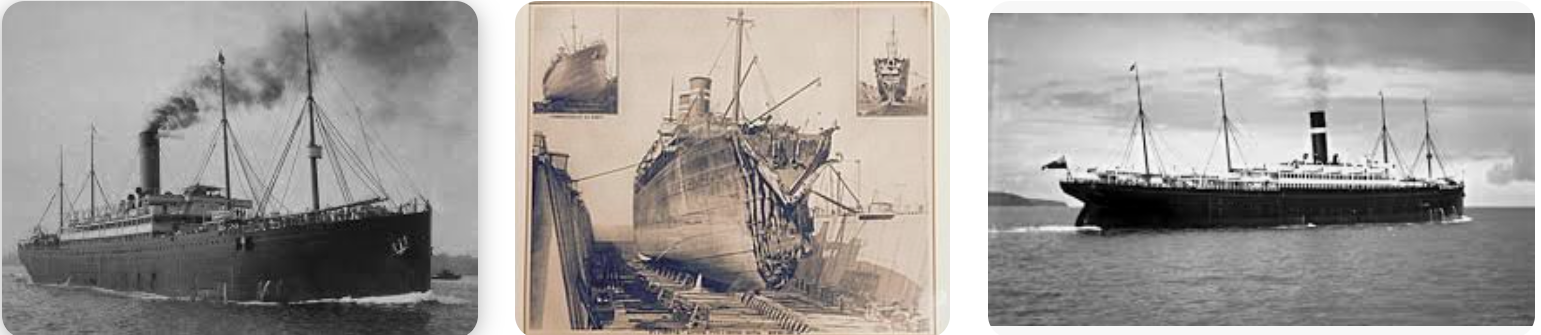
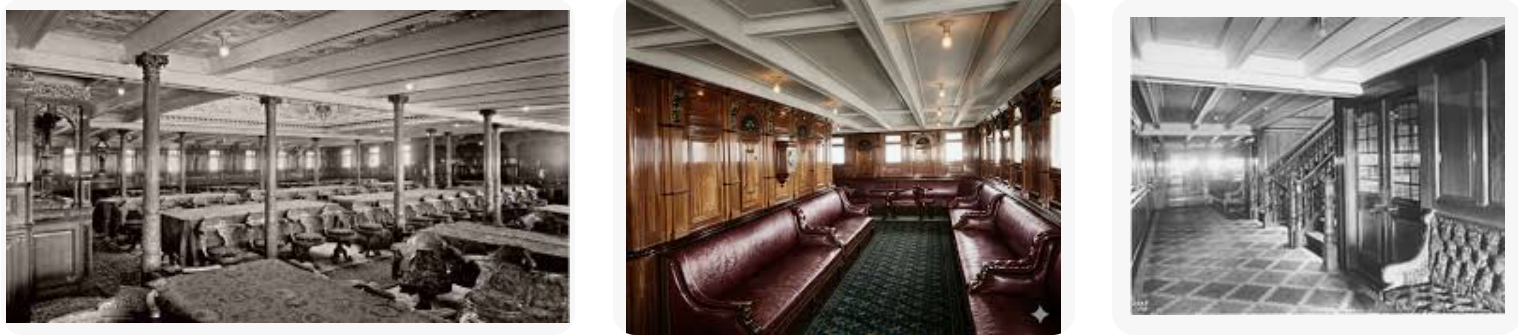
Built for the White Star Line, the Republic entered service as a vessel designed for comfort rather than speed. Her passengers included wealthy travelers, prominent families, and those who preferred polished interiors and refined crossing over theatrical grandeur. Long before the age of floating palaces reached its peak, the Republic represented a quieter kind of prestige — heavy velvet, carved wood, polished brass, and the calm confidence of first-class ocean travel.
The nickname “Millionaire’s Ship” came naturally. She frequently carried members of America’s wealthy class, industrial figures, and travelers accustomed to private servants and carefully appointed cabins. Yet wealth was not the only thing aboard. Like many liners of her era, she also transported mail, cargo, and ordinary passengers whose lives briefly moved through the same corridors as those of society’s elite.

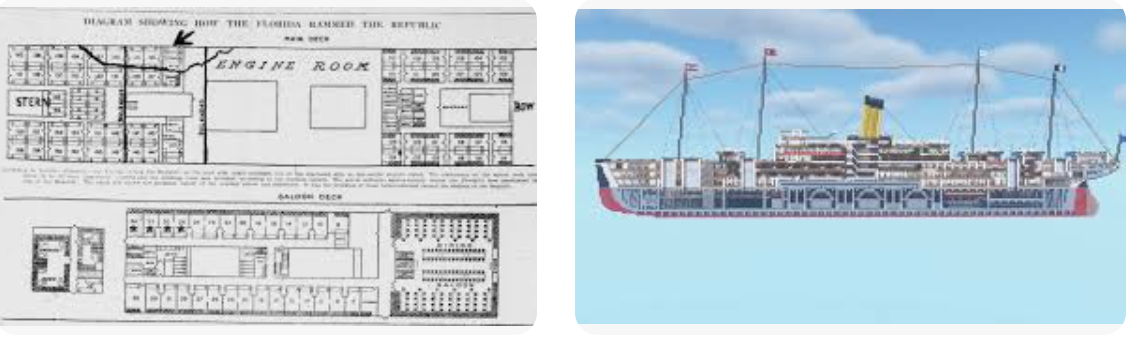
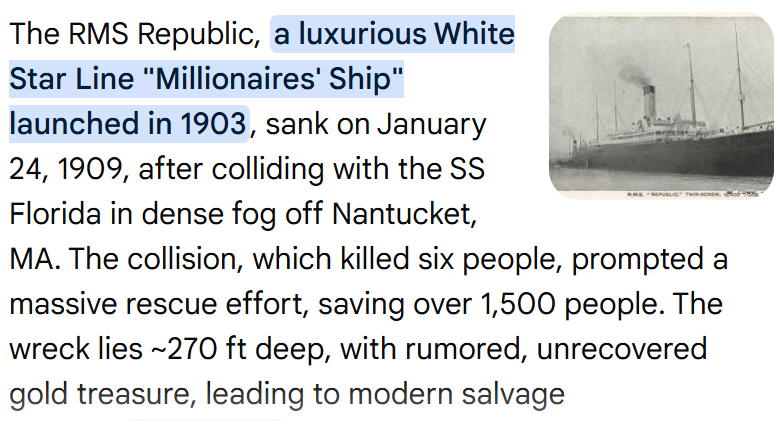
In January 1909, while sailing near Nantucket, dense fog covered the Atlantic. Visibility disappeared into white silence. Out of that fog emerged the Italian liner SS Florida.
The collision came hard enough to tear open the Republic’s side.
What followed became one of maritime history’s most important early demonstrations of wireless rescue. The Republic’s distress signal — sent by radio operator Jack Binns using the still relatively new wireless telegraphy — reached nearby ships and triggered a rescue operation that saved nearly everyone aboard.
This moment mattered historically because it proved that wireless communication at sea was no novelty; it was survival.
Passengers were transferred off in difficult winter conditions, many carrying little more than coats and whatever valuables they could quickly gather. The Republic remained afloat for nearly two days after the impact, drifting wounded in the cold Atlantic before finally slipping beneath the surface.
That slow sinking only deepened later fascination.
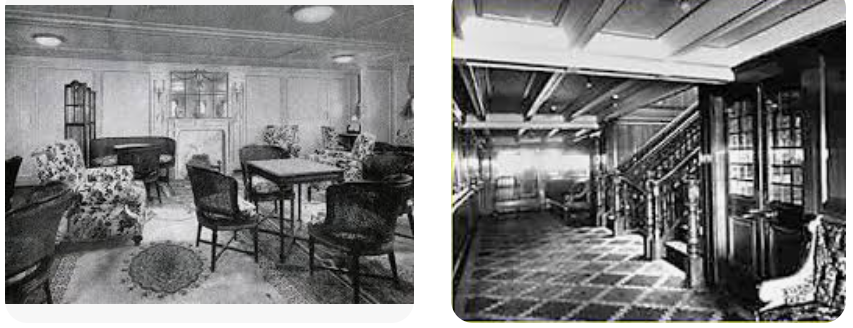
Because the ship had carried wealthy passengers, rumors began almost immediately that large quantities of gold had gone down with her. Over time, speculation grew into one of the Atlantic’s enduring treasure stories: coins, bullion, banking cargo, perhaps millions in lost value resting below.
No confirmed treasure recovery has ever fully settled the legend.
Today the wreck rests deep beneath Atlantic water, where steel, silence, and sediment have long replaced chandeliers and polished decks. What survives is not simply a lost ship, but a frozen moment between old-world luxury and the modern age of emergency communication.
The Republic did not become famous through mass loss of life. It became memorable because it revealed how quickly elegance can turn fragile when surrounded by fog, steel, and open water.
Some ships vanish in violence.
Others descend slowly enough for history to watch.
And some continue to linger because what sank with them was never fully accounted for.