
SS Andrea Doria
The Luxury Liner That Died in Slow Motion
She was supposed to arrive in New York the next morning.
Instead, shortly after 11 p.m. on July 25, 1956, two passenger liners found themselves converging in dense fog off Nantucket.
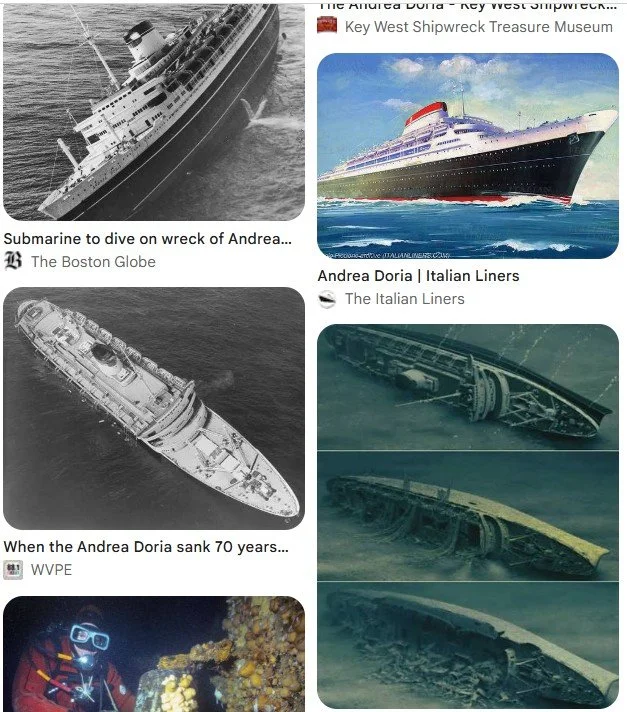
One was Italy's magnificent SS Andrea Doria.
The other was the Swedish liner MS Stockholm.
Minutes later, Stockholm's reinforced bow tore into Andrea Doria's starboard side.
And one of the most famous maritime disasters of the twentieth century began.
A Floating Italian Showpiece
Andrea Doria wasn't an aging ship limping through her final years.
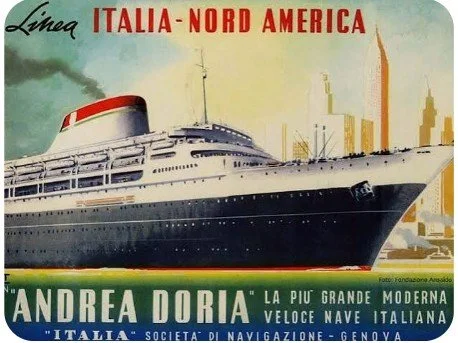
She was relatively new, luxurious and celebrated—a symbol of Italy's postwar return to the great transatlantic passenger trade.
She had swimming pools, elaborate artwork, stylish interiors and accommodations designed for passengers ranging from wealthy first-class travelers to immigrants making new lives in America.
When she left Genoa on July 17, 1956, bound for New York, she was making what would have been her 101st successful Atlantic crossing.
Nothing about the voyage suggested that this would be her last.
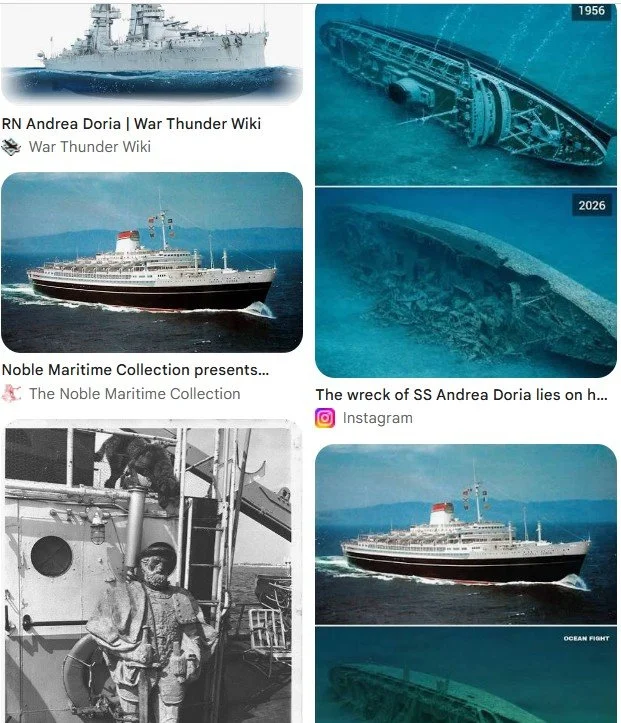
Two Ships in the Fog
On the night of July 25, Andrea Doria was approaching the American coast.
Fog blanketed the waters.
Both Andrea Doria and Stockholm were equipped with radar, and both crews knew another vessel was nearby.
Yet the ships interpreted the situation differently.
By the time the danger became unmistakable, there wasn't enough room left to correct it.
At approximately 11:22 p.m., Stockholm's bow smashed into Andrea Doria at nearly a right angle, ripping a massive opening into the Italian liner's side.
Stockholm's bow was crushed.
Andrea Doria was mortally wounded.
The Ship Began to Lean
Water poured into Andrea Doria.
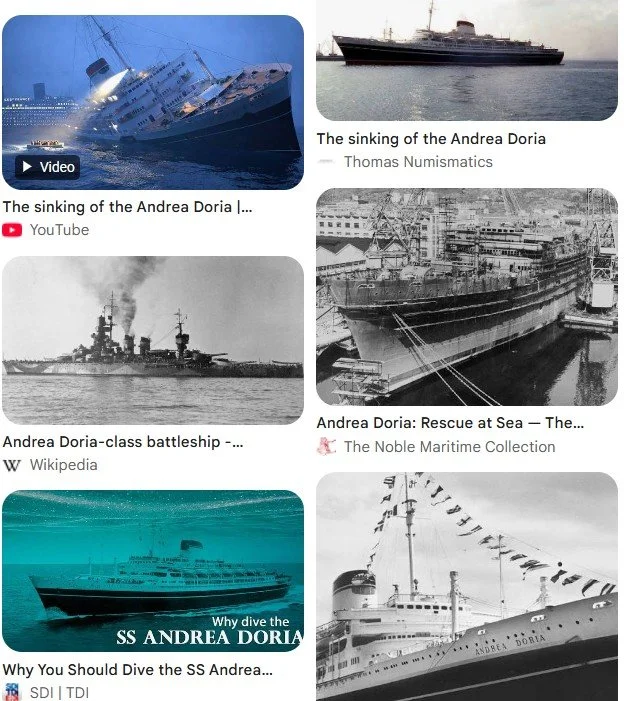
The liner quickly developed a severe list to starboard.
That created another terrifying problem.
Half of her lifeboats became effectively unusable.
More than 1,600 passengers and crew were aboard, and suddenly there weren't enough accessible boats to evacuate everyone in the conventional manner.
This could have become another maritime catastrophe on an enormous scale.
Instead, something remarkable happened.
Other ships came.
A Rescue at Sea
Distress calls went out across the Atlantic.
Nearby vessels changed course.
Among them was the French liner Île de France, which had already passed the area but turned around to help.
Rescue vessels gathered around the crippled Andrea Doria while passengers climbed down ladders and were transferred into lifeboats.
The evacuation continued through the darkness.
Despite the enormous damage and the difficulty evacuating the listing ship, the overwhelming majority of the people aboard survived.
The final death toll from the collision was 51 people—46 aboard Andrea Doria and five aboard Stockholm.
For a disaster involving two large passenger ships colliding in fog, the rescue operation prevented an almost unimaginable loss of life.
Then the World Watched Her Die
Andrea Doria didn't immediately disappear.
She remained afloat through the night and into the following morning.
That meant photographers, airplanes and television crews had time to reach her.
People watched as the magnificent liner leaned farther and farther toward the sea.
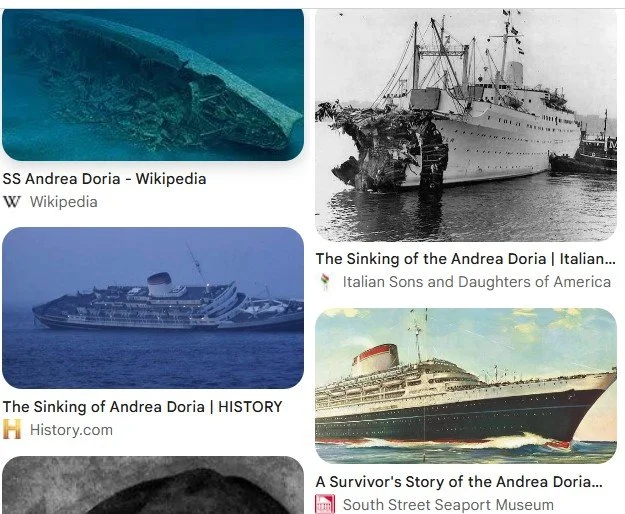
At 10:09 a.m. on July 26, Andrea Doria finally rolled over and disappeared beneath the Atlantic.
Because television and news crews were able to document her final hours, the sinking became one of the earliest great maritime disasters experienced almost in real time by the modern media.
But Andrea Doria's story didn't end on the surface.
The Everest of Shipwrecks
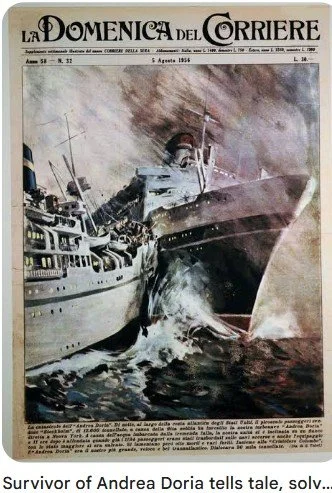
She came to rest roughly off Nantucket, where the Atlantic would begin slowly dismantling her.
And divers came looking.
Andrea Doria became one of the world's legendary wreck dives.
Experienced wreck divers nicknamed her:
"The Everest of Shipwrecks."
Not because she lies at some impossible ocean depth, but because reaching and exploring her can be extraordinarily demanding.
Darkness, currents, cold water, fishing lines, deteriorating metal and the complexity of penetrating a collapsing ocean liner can turn a mistake into a fatal one.
Over the decades, divers have died attempting to explore her.
And the ship itself continues to change.
A 2016 expedition used sonar and a manned submersible to study the wreck and document how rapidly the once-grand liner was deteriorating.
Eventually, the Atlantic will finish what began that foggy night in 1956.
The Strange Thing About Andrea Doria
Perhaps that's why this wreck fascinates me.
Titanic vanished into darkness and remained essentially unseen for decades.
Andrea Doria died differently.
People watched her die.
They photographed her.
They filmed her.
They watched her enormous hull slowly roll onto its side.
And then generations of divers went down to visit what remained.
She exists somewhere between modern history and underwater archaeology—a glamorous twentieth-century world that many people still remember, now slowly being consumed by the Atlantic.
The ship disappeared beneath the water in less than a day.
But seventy years later, Andrea Doria still hasn't completely disappeared
#SSDAndreaDoria #AndreaDoria #Sunken #HistoricalWrecks #Shipwreck #MaritimeHistory #OceanLiner #LostAtSea #NauticalHistory #UnderwaterHistory #ForgottenHistory #HistoryBeneathTheWaves #GothicDustDiaries