
Algernon Charles Swinburne
The Decadent Voice of Forbidden Beauty
https://youtube.com/shorts/3n70VHK6Ssc
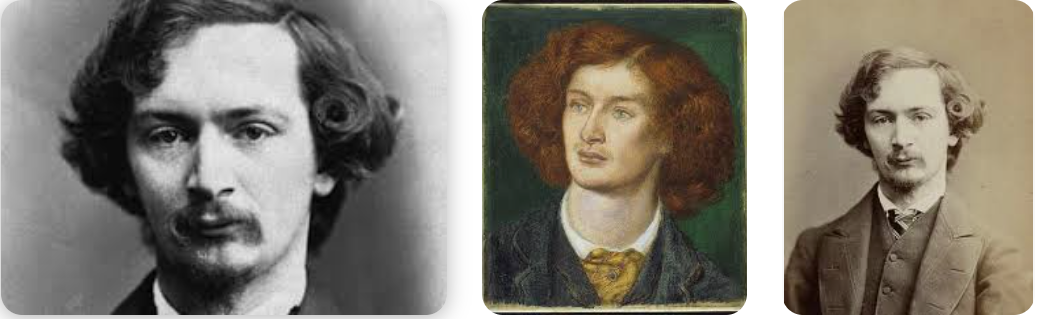
In the shadowed corridors of Gothic Dust Diaries, Algernon Charles Swinburne stands as a poet of excess, rebellion, and haunting musicality. Born in 1837 into an aristocratic English family, Swinburne emerged as one of the most controversial voices of the Victorian era, challenging morality, religion, and poetic tradition with verses that pulsed with sensuality and pagan imagery.
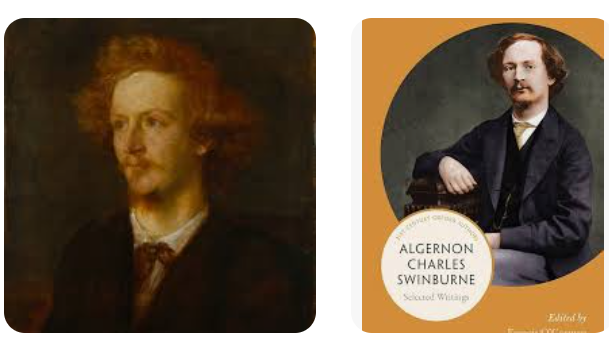
Victorian England was a society bound by strict moral codes, yet fascinated by what lay beyond them. Swinburne exploited this tension, writing poetry that celebrated taboo desires, classical paganism, and the ecstasy of transgression. His language was lush, hypnotic, and musical, filled with rhythm and repetition that felt more like incantation than verse.
Swinburne was associated with the Pre-Raphaelite circle, a group of artists and writers who rejected industrial modernity in favor of medievalism, myth, and aesthetic beauty. His early collection, Poems and Ballads (1866), shocked readers with its frank exploration of eroticism, sadomasochism, and religious heresy. Critics denounced him, while others hailed him as a daring visionary.
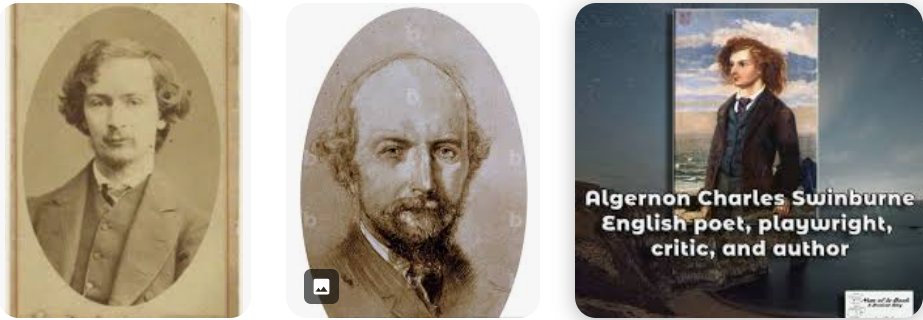
His fascination with pagan gods, classical antiquity, and mythological archetypes reflected a broader Victorian anxiety about faith and modernity. As scientific discoveries challenged Christian doctrine, poets like Swinburne turned to ancient myths as alternative spiritual frameworks. His verses resurrected gods and goddesses not as relics, but as living forces—dangerous, seductive, and eternal.
Beyond scandal, Swinburne was a master of sound. His poetry is renowned for its musical structure—flowing, repetitive, and incantatory. He believed poetry should be felt physically, like waves or wind, creating an almost trance-like experience. This emphasis on sound and sensation influenced later Symbolist and Decadent writers across Europe.
Yet Swinburne’s life was as tumultuous as his work. He struggled with alcoholism and erratic behavior, eventually coming under the guardianship of his friend Theodore Watts-Dunton, who sought to stabilize his health and reputation. In later years, Swinburne’s poetry became more restrained, though the shadow of his earlier decadence never faded.

From a gothic perspective, Swinburne embodies the Victorian fear and fascination with forbidden beauty. He stands at the threshold between faith and doubt, restraint and excess, order and chaos. His poetry is haunted by desire—for freedom, for sensation, for mythic transcendence.
Algernon Charles Swinburne reminds us that beauty can be dangerous, that rhythm can be intoxicating, and that rebellion can be lyrical. In the echoing corridors of literary history, his voice remains a dark, melodic incantation—seductive, unsettling, and eternal.
#AlgernonCharlesSwinburne #GothicPoetry #DecadentMovement #VictorianLiterature #DarkAcademia #GothicDustDiaries #PreRaphaelite #Decadence #SymbolistPoetry #LiteraryHistory #ForbiddenBeauty #PoetryArchive #VictorianGothic