
Elizabeth Gaskell
Elizabeth Gaskell: The Gothic Shadows Behind a Victorian Storyteller
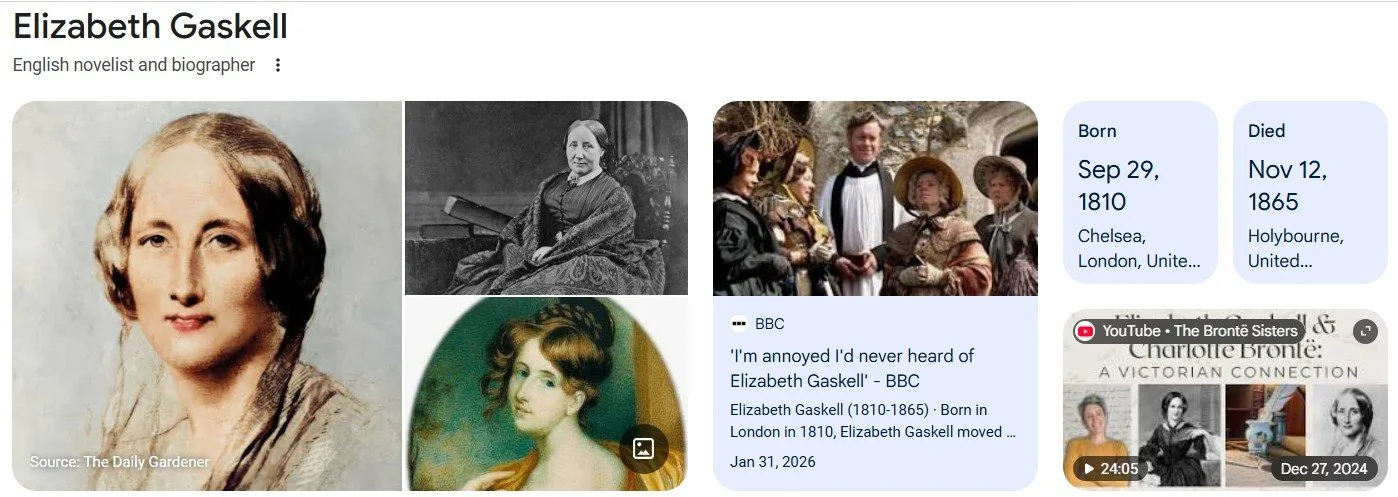
When we think of the great Gothic writers of the nineteenth century, Elizabeth Gaskell may not be the first name that comes to mind.
She probably should come a little closer.
Born in London in 1810 and raised largely in the English town of Knutsford, Gaskell became one of the notable literary voices of Victorian Britain. Her novels explored industrialization, poverty, class divisions, family relationships, religion, and the enormous social changes occurring around her.
Her writing could be compassionate and remarkably observant.
It could also become wonderfully dark.
More Than North and South
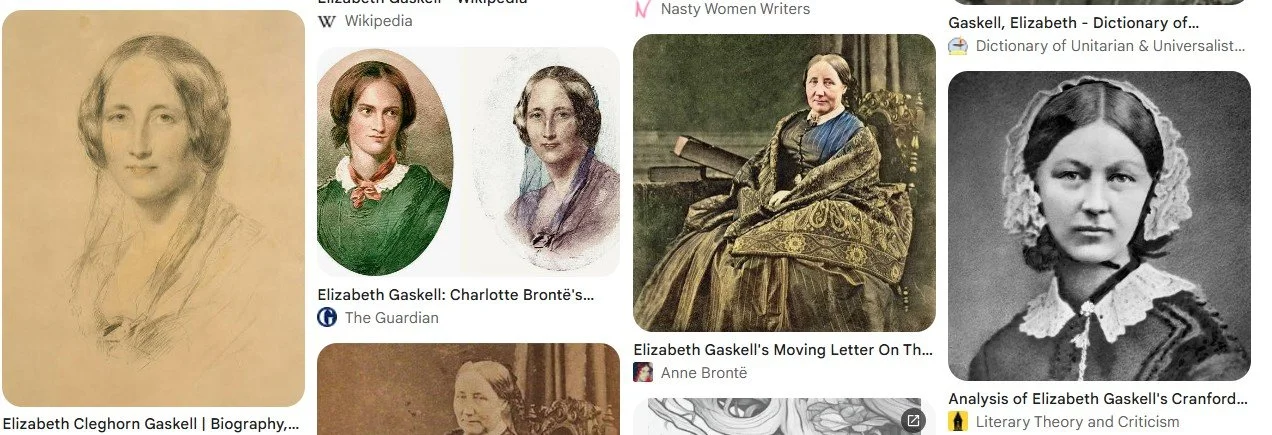
Many modern readers discover Gaskell through North and South, published in 1854–1855.
The novel places its heroine, Margaret Hale, amid the industrial world of the fictional northern town of Milton. Instead of ruined castles and mysterious crypts, Gaskell gives us factories, smoke, labor disputes, disease, poverty, and sharp divisions between those who own industry and those whose lives depend upon it.
It isn't traditionally classified as a Gothic novel.
Yet there is darkness everywhere.
Gaskell understood something that works beautifully within Gothic storytelling: a setting doesn't have to be supernatural to feel oppressive.
A factory town can loom over its inhabitants just as effectively as an ancient mansion.
And human circumstances can be every bit as frightening as ghosts.
Then Gaskell Gave Us the Ghosts
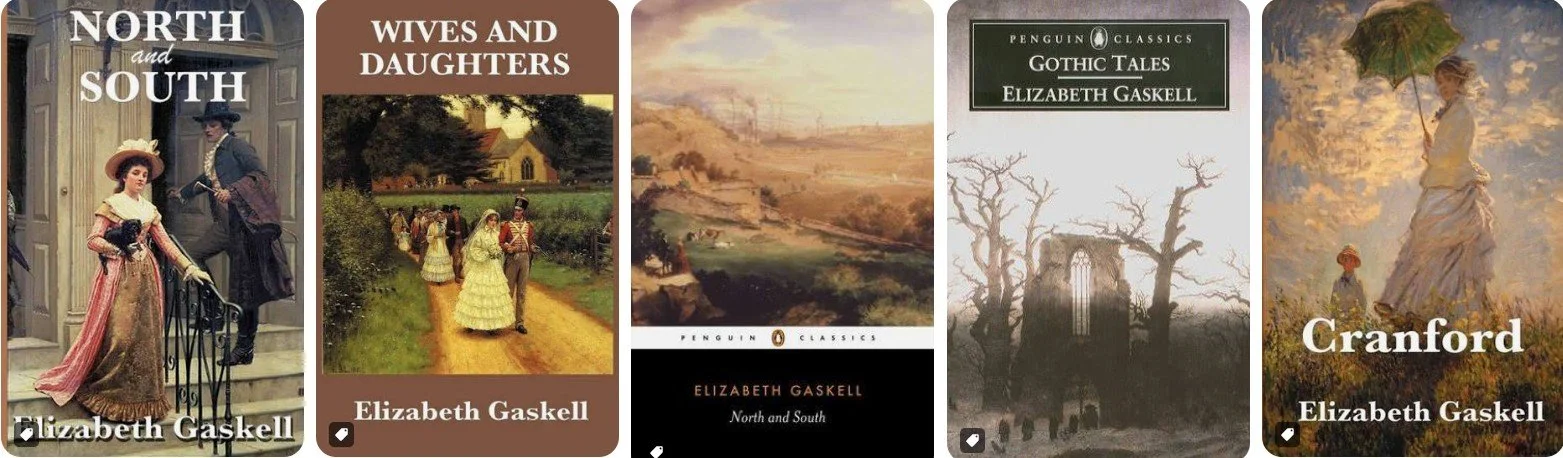
If North and South shows the atmospheric side of Gaskell, “The Old Nurse's Story” reveals what happened when she stepped fully into the Gothic tradition.
Published in 1852, the story is narrated by an elderly nurse recalling events from years earlier, when she accompanied a young, orphaned girl to an isolated mansion in northern England.
Already, we have the ingredients.
An old house.
A remote landscape.
Family secrets.
A mysterious organ.
A child.
And something outside in the cold.
As the story unfolds, the history of the house begins intruding upon the present. Past cruelty, jealousy, pride, and betrayal haven't simply disappeared because the people involved are gone.
Their consequences remain.
That is what makes the story more interesting than a simple ghost tale.
The supernatural elements are frightening, but human actions created the darkness long before anything ghostly appeared.
The Past Doesn't Stay Quiet
That theme appears again and again in Gothic literature.
Old houses remember.
Families hide things.
Respectability conceals cruelty.
And eventually somebody opens the wrong door—sometimes literally, sometimes figuratively.
Gaskell was particularly well equipped to explore that territory because she was so interested in people.
Her characters weren't merely pieces being moved around a spooky setting. Their choices mattered. Social expectations mattered. Money, position, gender, family, resentment, love, and loss mattered.
The Gothic atmosphere amplified those human struggles rather than replacing them.
That may be why her darker stories still work.
A Writer Living Between Worlds
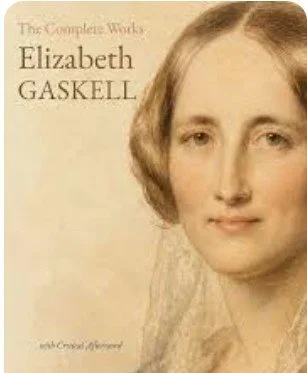
Gaskell herself lived during a fascinating period of transition.
Victorian Britain was becoming increasingly industrialized and technologically advanced, yet folklore, superstition, old traditions, and stories of the supernatural remained deeply embedded in the culture.
The railway could carry you rapidly across the country.
The old, haunted house was still waiting when you arrived.
Gaskell wrote comfortably in both worlds.
She could examine the very modern problems of industrial society in one work and lead readers through the corridors of an isolated ancestral mansion in another.
Perhaps those subjects weren't as different as they first appear.
Both ask what happens when people become trapped by circumstances larger than themselves.
Both explore the consequences of power.
And both remind us that progress doesn't necessarily erase what came before.
The Unexpected Gothic Gaskell
Elizabeth Gaskell died in 1865 at only 55 years old, leaving behind novels, biographies, novellas, short stories, and a vivid portrait of the society in which she lived.
Today, she remains closely associated with Victorian realism and social commentary.
But hidden within that reputation is a writer who clearly understood the pleasures of a dark corridor and an uncomfortable secret.
And perhaps that is the most interesting Gaskell to rediscover.
Because Gothic literature isn't merely about ghosts.
It is about memory.
Isolation.
Secrets.
Consequences.
And the uncomfortable realization that sometimes the past isn't nearly as finished with us as we are with it.
Elizabeth Gaskell understood that very well.
#ElizabethGaskell #VictorianLiterature #GothicLiterature #GothicAuthors #TheOldNursesStory #NorthAndSouth #VictorianEngland #ClassicLiterature #WomenWriters #LiteraryHistory #GothicStories #ForgottenLiterature #DarkLiterature #BritishLiterature #AuthorSpotlight #WomenInLiterature #GothicDustDiaries