
Ernest Dowson
The Poet Who Romanticized Decay and Longing
There are poets who write about darkness…
and then there are poets who seem to dissolve into it.
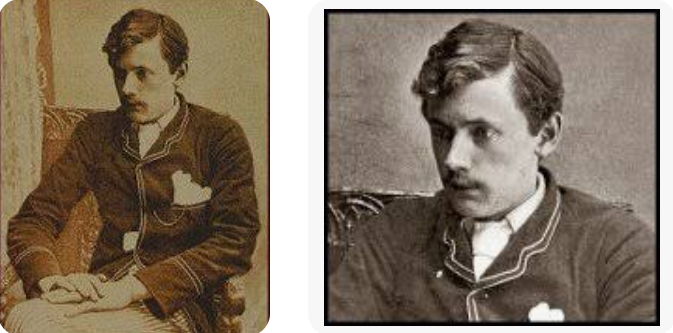
Ernest Dowson remains one of the most haunting literary voices of the late nineteenth century — a poet whose words dripped with melancholy, fading beauty, lost love, and self-destruction. While many Victorian writers celebrated progress and morality, Dowson wandered instead through dim cafés, absinthe-stained evenings, and the fragile ruins of emotion.
Born in London in 1867, Dowson became associated with the Decadent Movement, a literary circle fascinated with beauty, excess, mortality, and emotional despair. His poetry carried a softness that felt almost ghostly — delicate language wrapped around heartbreak and exhaustion. Even now, his verses feel less like literature and more like whispered confessions from a fading candlelit room.
Dowson is perhaps most remembered for the line:
“They are not long, the days of wine and roses…”
A single sentence that somehow captures the entire mood of his life.

His work often revolved around unattainable love, spiritual emptiness, and the quiet realization that beauty rarely survives untouched. Unlike gothic horror filled with monsters and castles, Dowson’s darkness lived in atmosphere — in fading flowers, abandoned memories, and the ache of longing for something forever out of reach.
His obsession with a young girl named Adelaide Foltinowicz became one of the tragic centers of his life. Though he proposed marriage repeatedly, her family refused him. The rejection deepened the despair already threading through his work. Over time, alcohol, illness, and emotional collapse consumed much of his adult life.
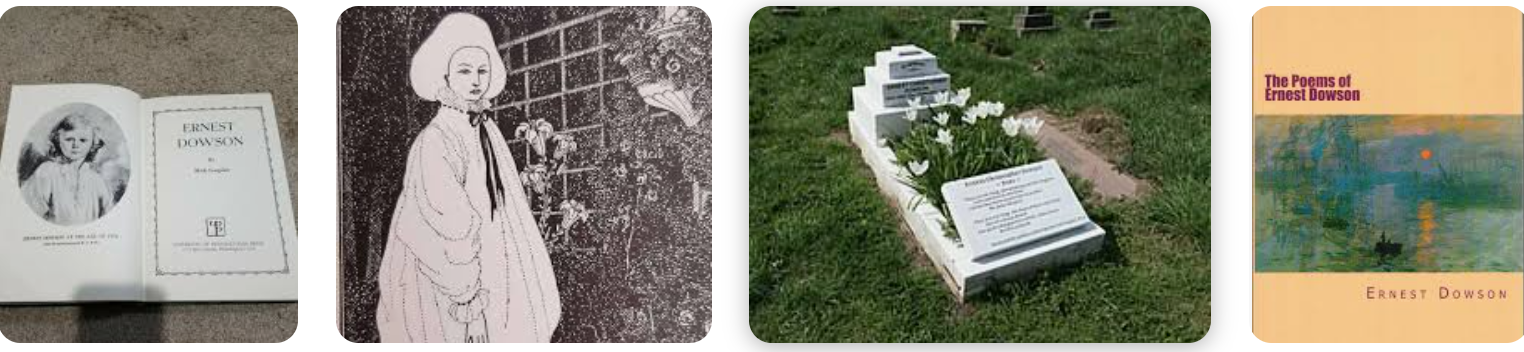
By the age of thirty-two, Ernest Dowson was dead.
Yet his poetry survived where he could not.
Dowson’s influence quietly echoes through gothic literature, dark romanticism, and modern melancholic writing. His verses continue to appear in films, music, and literary circles drawn to beauty wrapped in sorrow. Unlike louder literary figures, Dowson never demanded attention. His poetry lingers instead like perfume in an abandoned theater — faint, elegant, and impossible to forget.
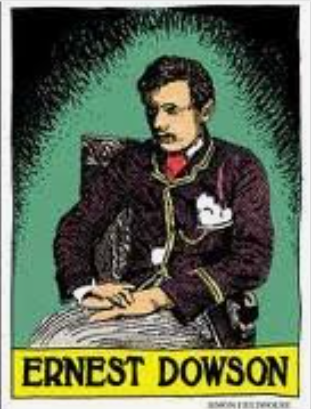
In many ways, Ernest Dowson represents the gothic spirit perfectly: not terror, but beautiful ruin.
And perhaps that is why his words still endure long after the candle burned out.
His most famous poem is considered to be Non Sum Qualis Eram Bonae Sub Regno Cynarae, the work containing the famous line: “They are not long, the days of wine and roses…”
Last night, ah, yesternight, betwixt her lips and mine
There fell thy shadow, Cynara! thy breath was shed
Upon my soul between the kisses and the wine;
And I was desolate and sick of an old passion,
Yea, I was desolate and bowed my head:
I have been faithful to thee, Cynara! in my fashion.
They are not long, the days of wine and roses:
Out of a misty dream
Our path emerges for a while, then closes
Within a dream.