
Gerard Manley Hopkins
The Gothic Interior
https://youtube.com/shorts/ym-WOC9rlTg
Born in Stratford, London and Died in Dublin, Ireland 07.28.1844 – 06.08.1889

Gerard Manley Hopkins is often misunderstood as a devotional poet, but his true terrain is far darker. His work does not rest in comfort or belief; it wrestles relentlessly with spiritual absence, mental anguish, and the terror of being abandoned by meaning itself. In this way, Hopkins belongs unmistakably to the gothic tradition—not in castles or specters, but in the haunted interior of the mind.
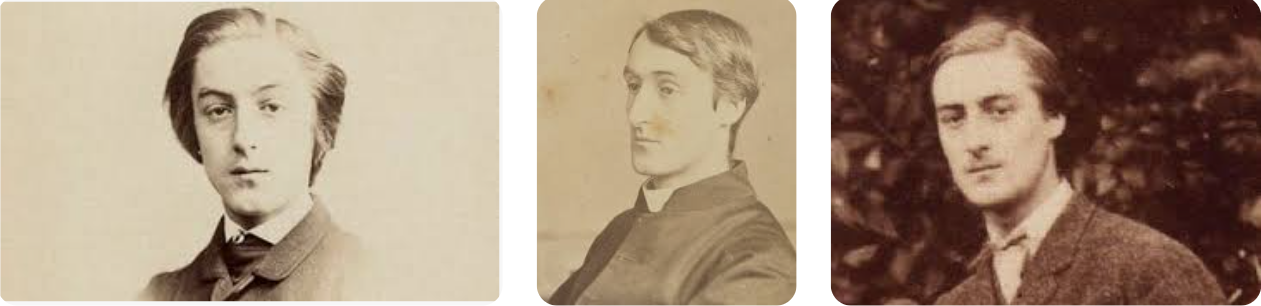
Writing in the late Victorian era, Hopkins lived a life marked by repression, isolation, and psychological strain. A Jesuit priest bound by vows of obedience and silence, he believed poetry to be a temptation, even a sin. When he finally returned to writing, the poems that emerged were unlike anything else in English literature—compressed, violent with sound, and charged with emotional extremity.
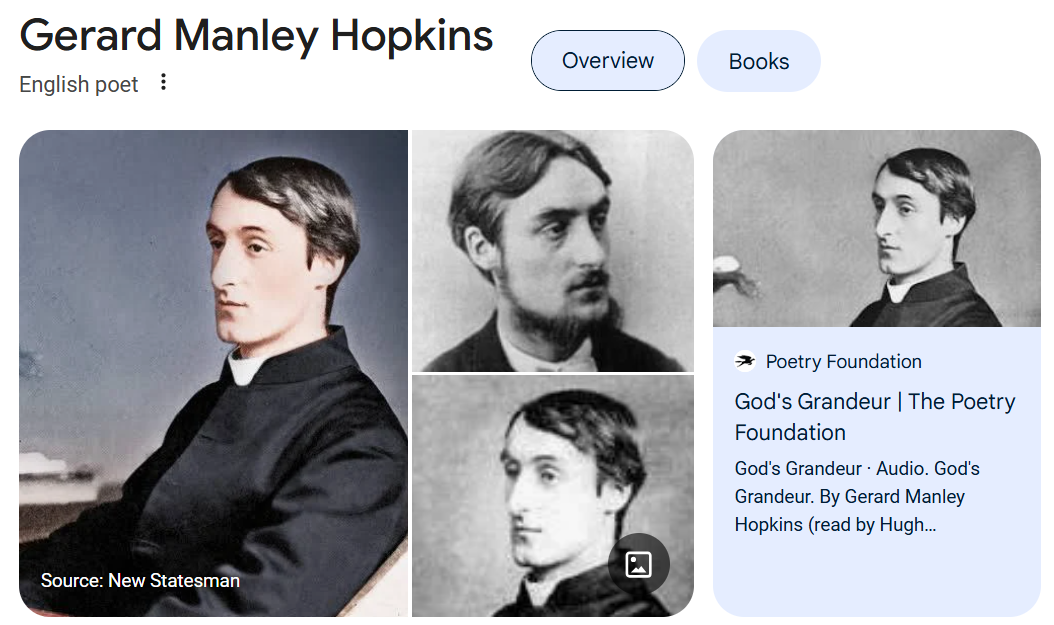
Hopkins invented what he called sprung rhythm, a form that fractures conventional meter and mirrors emotional collapse. His lines leap, buckle, and grind forward, mimicking the turbulence of thought under distress. This stylistic rupture is not ornamental—it is gothic architecture built from syntax itself.
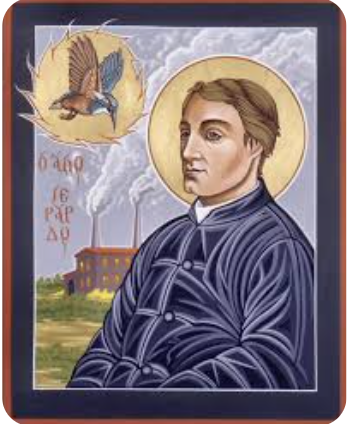
Nowhere is this clearer than in the poems known as the “terrible sonnets.” Written during a period of profound depression, these works confront despair without consolation. God is not a refuge here; God is distant, silent, or terrifyingly absent. Night dominates these poems—not as rest, but as punishment. Time stretches painfully. Hope becomes unbearable.
Yet Hopkins’ darkness is never empty. His poems seethe with intensity—compressed images of rot, pressure, fire, and weight. Beauty exists, but it wounds. Faith flickers, but it does not heal. This tension between longing and despair places Hopkins in direct conversation with later poets like Sylvia Plath and Georg Trakl, and alongside Poe’s psychological claustrophobia.
To read Hopkins is to enter a mind under siege, straining for meaning while fearing its loss. His gothic vision is inward, spiritual, and devastatingly modern.
Notable poems to explore:
God’s Grandeur
I wake and feel the fell of dark, not day
No worst, there is none
Carrion Comfort
Spelt from Sibyl’s Leaves
Featured Poem: “God’s Grandeur” (public domain, full poem)
The world is charged with the grandeur of God.
It will flame out, like shining from shook foil;
It gathers to a greatness, like the ooze of oil
Crushed. Why do men then now not reck his rod?
Generations have trod, have trod, have trod;
And all is seared with trade; bleared, smeared with toil;
And wears man’s smudge and shares man’s smell: the soil
Is bare now, nor can foot feel, being shod.
And for all this, nature is never spent;
There lives the dearest freshness deep down things;
And though the last lights off the black West went
Oh, morning, at the brown brink eastward, springs—
Because the Holy Ghost over the bent
World broods with warm breast and with ah! bright wings.
#GothicPoetry #GerardManleyHopkins #DarkLiterature #PoetryOfDespair #VictorianGothic #ExistentialPoetry #LiteraryGothic #GothicDustDiaries