Hidden World of Name Tags
Origins, Meanings, and Why Right Over Left
Whispers of Identity: The Gothic Tale of Name Tags
In the fog-draped corridors of history, where shadows etch their truths upon bone and cloth, the name tag emerges—a spectral sigil of self, pinned like a heart’s confession. Far from the banal badges of modern mixers, these talismans bear a legacy older than the Nile’s murmurs, weaving a tale of mortals daring to be known. Join me, shadowed seekers, for a 3-minute waltz through their arcane origins, their veiled meanings, and the curious ritual of pinning them to the right breast, where the soul’s gaze lingers.
Ancient Sigils: From Nile to Necropolis
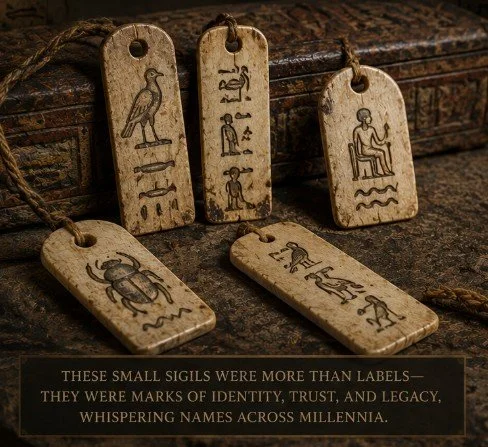
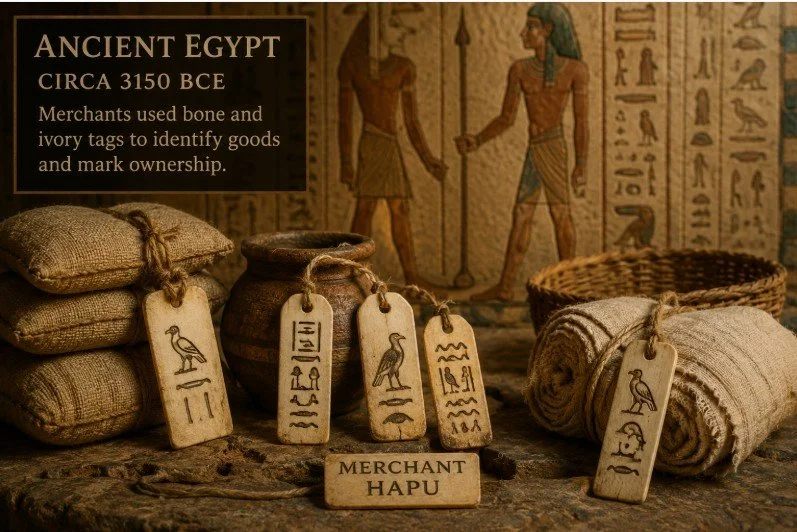
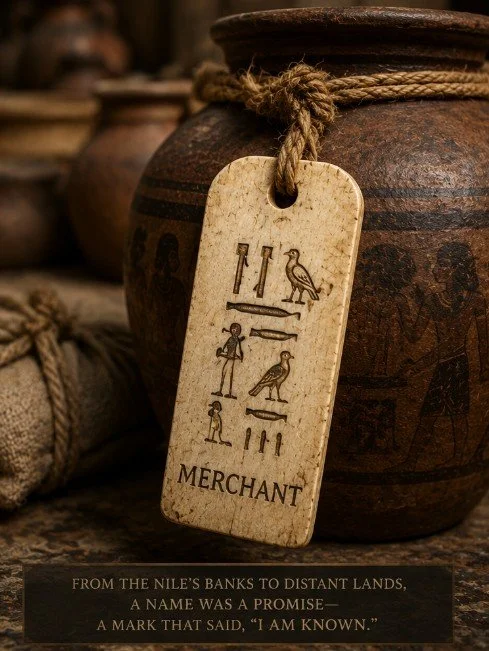
Millennia ago, under the reign of Egypt’s King Scorpion I (circa 3150 BCE), bone and ivory tags adorned trade goods—silent sentinels of grain and silk, whispering names of merchants in the Nile’s bustling bazaars. These were no mere labels; they were pacts with the gods of commerce, marking ownership amid chaos. In Sparta’s blood-soaked fields, warriors bound their names to sticks upon their armor, grim charms to greet the reaper should they fall. By the Middle Ages, monasteries and noble halls pinned names to garments, warding off anonymity’s specter in crowded laundries. The 19th century’s industrial shadows birthed sewn tags for soldiers and schoolboys, while in 1955, a South African tavern-keeper, Bram Combrink, conjured the reusable badge to charm patrons with remembered names. The iconic “Hello, My Name Is…” sticker, born of Avery Dennison’s 1940s alchemy, sealed its place in our gothic tapestry.
Symbolism in the Gloom: A Veil of Trust
A name tag is no trifling adornment—it is a pact, a baring of the soul to strangers in the masquerade of life. In the dim-lit parlors of commerce—taverns, banks, or apothecaries—it transforms “the server” into “Eleanor, keeper of secrets.” Psychologically, it parts the fog of social dread, easing whispered introductions at shadowed gatherings. In the military, last names pinned to the right chest echo Spartan death-tokens, a nod to mortality’s embrace. Even our canine companions wear “dog tags,” a term born in the 1800s, blending whimsy with the weight of belonging. In hospitals or grand manors, they signal roles without capes or crowns, a quiet vow: I am known, and I invite you to know me. Amid a digital void of faceless specters, the name tag is a candlelit tether to human connection.
The Right-Side Enigma: A Dance of Gazes
Why the right breast, not the left? Behold the handshake’s dark choreography. As your right hand extends—90% of mortals favor this path—your eyes trace an arc from clasped palm to the right chest, where the name tag gleams like a moonlit rune. This ritual, endorsed by etiquette’s grim scholars, ensures the name is unveiled without obstruction, unlike the left, where arms might shroud or crumple the badge. Some defy this—Disney’s service sprites pin left, as do errant royals—but for most, the right reigns, a silent pact with the stranger’s gaze. Magnet over pin, dear wanderers, to spare your velvet cloak, and place it pocket-high for clarity’s sake.
In the grand waltz of existence, name tags are no mere trifles—they are relics of pharaohs, warriors, and tavern-keepers, etched with the courage to be seen. Pin yours, and step into the mist, known. linger here, my darklings.