
Mary Poppins
Whispers of Edwardian Magic & Shadows
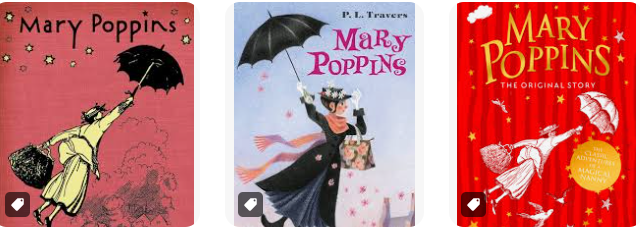
In the shadowed folds of Gothic Dust Diaries, Mary Poppins drifts into Tales of the Unseen on an east wind, her silhouette both enchanting and enigmatic, a figure woven from Edwardian England’s dreams and veiled anxieties. Born from P.L. Travers’ 1934 novel Mary Poppins, this magical nanny arrives at the Banks household with an umbrella and carpetbag, wielding stern authority and otherworldly wonder. Far from a mere children’s tale, her story threads through Victorian folklore, personal grief, and societal tensions, casting a shadow beneath her prim exterior. Whispers of darkness—rumors of malice like poisoning children—swirl in modern imaginations, yet her true complexity lies in the interplay of light and shadow, a guardian of fleeting childhood in a world of rigid order.
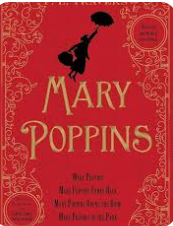
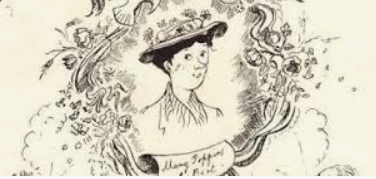
The historical roots of Mary Poppins stretch deep into literary and cultural soil. Travers drew inspiration from Victorian tales of magical governesses, like E. Nesbit’s enchanted tutors in Five Children and It (1902), who blended discipline with marvels. Her own Australian childhood, marked by the death of her bank clerk father, Travers Goff, in 1907, infused Mary with a bittersweet edge. The Banks family’s middle-class struggles in 1910 London mirror Travers’ own, a household teetering between stability and loss amid Edwardian class divides, suffragette protests, and labor unrest. Mary’s character echoes Travers’ great-aunt Helen Morehead, a strict yet whimsical figure whose prim demeanor shaped the nanny’s no-nonsense magic. Folkloric threads weave further, tying Mary to Celtic myths of the bean sidhe, a mystical woman of wind and fate, her umbrella a nod to supernatural journeys across time’s veil.
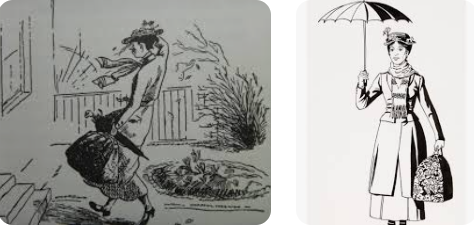
Yet, does a darker shadow lurk beneath Mary’s umbrella? Modern readers, hungry for grim undertones, speculate about sinister motives—could she poison the children she tends? No historical or fictional evidence supports such claims. Travers’ novels paint Mary as aloof, not malevolent; she never harms Jane or Michael, though her sharp tongue and sudden departures unsettle them, leaving a void of warmth. Her darkness is subtle, rooted in emotional distance and control, reflecting Edwardian anxieties about impermanent caregivers in a fracturing society. The 1910 setting, with its smog-choked streets and rigid gender norms, casts Mary as a paradox: a maternal figure who offers starlit adventures—levitating teacups, dances with chimney sweeps—yet withdraws affection, embodying the era’s tension between imagination and restraint.
The tale’s deeper shadows emerge from its cultural echoes. Neverland’s wild freedom in Peter Pan, a contemporary of Mary Poppins, finds a tamer cousin in Mary’s structured magic, yet both grapple with loss. The Lost Boys, inspired by Barrie’s orphaned wards, parallel the Banks children, tethered to a nanny who vanishes when the wind changes. Medieval folklore, like the 12th-century Green Children of Woolpit, ageless and otherworldly, resonates with Mary’s timelessness, a figure unbound by mortality. Her carpetbag, bottomless as myth, and her umbrella, soaring like a Celtic sprite, evoke a world where wonder skirts the edge of unease. The Great Famine (1315–1322) taught resilience through scarcity, a distant echo in Mary’s insistence on order amid chaos.
Unlike Disney’s 1964 softened portrayal, Travers’ Mary Poppins is no saint—she’s a trickster of sorts, her magic a fleeting gift, not a promise. Her stern gaze and cryptic exits hint at a deeper enigma, not malice, but a refusal to be fully known. In a society craving innocence, Mary Poppins weaves a tapestry of discipline and dreams, its threads spun from grief, folklore, and Edwardian hopes.