
THE REAL BLACK SHEEP SQUADRON
Pappy Boyington, VMF-214 and the Story Behind the Television Legend

When I was growing up, there were few things worth fighting my sister over.
The television was one of them.
We had one TV.
Unfortunately, her favorite show aired at the same time as mine.
Mine was Black Sheep Squadron.
Although if I'm being completely truthful, my historical interest may have had something to do with Robert Conrad. 😂
Decades later, I discovered that Pappy Boyington and the Black Sheep weren't invented for television at all.
And down the rabbit hole we go.
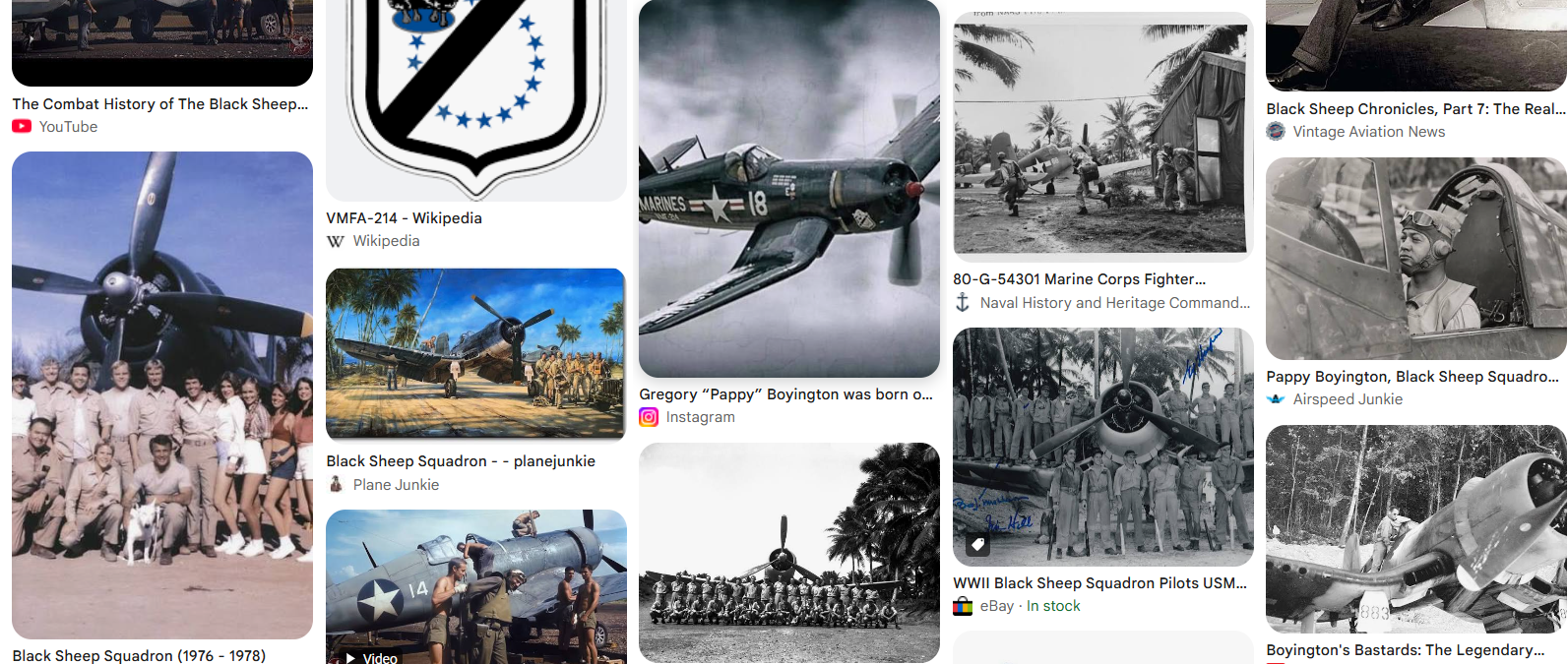
Pappy Before the Black Sheep
Gregory “Pappy” Boyington was already an experienced combat pilot before VMF-214 made him famous.
He had joined the Marine Corps in the 1930s and later resigned his commission to fly with the American Volunteer Group—the legendary Flying Tigers—in China and Burma before returning to the Marines.
By 1943, Boyington was 31.
That doesn't exactly qualify someone for Social Security, but compared with lieutenants in their early twenties, apparently it made him ancient.
His younger pilots called him “Gramps” or “Pappy.”
So Were They Really Misfits?
This is where television took a very good story and decided it needed seasoning.
VMF-214 really was assembled unusually. Boyington and Major Stan Bailey gathered available pilots in the South Pacific and had only weeks to turn them into a combat-ready squadron. Some were experienced combat veterans. Others were newly arrived replacement pilots.
That unusual beginning helped inspire the name Black Sheep.
But the popular image of the squadron as a collection of disciplinary problems, drunks and unwanted troublemakers is largely mythology.
An official Marine Corps history specifically says that portrayal is inaccurate. In reality, the squadron contained a fairly normal cross-section of fighter pilots with different personalities and experience levels.
They apparently did consider a considerably more colorful name: “Boyington's Bastards.”
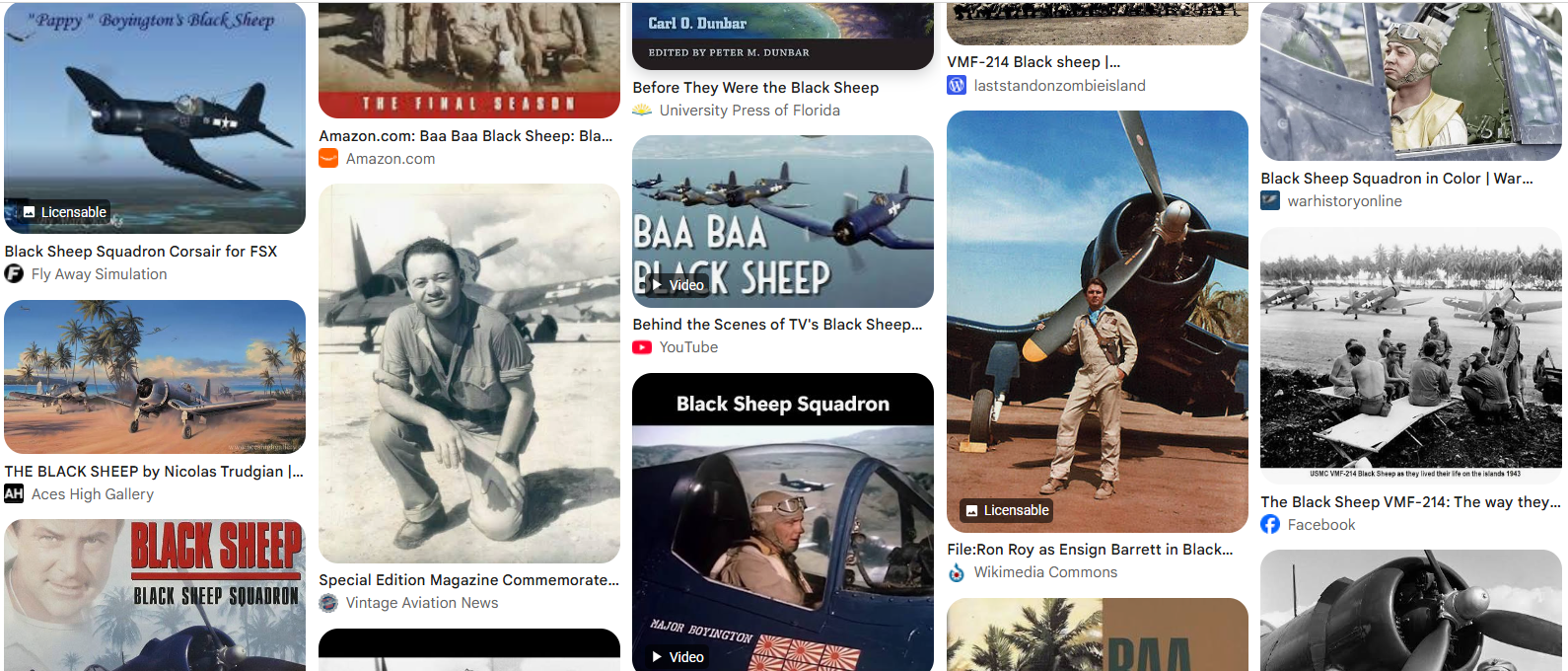
The sensibilities of the 1940s intervened.
Black Sheep it was.
Eighty-Four Days
Here's where reality starts competing rather well with Hollywood.
The original Black Sheep earned their reputation in just 84 days.
Marine Corps records credit them with 97 confirmed aerial victories, along with dozens of probable or damaged enemy aircraft. The squadron produced multiple fighter aces and attacked Japanese shipping and installations as well.
Their performance earned VMF-214 the Presidential Unit Citation for extraordinary heroism.
And Boyington became one of America's most famous fighter aces.
Then he disappeared.
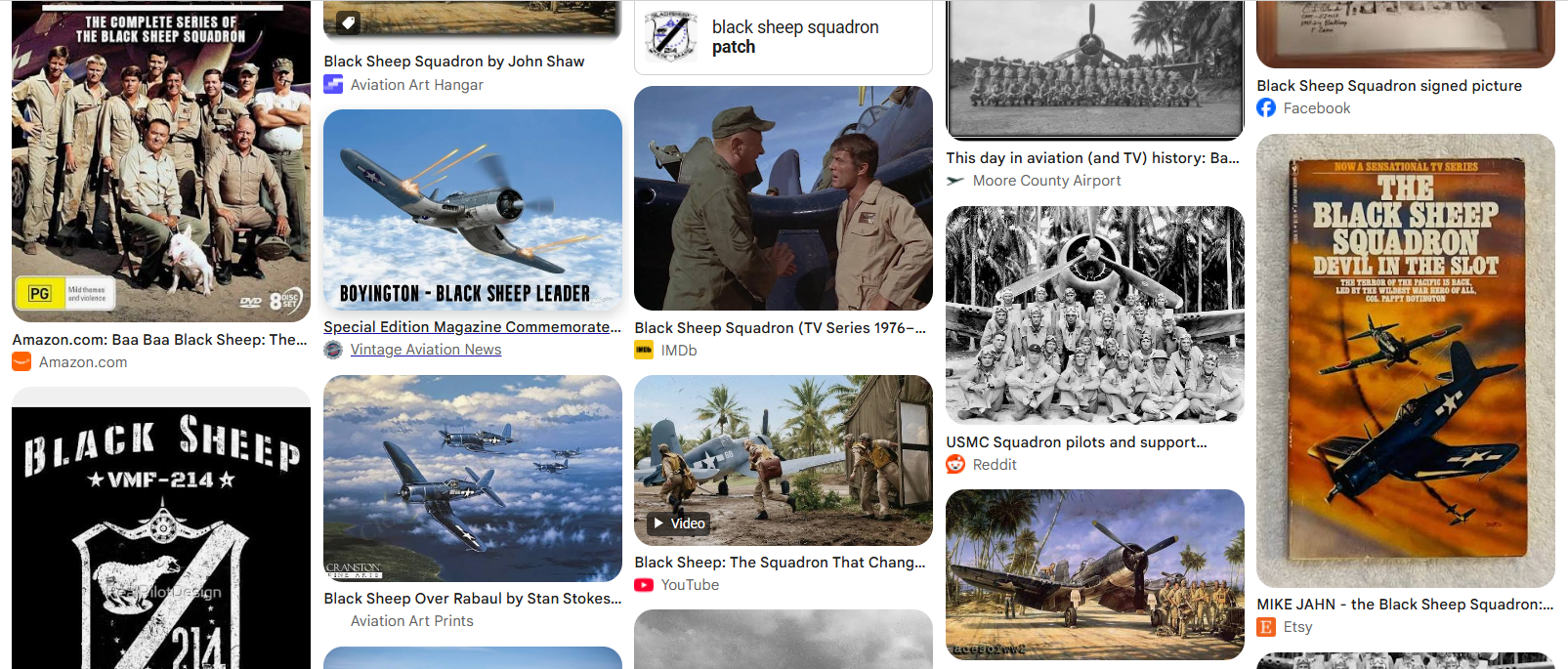
Pappy Is Dead
On January 3, 1944, Boyington was shot down during combat over the Pacific.
He wasn't recovered.
For the people back home, Gregory Boyington was effectively gone.
But Boyington had survived.
The Japanese captured him, and he spent the remainder of the war as a prisoner. His fate remained unknown to the United States for much of that time.
When the war ended, Pappy came home.
He received the Medal of Honor for his extraordinary combat leadership and heroism, while his exploits and personality helped turn him into one of the legendary characters of Marine aviation.
And character is probably the appropriate word.
Boyington wasn't the polished Hollywood version of a military hero. Marine Corps historical writing describes him as a complicated figure whose remarkable abilities as a combat pilot existed alongside significant personal problems.
Perhaps that's part of what makes his story so fascinating.
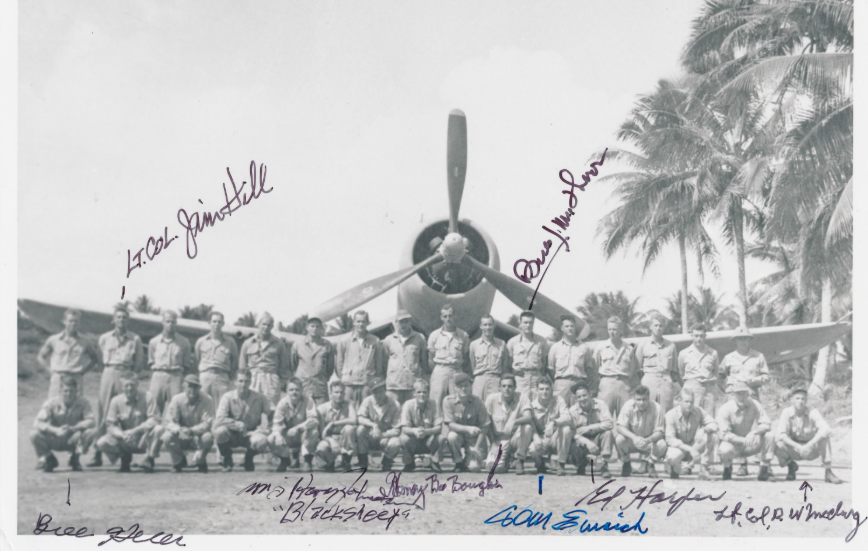
Hollywood Arrives
More than three decades later, NBC transformed Boyington and VMF-214 into Baa Baa Black Sheep, later renamed Black Sheep Squadron, with Robert Conrad playing Pappy.
The basic ingredients were real:
Pappy Boyington.
VMF-214.
The Corsairs.
The South Pacific.
And a hastily assembled group of pilots who became extraordinarily successful.
But television exaggerated the “misfit” mythology and created or altered characters and events for entertainment. The actual Black Sheep weren't quite the collection of lovable delinquents many of us grew up watching.
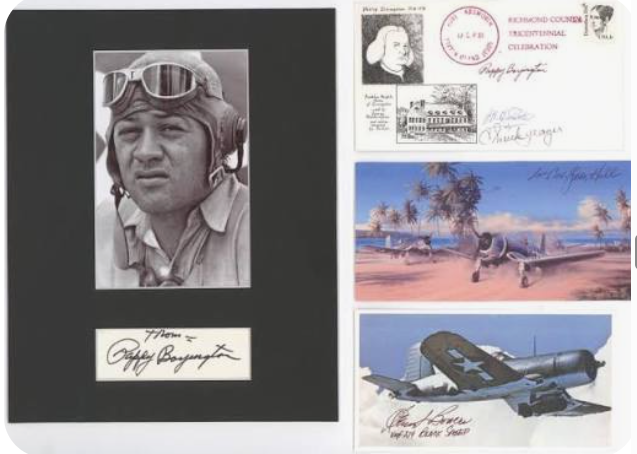
And perhaps they didn't need to be.
Because strip away Hollywood and you're left with something better:
A 31-year-old combat veteran assembled a group of pilots under extraordinary circumstances, trained them in a matter of weeks, took them into the skies over Japanese-held territory and helped turn them into one of the most celebrated fighter squadrons in Marine Corps history.
Then he was shot out of the sky, disappeared, survived Japanese captivity and eventually came home.
Hollywood gave us a terrific television series.
History gave us an even better story.
And yes... I still like the Robert Conrad version. 😂
Gothic Dust Diaries — Arcane Musings
Where history is rarely as simple as we remember it.
#BlackSheepSquadron #PappyBoyington #VMF214 #GregoryBoyington #WWII #PacificWar #MarineCorps #Corsair #MilitaryAviation #MilitaryHistory #ForgottenHistory #RobertConrad #GothicDustDiaries #ArcaneMusings