
Lascaux
When Boys Stepped Into the Ice Age
Sometimes history is uncovered by archaeologists armed with maps, research, and years of careful excavation.
And sometimes, it begins with a boy and his dog.
In September 1940, 18-year-old Marcel Ravidat was walking near the village of Montignac in southwestern France when his dog, Robot, drew his attention to an opening in the ground near Lascaux hill.
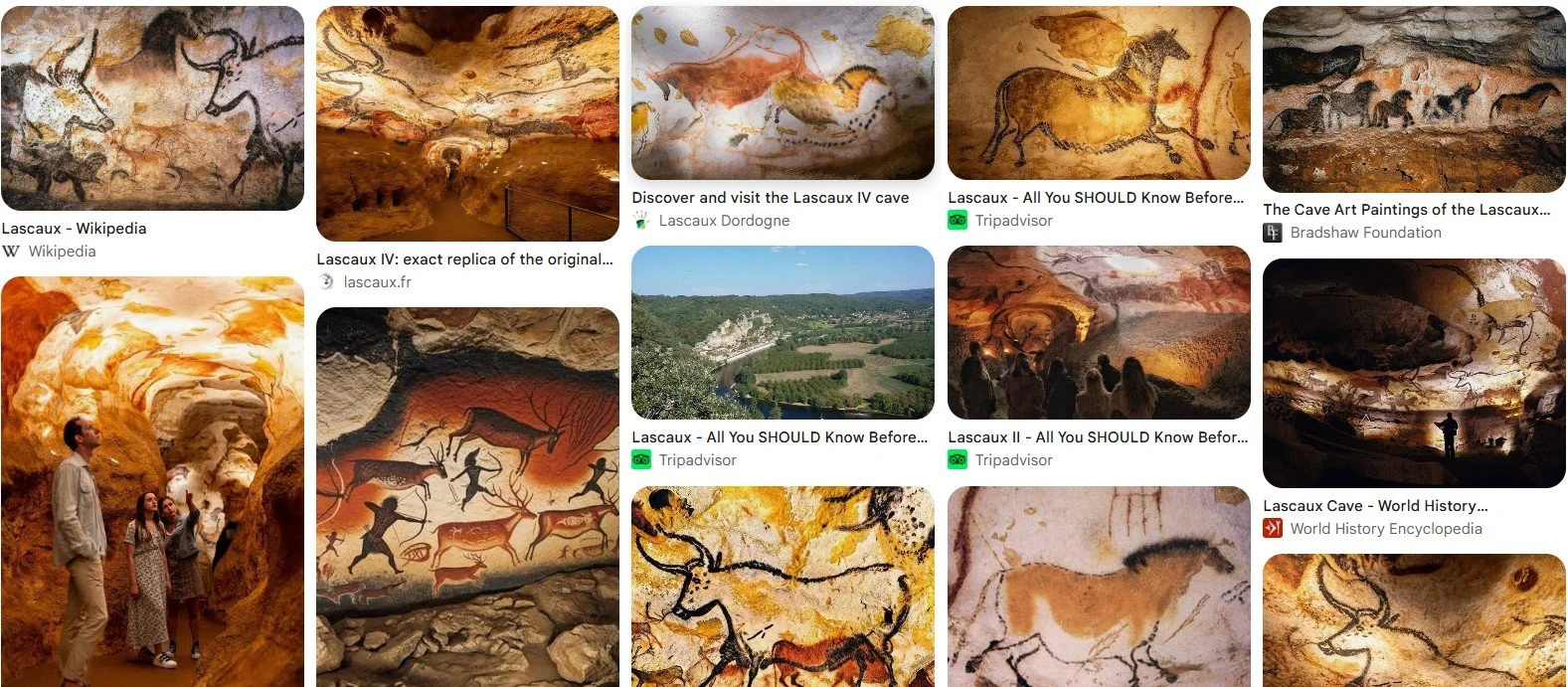
Exactly what Robot did has changed slightly with the telling. Some versions say the dog disappeared into the opening. Others say he simply investigated it and led Marcel to notice the hole.
But the hole was real.
And Marcel was curious.
Local stories spoke of an underground passage beneath the hill, perhaps even a secret tunnel leading toward the nearby Lascaux manor. Marcel apparently wondered whether he had stumbled upon its entrance.
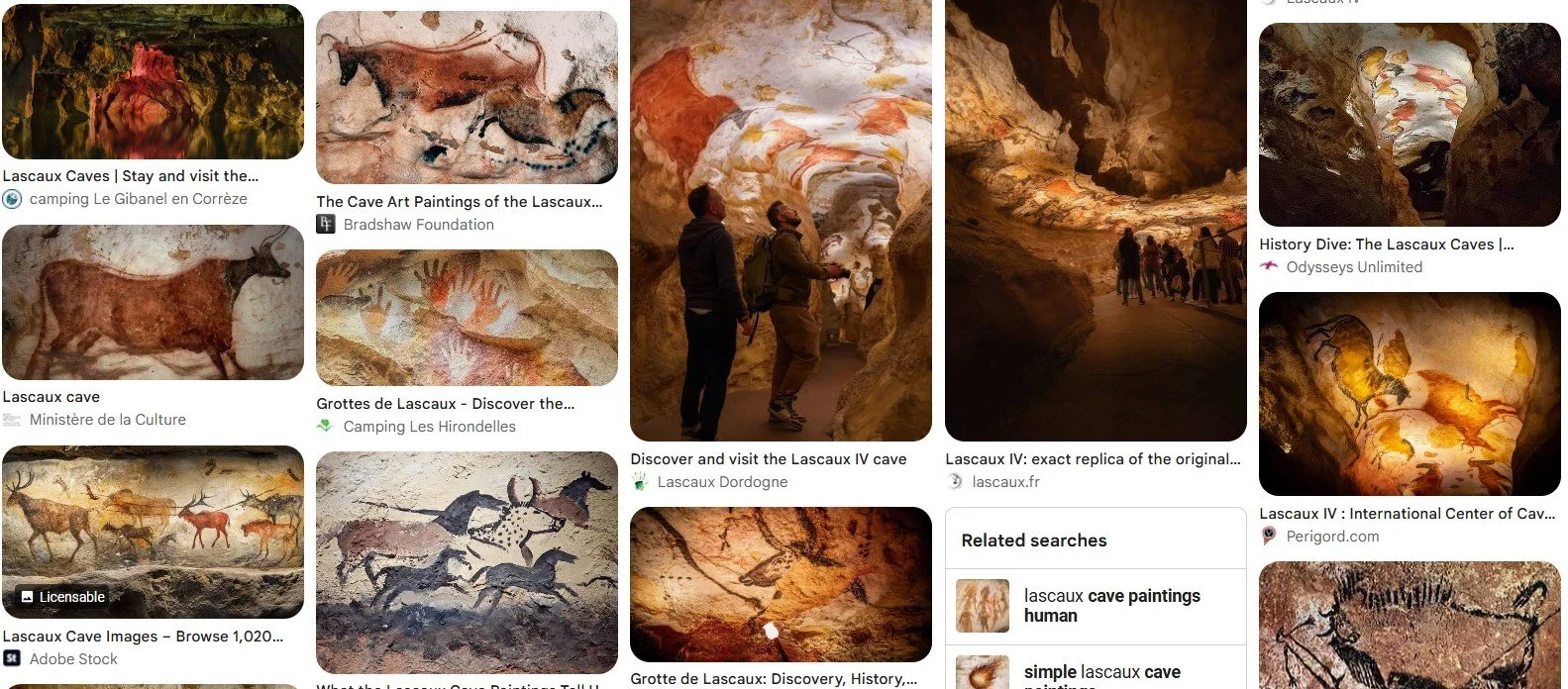
He returned several days later with three friends: Jacques Marsal, Georges Agniel, and Simon Coencas.
On September 12, 1940, the four boys enlarged the opening enough to enter.
They descended underground with little idea of what was waiting for them.
And then their light touched the walls.
A World Frozen in Time
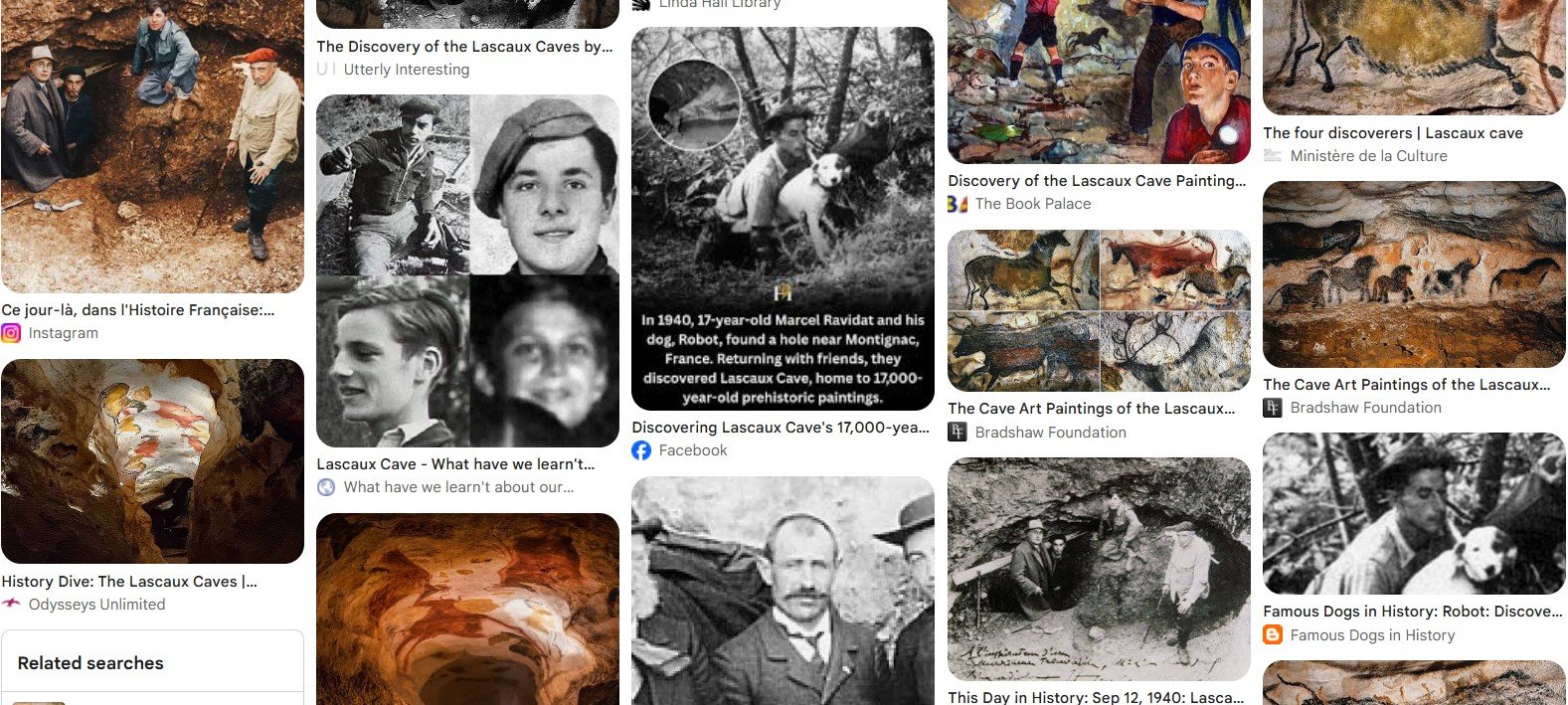
Across the limestone were enormous animals.
Horses.
Bison.
Deer.
Aurochs—the massive wild ancestors of modern cattle.
Some figures stretched several feet across the stone. Others overlapped one another, creating scenes that seemed almost to move as the boys' light flickered across the uneven cave walls.
The chamber that would become known as the Hall of the Bulls contained some of the most extraordinary prehistoric artwork ever discovered.
This wasn't a forgotten medieval tunnel.
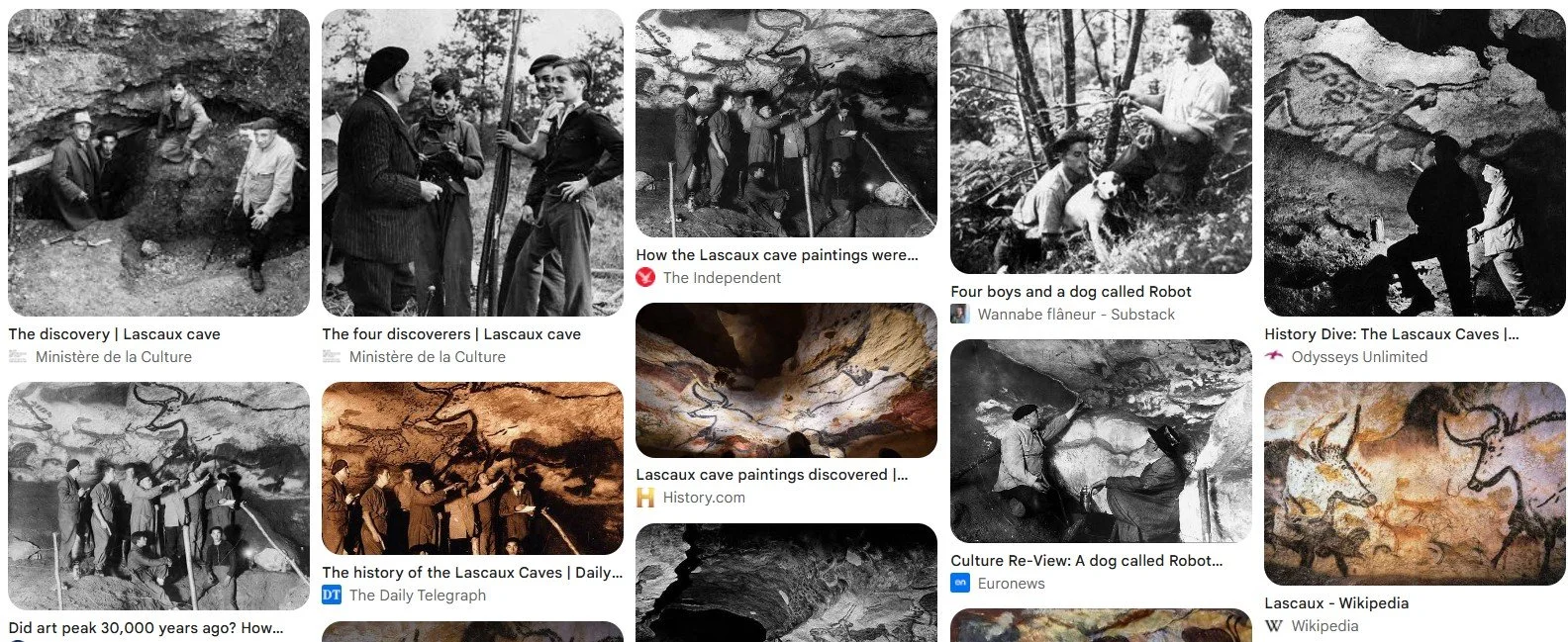
The boys had walked into a gallery created during the Ice Age.
The artwork at Lascaux is generally believed to have been created roughly 20,000 years ago, although estimates vary as researchers continue studying the site.
Thousands of painted, drawn, and engraved figures have been documented throughout the cave complex.
And their sophistication is remarkable.
The artists weren't simply scratching crude outlines into stone. They used pigments, perspective, the natural contours of the cave walls, and techniques that gave some animals an astonishing sense of depth and movement.
Who were these artists?
We don't know their names.
We don't know exactly why they entered the darkness to create these images.
Were the paintings part of ceremonies?
Stories?
Teaching?
Spiritual beliefs?
A record of the animals surrounding them?
Perhaps something entirely different?
Twenty thousand years later, the walls still aren't telling us.
The Discovery Became Its Own Problem
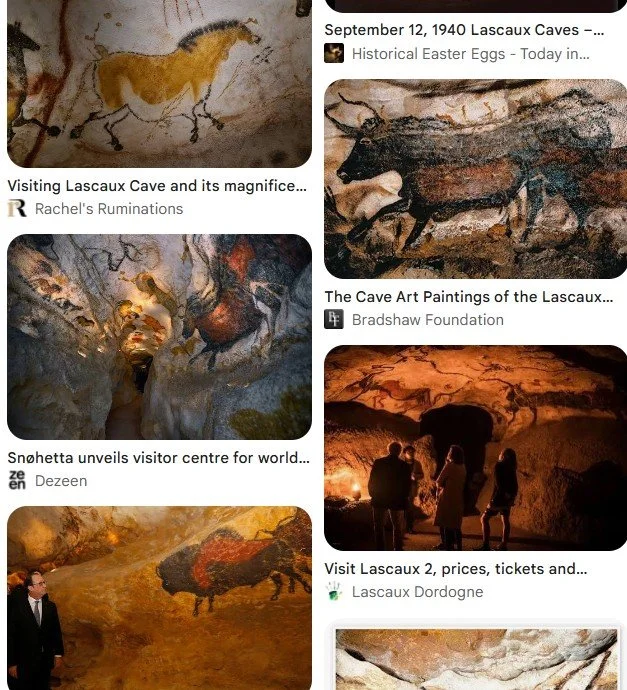
Word of Lascaux eventually spread, and after World War II the cave became a major tourist attraction.
Hundreds of thousands of people entered.
Unfortunately, humans brought something the paintings had been protected from for millennia: changes in temperature, humidity, carbon dioxide, microorganisms, and artificial light.
The cave began to suffer.
In 1963, authorities closed the original Lascaux Cave to the public in an effort to preserve it.
Today, visitors see extraordinarily detailed reproductions rather than wandering through the original chambers.
The real paintings remain in darkness.
Perhaps that's appropriate.
For thousands upon thousands of years, those animals existed beneath the French countryside while civilizations rose and disappeared above them.
Nobody knew they were there.
Then, during one of the darkest periods of modern history, four teenagers crawled through a hole looking for a legendary passage.
Instead, they found voices from another world.
Not written words.
Not names.
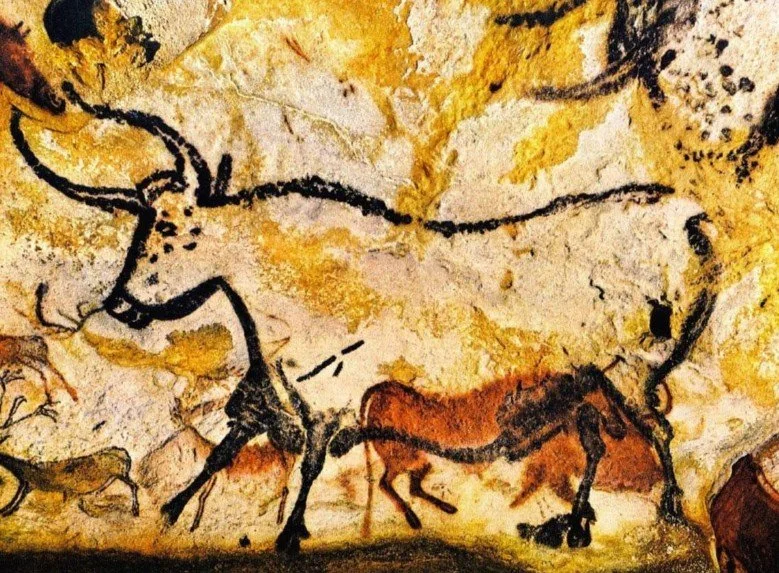
Just horses running across stone, enormous bulls emerging from darkness, and the unmistakable evidence that someone stood in that same cave roughly twenty millennia ago and decided:
I want to leave something here.
And somehow, they did.
#GothicDustDiaries #Lascaux #LascauxCave #CaveArt #PrehistoricArt #AncientHistory #Archaeology #IceAge #ForgottenHistory #HistoricalMysteries #AncientWorld #HistoryUnearthed #RelicsOfTime #France #HistoryLovers