
Habsburg Princess, a Dynasty's Obsession with Heirs, and a Life Cut Short at Twenty-One
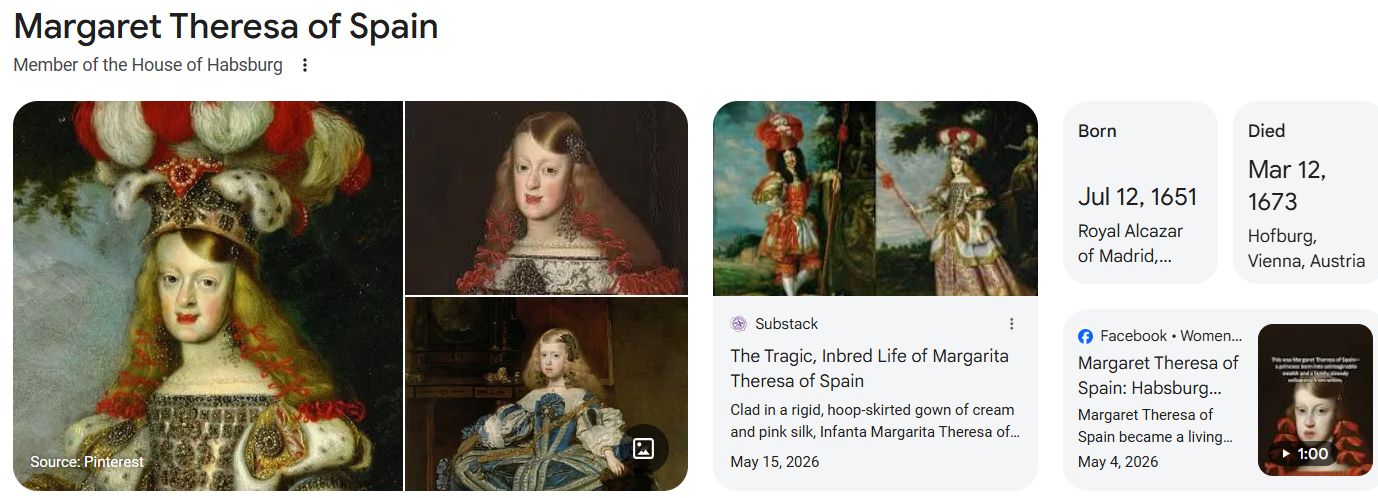
In 1651, a little girl was born into one of Europe's most powerful royal families.
Her name was Margaret Theresa of Spain, known in her homeland as Margarita Teresa.
She was the daughter of King Philip IV of Spain and Mariana of Austria, and from the beginning, her future was shaped by something far greater than childhood dreams or personal wishes.
She was born into a dynasty determined to preserve its power.
The Habsburgs ruled vast territories across Europe, and marriage was one of their most important political instruments. Royal children were not simply sons and daughters. They were potential alliances, succession claims, and guarantees of dynastic continuity.
Margaret was no exception.
The Little Girl in the Painting
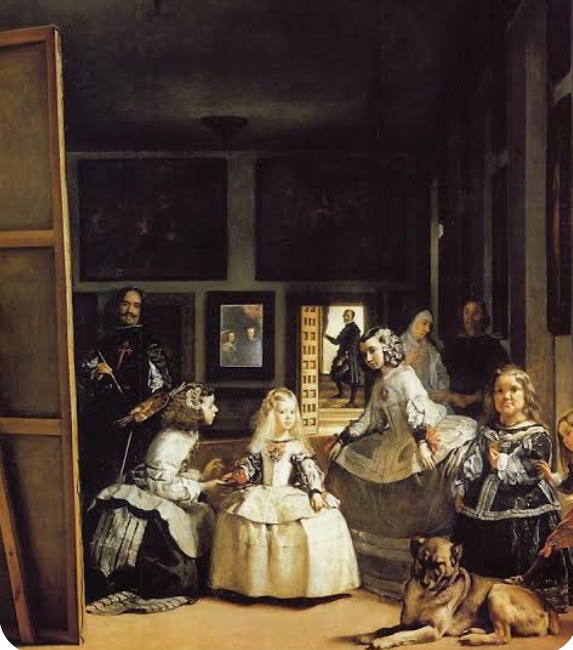
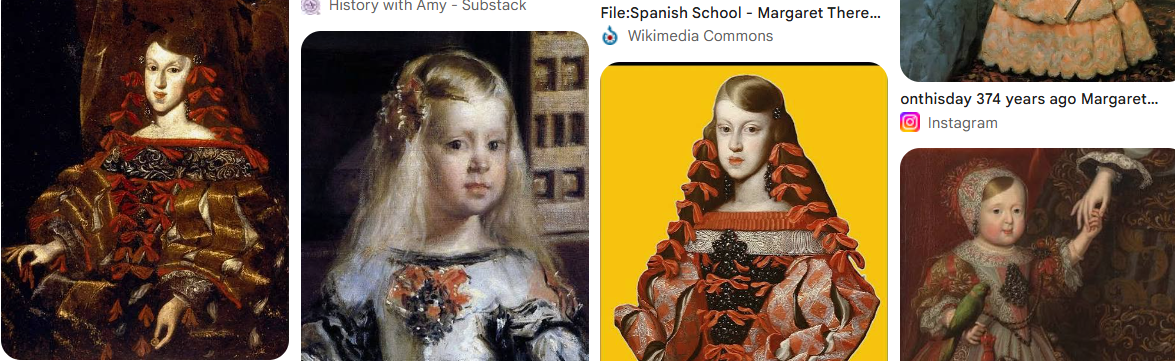
Long before she became an empress, Margaret was immortalized by the great Spanish painter Diego Velázquez.
She is the little girl standing at the center of his celebrated 1656 painting, Las Meninas, surrounded by attendants in the Spanish royal court.
Her golden hair, elaborate dresses, and solemn expression made her one of the most recognizable royal children in European art.
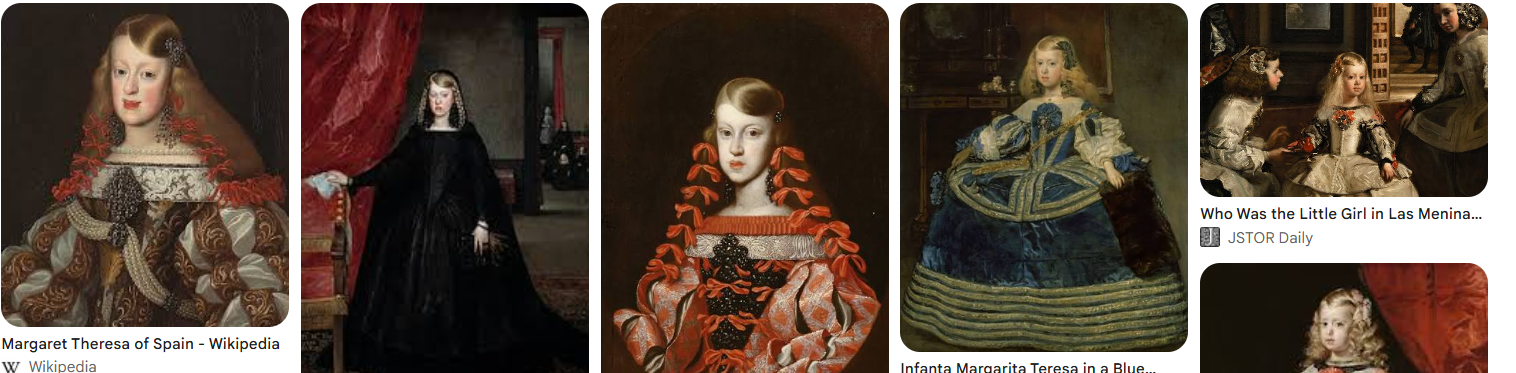
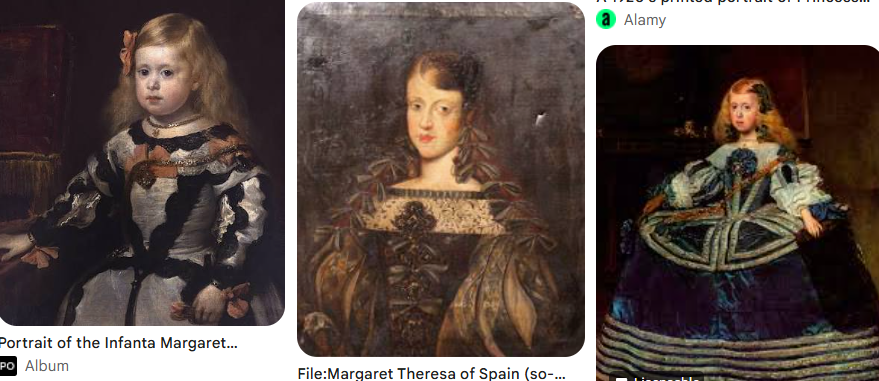
Other portraits followed, including one depicting her at approximately eight years old in a magnificent blue gown.
But these paintings served more than an artistic purpose.
They were sent to Vienna, where her future husband waited, documenting the young princess as she grew toward the marriage planned for her.
Even her childhood portraits were part of a royal arrangement.
A Marriage Within the Family
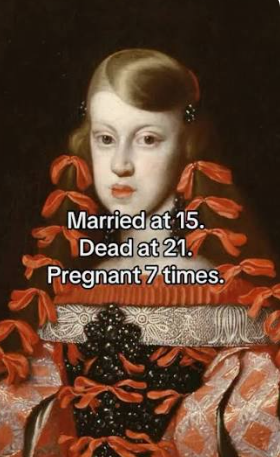
In 1666, at just fifteen years old, Margaret married Holy Roman Emperor Leopold I.
He was twenty-six.
And he was not merely another European monarch.
Leopold was both her maternal uncle and her first cousin.
Today, such a marriage seems extraordinary. Within the Habsburg dynasty, however, marriage between close relatives had become a recurring strategy for keeping territories, wealth, and political claims within the family.
The wedding celebrations were magnificent.
Vienna witnessed fireworks, operas, lavish ceremonies, and an elaborate equestrian ballet. The union was celebrated as a triumph of dynastic diplomacy and Baroque splendor.
To the court, it was a remarkable political achievement.
But beneath the spectacle stood a fifteen-year-old girl whose future was now tied to producing heirs.
The Burden of an Empress
For royal women, motherhood was not simply a private matter. It was a responsibility upon which the survival of dynasties could depend.
Margaret experienced repeated pregnancies during her short marriage.
She gave birth to four children and suffered two miscarriages. Of her four children, only one daughter, Maria Antonia, survived to adulthood.
The repeated losses must be understood against the realities of seventeenth-century medicine, when pregnancy and childbirth carried substantial risks even for women surrounded by royal physicians and extraordinary wealth.
The Habsburg court required heirs.
But neither royal privilege nor political influence could eliminate the dangers of childbirth.
On March 12, 1673, Margaret Theresa died in Vienna.
She was only twenty-one years old.
The Woman Behind the Crown
We know the political reasons for Margaret's marriage. We know the dates of her pregnancies, the names of her children, and the magnificent ceremonies held in her honor.
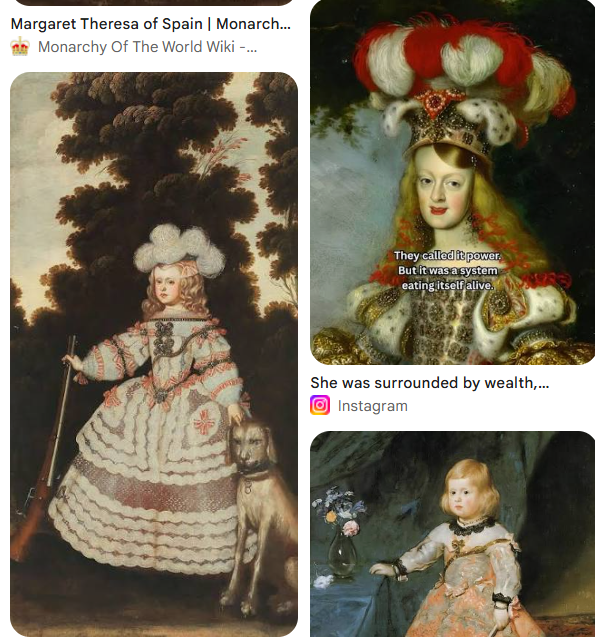
We know what she looked like because some of Europe's greatest artists preserved her image.
But how much do we really know about the young woman herself?
What did she dream of becoming?
What did she fear?
Did she ever imagine a future beyond the responsibilities assigned to her before she was old enough to choose?
The surviving historical record cannot answer all those questions.
And perhaps that is part of the tragedy.
History preserved her portraits, her bloodline, and her importance to the Habsburg dynasty far more clearly than it preserved her private hopes.
Today, millions recognize the little girl in Las Meninas without knowing how brief her life would be.
She was a princess, an empress, a wife, and a mother.
But before all those titles, she was a human being whose life deserved to be more than an instrument of dynastic ambition.
Margaret Theresa's story reminds us that crowns may be made of gold, but the price of wearing one has not always been measured in wealth.
Sometimes, the price was an entire lifetime.
#GothicDustDiaries #Echoes #Notables #MargaretTheresa #HabsburgDynasty #RoyalHistory #ForgottenWomen #WomenInHistory #HiddenHistory #EuropeanHistory