
Where Life Grew Beneath the Light
The Forgotten Gardens Beneath the Beacons
Picture a lighthouse standing alone against a restless sea.
Its great lantern sweeps across the darkness, warning distant sailors of dangerous shoals and rocky shores. Waves crash against the coastline. Salt-laden winds whistle through the night.
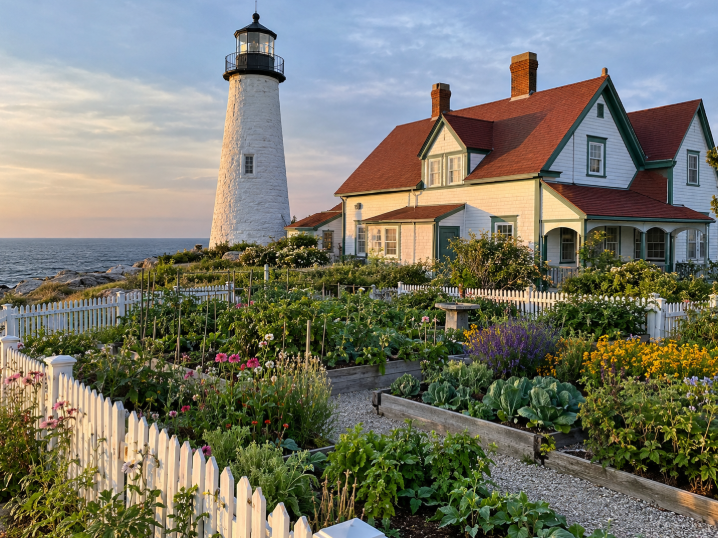
And somewhere beneath that towering beacon, a woman kneels in a garden, carefully tending her tomatoes.
It isn't the image most of us associate with lighthouses.
We remember their architecture, their dramatic locations, and the dedicated keepers who maintained the lights. We remember storms, shipwrecks, and the lives saved by a steady beam.
But lighthouses were also homes.
And where there were homes, there were often gardens.
Growing Food at the Edge of the World
During the nineteenth and early twentieth centuries, many lighthouse stations stood miles from the nearest town. Supplies could be difficult to obtain, transportation depended on weather, and fresh produce wasn't always readily available.
For lighthouse families, gardening was more than a pleasant pastime.
It was a practical necessity.
At California's Old Point Loma Lighthouse, the Israel family lived approximately four hours by horse and buggy from the nearest town. Supplies arrived only every three months.
The family's kitchen garden provided fresh vegetables and herbs to supplement their provisions.
Mrs. Israel, who also performed assistant keeper duties, managed to grow tomatoes at the isolated station. A separate potato patch supplied additional food.
Imagine tending those fragile plants while the wind carried salt from the Pacific Ocean.
Every successful harvest represented another small victory over isolation.
Where Animals Roamed and Gardens Were Protected
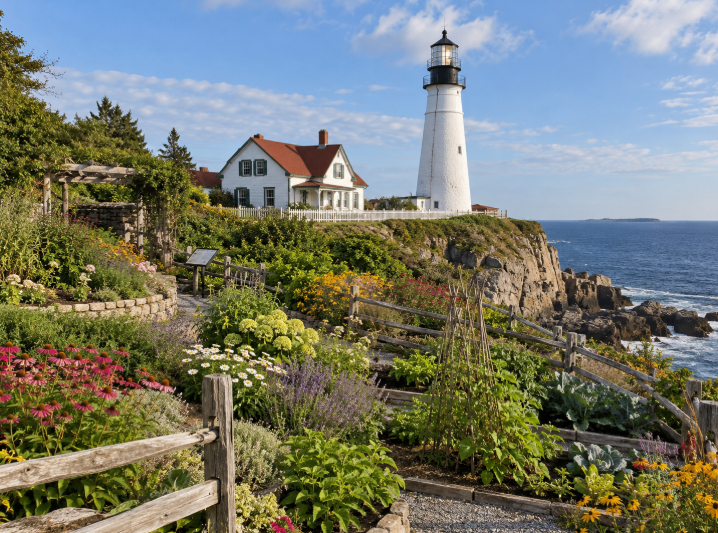
At Cape Lookout Lighthouse in North Carolina, families faced another challenge: sandy coastal soil.
Nevertheless, lighthouse keepers cultivated gardens and raised livestock, including chickens, goats, sheep, and cattle.
One particularly charming detail survives in National Park Service records.
Instead of fencing their animals into pens, some families allowed the livestock to roam the island and fenced the animals out of their gardens.
It is such a wonderfully practical glimpse into everyday lighthouse life.
The gardens were worth protecting.
Fruit Trees That Outlived Their Keepers
Perhaps one of the most remarkable examples comes from Georgia's Cockspur Island.
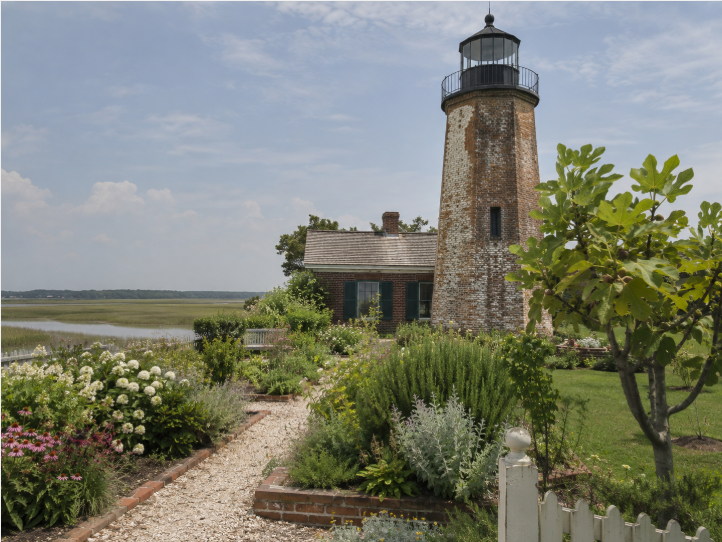
Lighthouse keepers living near Fort Pulaski planted peach trees, pecan trees, a fig tree, and a vegetable garden. They also kept livestock within the old fort.
Years passed. The keepers disappeared from the landscape, and their buildings changed or vanished.
But something remained.
According to the National Park Service, a pecan tree and fig tree planted by the lighthouse keepers still survive and produce fruit.
Think about that for a moment.
Long after the people who tended them were gone, those trees continued growing.
A living connection to hands that worked the soil generations ago.
Bringing the Gardens Back to Life
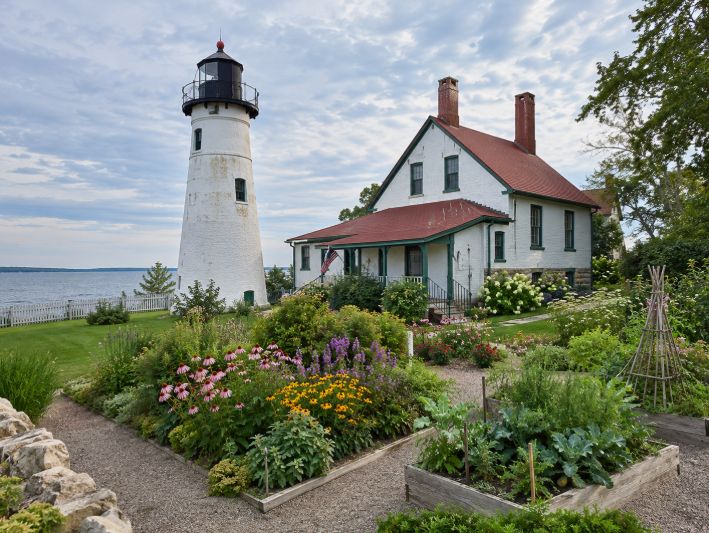
Today, preservation doesn't always stop at restoring lighthouse towers and keeper's cottages.
At North Point Lighthouse in Milwaukee, Wisconsin, volunteers maintain a Victorian-style kitchen garden inspired by the property's historical setting.
Its pathways incorporate paving stones reclaimed from an 1893 railroad spur, while historically appropriate plantings help visitors imagine the grounds as they might have appeared more than a century ago.
At Old Point Loma, volunteers also tend a garden representing the kinds of vegetables grown during the lighthouse's nineteenth-century years.
These gardens offer something that polished brass lenses and restored staircases cannot.
They reveal the domestic world behind the lighthouse.
The meals prepared. The children raised. The ordinary routines that continued even while the sea raged beyond the windows.
More Than a Beacon
There is something deeply moving about the contrast.
Above, a powerful light swept the darkness to protect strangers at sea.
Below, families planted seeds in uncertain soil, hoping for enough sunshine, rain, and shelter to produce another harvest.
One activity helped preserve lives far beyond the shore.
The other helped sustain the lives of those who kept the light burning.
Both required patience, dedication, and faith that their efforts would matter.
Today, we admire lighthouses as monuments to maritime history. But perhaps we should occasionally look away from the tower and toward the ground beneath it.
Because sometimes the smallest pieces of history aren't carved in stone or recorded in grand monuments.
Sometimes they are buried in the soil.
And sometimes, if we're fortunate, they are still growing.
The lighthouse guided those who were lost at sea. The garden sustained those who remained behind.
#GothicDustDiaries #LighthouseHistory #LighthouseGardens #MaritimeHistory #ForgottenHistory #HistoricGardens #LighthouseKeepers #OldWorldLiving #LivingHistory #CoastalHistory