
THE ANTIKYTHERA WRECK
THE ANCIENT MACHINE THAT SHOULDN'T EXIST
A Treasure Beneath the Aegean
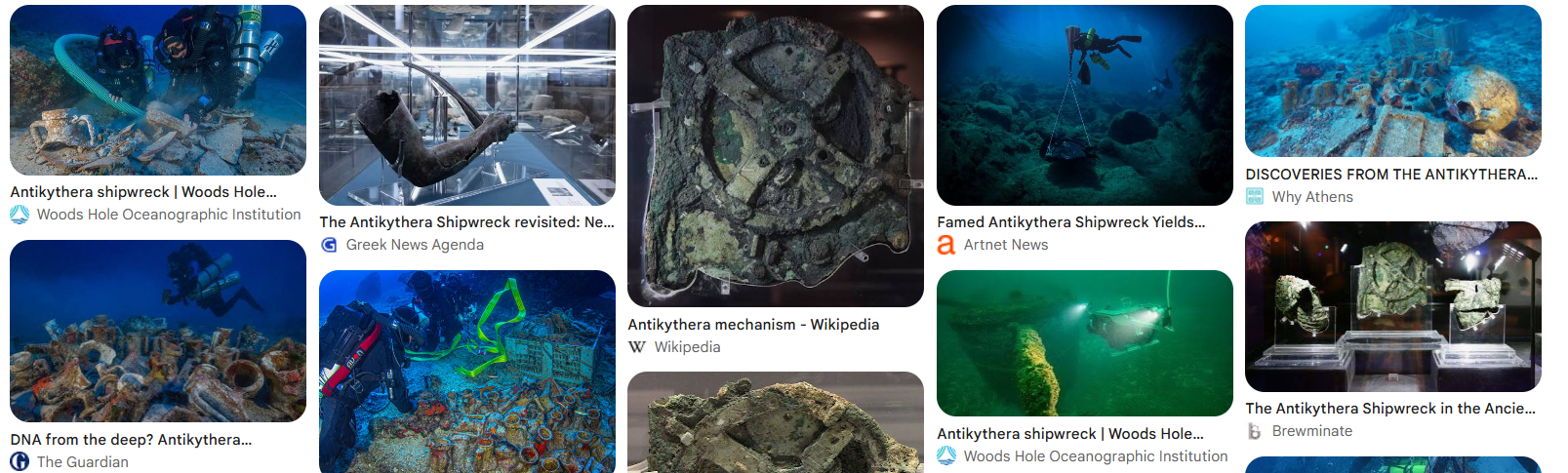
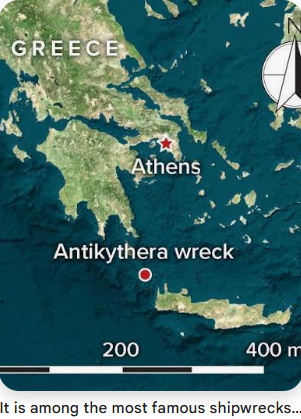
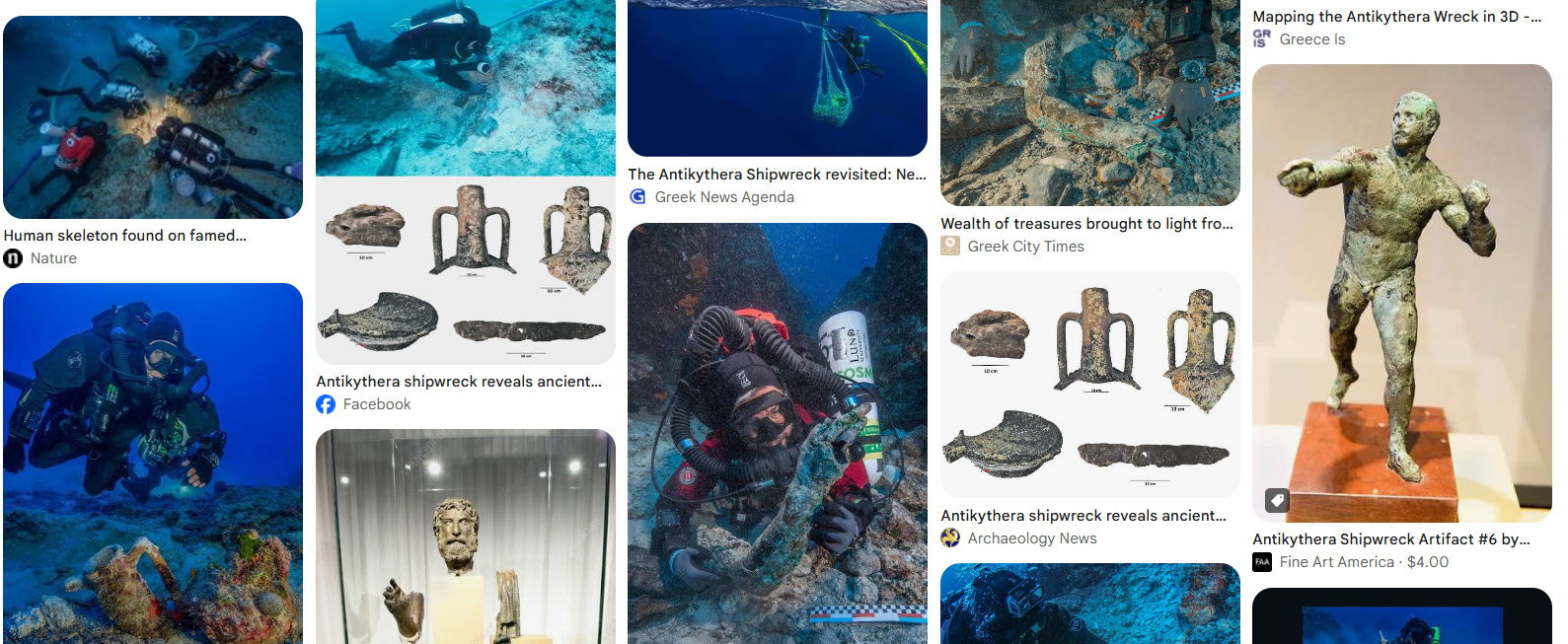
In 1900, sponge divers seeking their livelihood beneath the waters near the Greek island of Antikythera encountered something extraordinary.
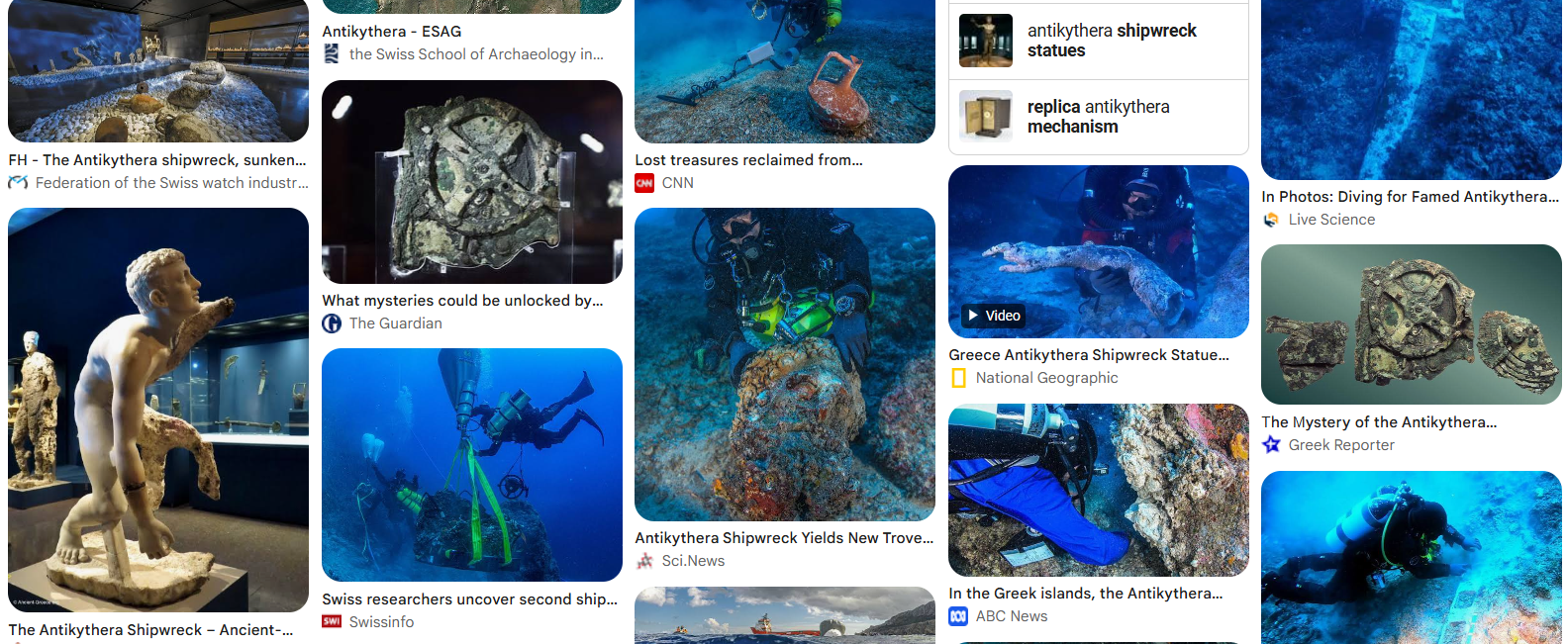
Resting on the seabed were the remains of an ancient ship, surrounded by marble and bronze statues, pottery, coins, and objects that had lain undisturbed for nearly two millennia.
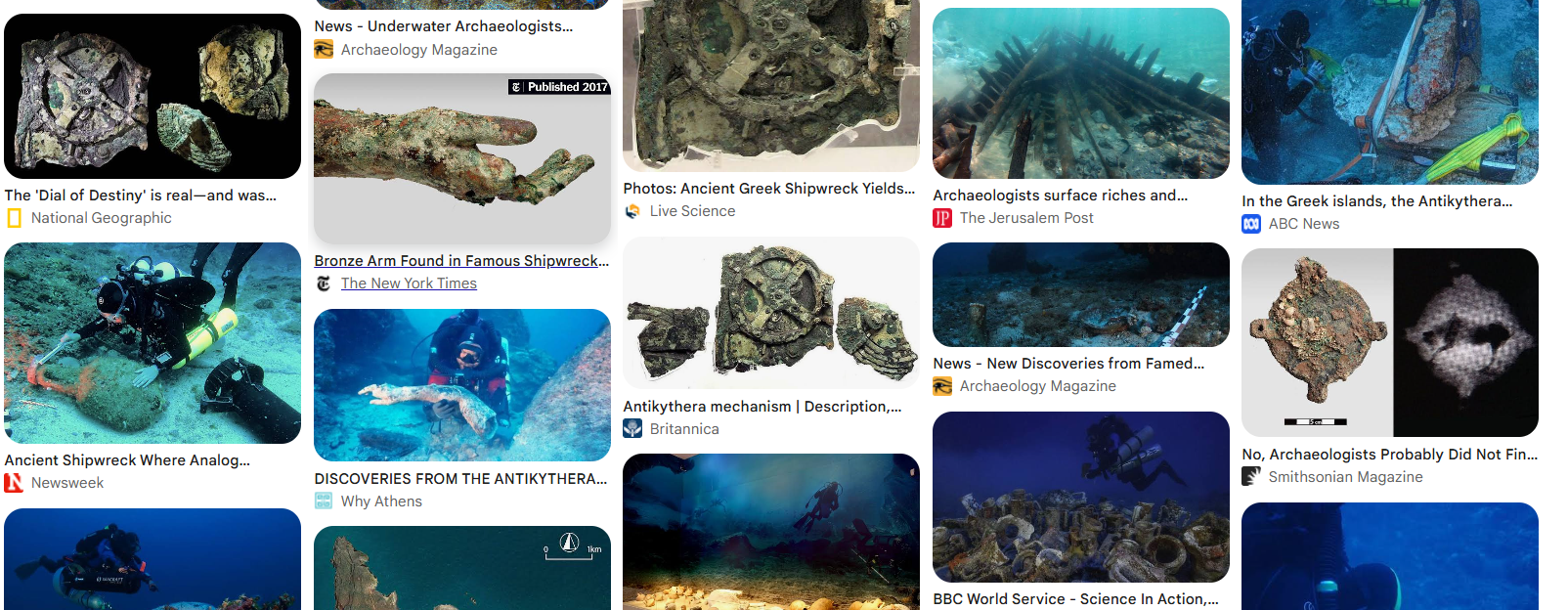
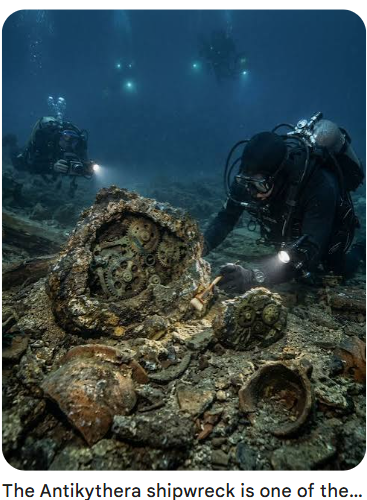
The vessel had carried the wealth and craftsmanship of the ancient Mediterranean world. But among its treasures was an unremarkable mass of corroded bronze, recovered during the archaeological operations that followed.
At first glance, it seemed little more than another fragment claimed by the sea.
It was anything but.
The Machine Within the Bronze
In 1902, researchers recognized that the corroded fragments contained gears and inscriptions. What emerged through decades of investigation would challenge assumptions about the technological capabilities of the ancient Greeks.
The object became known as the Antikythera Mechanism.
Constructed more than 2,000 years ago, it was an astonishingly sophisticated mechanical device, operated by turning a handle that moved an intricate arrangement of interlocking bronze gears.
Its purpose was not warfare, navigation, or the counting of treasure.
It was designed to calculate and display astronomical cycles.
The mechanism could represent the movements of the Sun and Moon, predict eclipses, and track cycles associated with ancient calendars and athletic festivals.
It was, in essence, a mechanical model of the heavens.
Knowledge Lost to Time
What makes the Antikythera Mechanism so remarkable is not that the ancient Greeks studied astronomy. Their mathematical and astronomical accomplishments are well documented.
The astonishing revelation is that someone translated that knowledge into an extraordinarily complex geared instrument.
No other surviving ancient device of comparable sophistication has been discovered.
The mechanism's existence suggests a tradition of precision engineering whose other products have largely vanished.
Who designed it? Was it produced in a renowned center of Greek scientific learning? Were similar instruments once found in libraries, workshops, or the homes of wealthy scholars?
Scholars have proposed possible origins and intellectual influences, but its maker remains unknown.
The Sea Keeps Its Secrets
Modern imaging techniques have revealed details hidden within the corroded fragments, allowing researchers to reconstruct portions of the machine's operation.
Yet substantial parts of the original mechanism are missing, and questions remain about its complete design.
The ship itself continues to offer archaeological clues about the people, commerce, and cultural exchange of the ancient Mediterranean.
The Antikythera Mechanism is not evidence of supernatural intervention or a vanished civilization possessing impossible powers.
Its mystery is something more compelling.
It demonstrates what human ingenuity achieved—and how easily knowledge, craftsmanship, and entire technological traditions can disappear from the surviving historical record.
For nearly two thousand years, the sea guarded a machine built to measure the heavens.
And when it finally surrendered that treasure, the ancient world became a little less familiar, and infinitely more extraordinary.
Yet the discovery raises two mysteries beyond the shipwreck itself. How did ancient craftsmen construct a machine of such remarkable precision, and how did its creators translate the movements of the heavens into turning gears? Those questions deserve stories of their own—stories we will explore in future entries under ECHOES — CURIOSITIES and ECHOES — CELESTIAL.
Perhaps the greatest mysteries are not the things humanity has yet to discover, but the things it once knew—and forgot.
#GothicDustDiaries #Sunken #Shipwrecks #AntikytheraMechanism #AncientGreece #LostTechnology #MaritimeHistory #UnderwaterArchaeology #AncientMysteries #RelicsOfTheDeep