
STORIES THAT SINK - Pi
THERE ARE STORIES THAT SCREAM, AND THERE ARE STORIES THAT SINK.
https://youtube.com/shorts/PTXNtbw0p3I
Welcome back, my darklings and trail blazers.
Life of Pi by Yann Martel belongs to the latter — a narrative that slips beneath the surface quietly, leaving only ripples where certainty once stood. This is not a tale of monsters rising from the deep, but of something far more unsettling: the human mind adrift when civilization disappears.
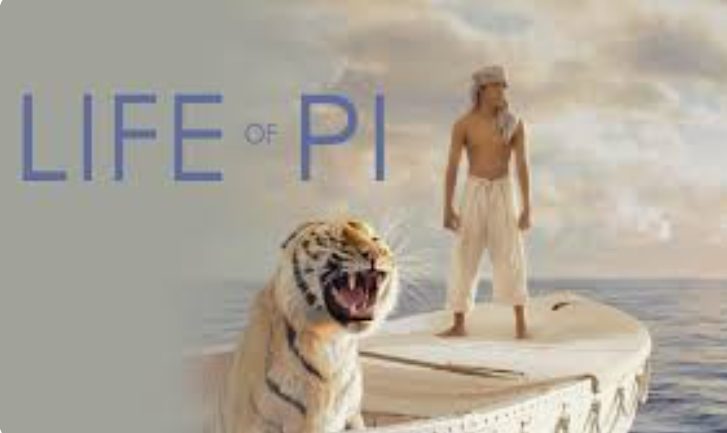
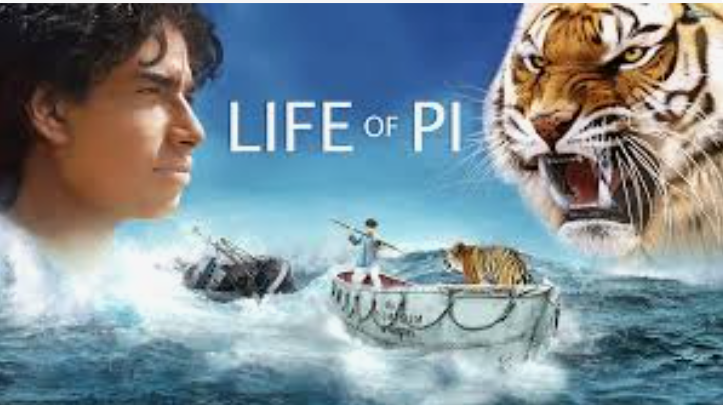
After a shipwreck in the Pacific Ocean, Pi Patel finds himself suspended between worlds — land and sea, boyhood and survival, faith and doubt. The lifeboat becomes a floating limbo. The horizon never changes. Time stretches, thins, dissolves. The ocean, vast and indifferent, does not threaten — it observes.
Sharing this fragile vessel is a Bengal tiger.
Whether the tiger is flesh or metaphor is beside the point. What matters is coexistence. Survival demands negotiation with danger, not conquest of it. Pi learns rituals — feeding schedules, boundaries, routines — small human constructs designed to impose order on chaos. In this way, the novel becomes deeply gothic: it explores how the mind builds cathedrals out of fear when faced with the infinite.
The sea in Life of Pi is not romantic. It is not cinematic. It is endless, reflective, and quietly cruel. It provides beauty one moment and annihilation the next, without explanation or apology. Days blur. Hunger becomes a constant companion. Death arrives not with drama, but with inevitability.
This is maritime gothic at its most restrained — no haunted hulls, no sirens, no storm-tossed theatrics. Instead, we are given the slow erosion of certainty. Identity thins. Morality bends. Faith transforms from belief into survival mechanism.
And then comes the fracture.
When Pi is rescued, he offers two versions of his ordeal: one filled with animals and myth, the other stripped of symbolism and soaked in human brutality. The reader is asked not which is true, but which is preferable.
Here, the story descends fully into the abyss.
Because gothic literature has always understood this truth: sometimes the lie is what keeps us alive. Sometimes the monster is not the thing we invent, but the reality we refuse to face. The wreckage is not only the ship — it is the soul that survives it.
Life of Pi does not demand belief. It demands choice.
Do we accept the story that allows beauty to exist in suffering? Or do we insist on the version that drowns meaning in realism? The novel never answers. It leaves us floating, suspended between narratives, much like Pi himself.
In the context of the Sunken section, this book belongs among shipwrecks, lost light, and submerged truths. It reminds us that some abysses are not measured in fathoms, but in what we are willing to believe when nothing solid remains.
And perhaps that is the most gothic thing of all — that when faced with the infinite, humanity chooses story over silence.
Follow for more from the abyss.
#GothicDustDiaries #SunkenStories #MaritimeGothic #LiteraryAbyss #OceanSymbolism #PsychologicalGothic #BookReview #LifeOfPi #GothicLiterature #SubmergedTruths #DarkNarratives #FaithAndSurvival #UnreliableNarrator #AbyssalReading