
The U.S.S. Sachem
America’s Forgotten Ghost Ship in the Kentucky Mud
Born into luxury, baptized in war, celebrated in spectacle—and finally abandoned to silence.
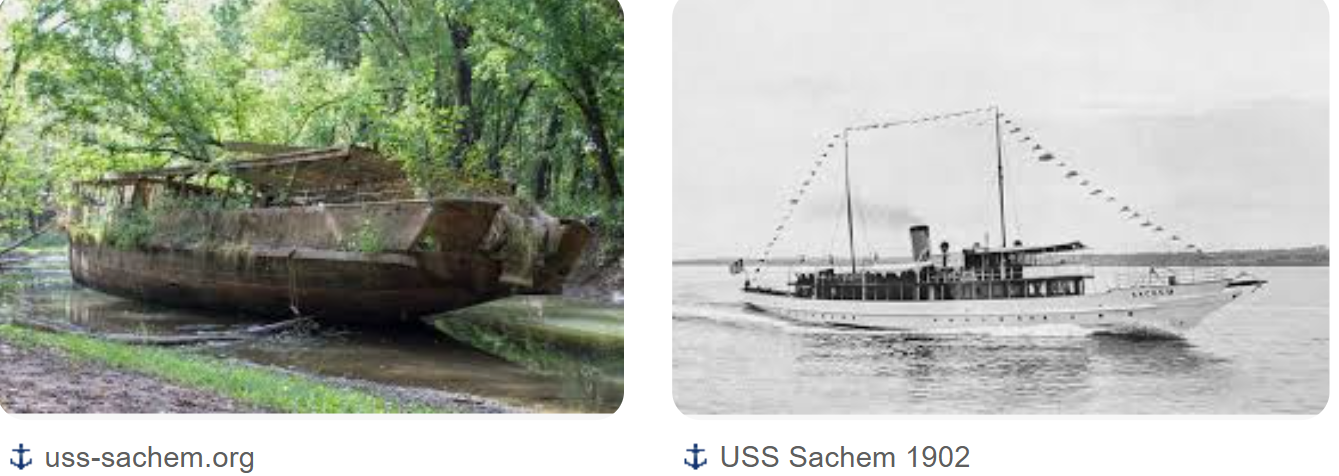
The U.S.S. Sachem now rests in a quiet Kentucky tributary, her iron bones sinking into river mud like a forgotten corpse. At 122 years old, she is not merely a derelict vessel—she is a floating relic of ambition, war, celebrity, and inevitable decay.
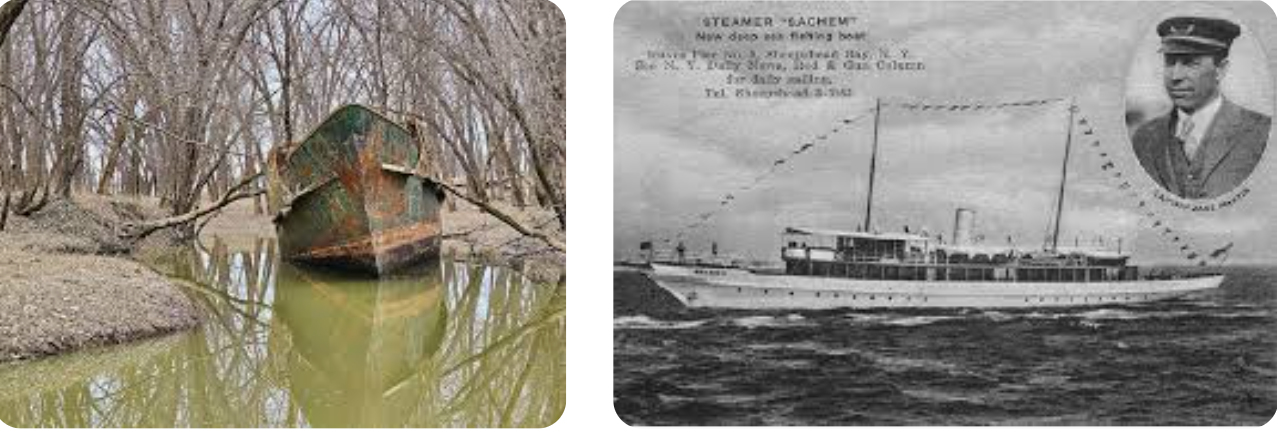
Launched in 1902, a decade before the Titanic’s ill-fated maiden voyage, the Sachem began life as a private luxury yacht for railroad magnate Jay Gould’s family. She was not built for the masses but for the elite—a sleek symbol of wealth and power gliding through calm waters while the industrial world thundered ashore.
Her decks carried not just wealthy passengers, but Thomas Edison himself, who boarded the vessel during wartime to conduct experiments and test naval technology. The inventor of modern light traveled aboard a ship that would one day vanish into darkness.
From Pleasure Yacht to War Machine
With the outbreak of World War I, the Sachem was commandeered by the U.S. Navy and transformed into a patrol vessel. Luxury gave way to duty. Velvet furnishings were replaced with naval equipment, and champagne salons gave way to command posts and bunks for sailors.
She survived two world wars, a veteran of an era that consumed millions. While nations burned and cities fell, the Sachem endured—quietly aging, quietly surviving, quietly witnessing history from the waves.
But technology moves forward without mercy. By World War II, she was outdated—an antique in a world of steel giants and radar-guided fleets. Her war days ended not with ceremony, but with irrelevance.
The Party Boat Years
In the late 1940s, she was reborn—not as a warship, but as entertainment.
Purchased by a New York cruise company, she became a sightseeing vessel, carrying nearly three million passengers around Manhattan. Families, tourists, lovers, and dreamers walked her decks. She was renamed Sightseer, and later Circle Line V, her name fading with each coat of paint and each passing decade.
Her hull appeared in a Madonna music video, briefly reclaiming a moment in the cultural spotlight—an aging starlet of steel dancing once more in public memory.
But fame is fleeting. And ships, like people, age without mercy.
The Final Voyage Into Oblivion
In 1986, private owner Robert Miller purchased the ship, dreaming of restoration. But dreams require money, and time is an unforgiving tide.
The journey from New York to the Midwest took ten exhausting days as Miller and his crew guided the aging vessel down the Mississippi. She was finally anchored in a quiet tributary off the Ohio River on Miller’s property.
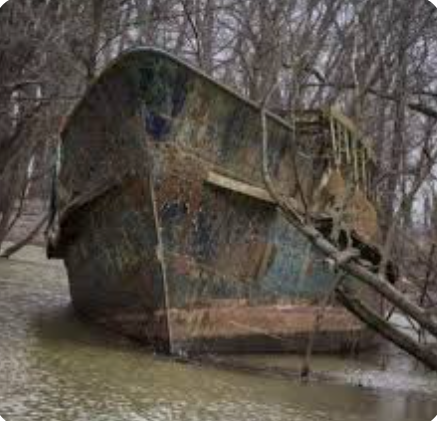
Then the river betrayed her.
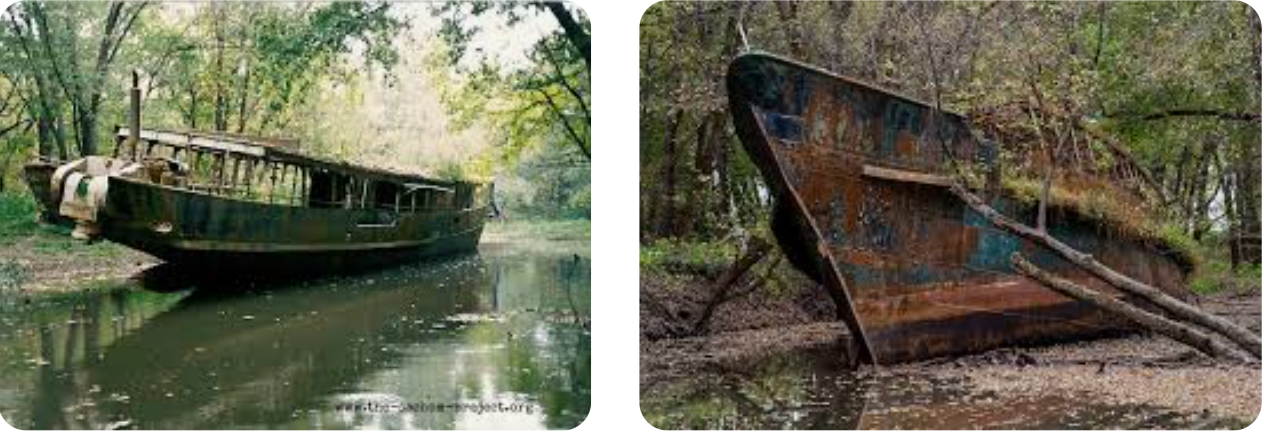
Water levels dropped. Mud swallowed her hull. The cost to move or restore her proved impossible. And so, she remained—abandoned, rusting, sinking into sediment.
A luxury yacht turned warship turned party boat turned forgotten relic—her journey ended not with a storm, not with battle, but with silence and poverty.
A Gothic Relic of American Memory
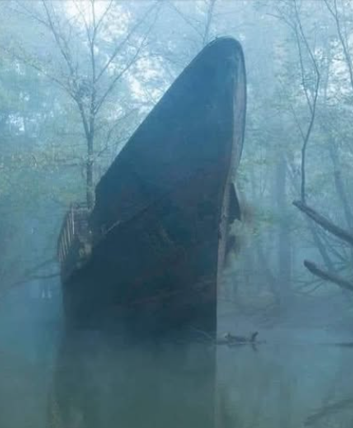
Today, the Sachem sits like a ghost in daylight, her corroded hull a monument to forgotten grandeur. She is a reminder that even icons fade, even inventions rot, even legends sink.
She carried Edison and soldiers, tourists and celebrities—yet now she carries only memory and rust.
A floating mausoleum of American optimism, she whispers from the riverbanks:
Everything we build, we will abandon. Everything we celebrate, we will forget.
And the river keeps her bones.
#GhostShip #USSsachem #HistoricalWrecks #AbandonedShips #MaritimeHistory #ForgottenHistory #RustAndRuin #RiverWreck #GothicHistory #SunkenStories #UrbanDecay #DarkHistory