
Theodore Dreiser
The Weight of Desire, Consequence, and American Darkness
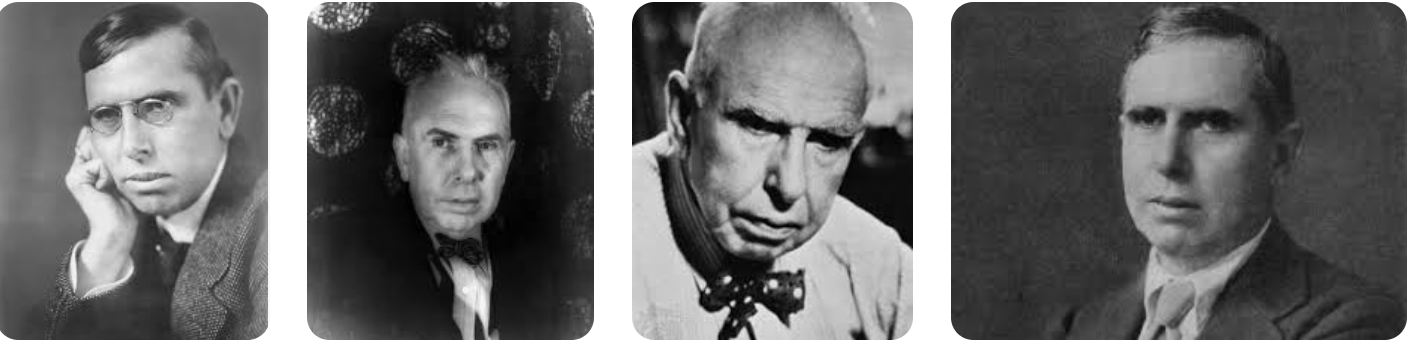
Some writers create darkness through atmosphere. Theodore Dreiser created it through consequence.
Born in 1871 in Terre Haute, Dreiser became one of the central figures of American literary naturalism, a movement that viewed human life as deeply influenced by forces often beyond individual control — poverty, social class, desire, ambition, and circumstance. His work rarely offered comforting moral conclusions. Instead, it observed how people moved through systems that often rewarded impulse before exposing its cost.

His first major novel, Sister Carrie, immediately challenged conventional expectations. Rather than punishing its central character according to the moral codes expected by many readers of the time, the novel followed Carrie Meeber as she moved through urban life, relationships, and social advancement in ways that unsettled publishers and critics alike. The city in Dreiser’s work is rarely romantic. It is mechanical, indifferent, and quietly demanding.

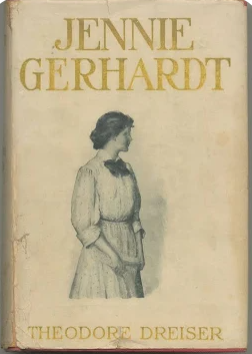
That same emotional atmosphere deepened in Jennie Gerhardt, where sacrifice and social judgment shape nearly every personal decision. Dreiser’s people often do not fall because they are evil. They fall because circumstances press against weakness until weakness becomes destiny.
His darkest and perhaps most enduring work remains An American Tragedy. Inspired in part by a real murder case, the novel follows Clyde Griffiths, a young man driven by longing for status, belonging, and escape. What makes the novel powerful is not simply the crime itself, but the slow construction of thought that leads toward it. Dreiser shows how ambition can become dangerous when mixed with insecurity and social aspiration.
There are no haunted corridors in Dreiser’s fiction, yet many of his pages carry the same pressure found in darker literature. His characters often move as if enclosed by invisible architecture — class expectations, private fear, public appearance, and the constant pull between desire and consequence.
This is what gives his writing its lasting weight. He does not rush judgment. He watches it unfold.
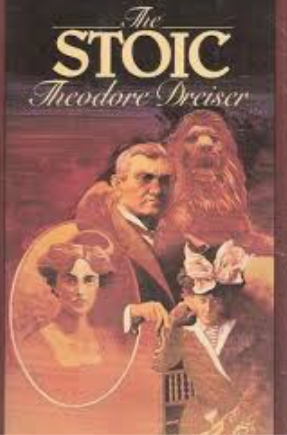
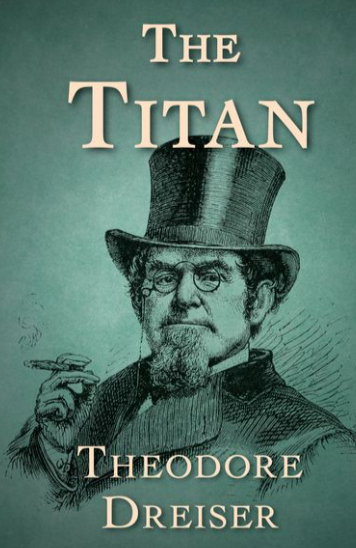
Dreiser also wrote larger social and financial novels such as The Financier and The Titan, where power itself becomes a subject of study. Wealth in these works is never clean. It arrives through force, appetite, calculation, and often moral compromise.
For readers who approach literature through atmosphere alone, Dreiser may first appear plain. But beneath the surface, his work carries a steady gravity: human beings moving toward outcomes they partly understand and partly refuse to see.
That is why his writing still matters. He reminds us that darkness in literature does not always arrive through shadow. Sometimes it arrives through ordinary choices made one step too far.
Here are the principal works of Theodore Dreiser that lines up best for GDD
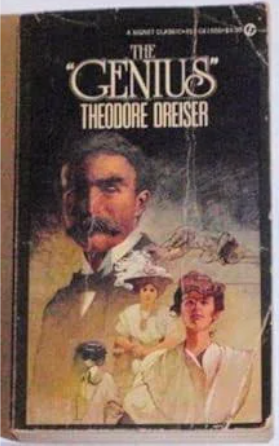
Sister Carrie, Jennie Gerhardt, The Financier, The Titan, The Genius,
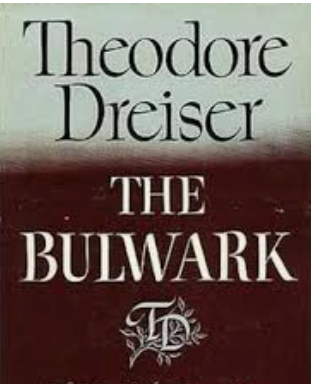
An American Tragedy, The Bulwark, The Stoic
#TheodoreDreiser #GothicDustDiaries #AmericanLiterature #ClassicAuthors #Scribes #LiteraryNaturalism #AnAmericanTragedy #SisterCarrie #JennieGerhardt #ClassicBooks #DarkLiterature #AmericanAuthors #LiteraryHistory #AuthorsOfWeight #GDDAuthors